Wild at Heart: Inside Chat Sauvage and the Quiet Revolution of the Rheingau
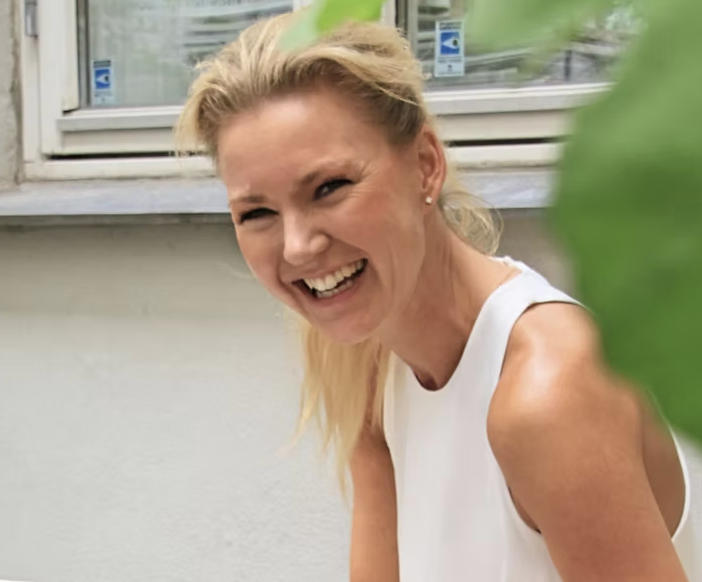
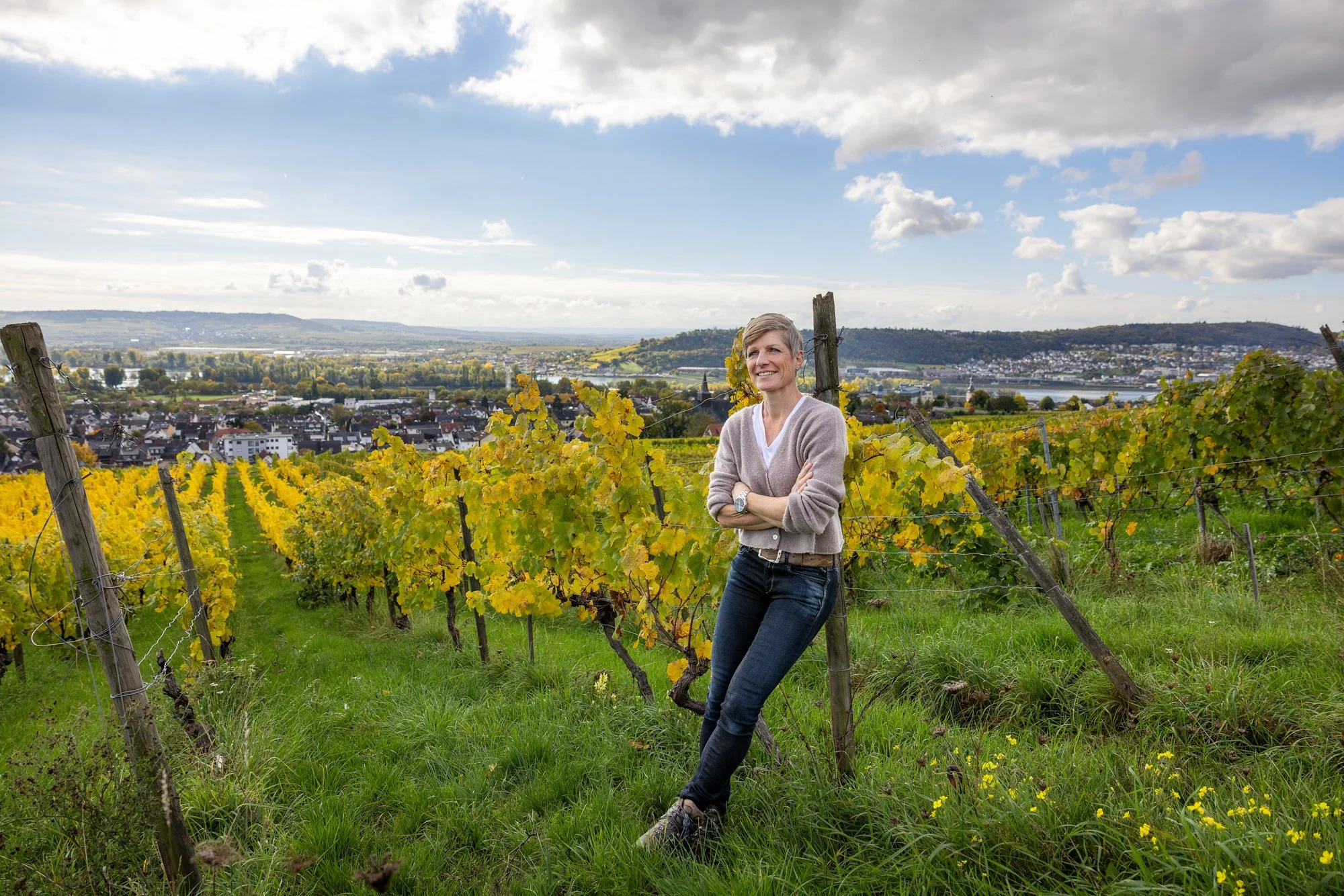
Verena Schöttle. Image: Chat Sauvage
The Rheingau is Riesling country. Anyone who has spent time in this stretch of hills along the Rhine knows it — the steep south-facing slopes, the slate and quartzite soils, the proud producers who have spent centuries coaxing elegance from a single grape. So when I sat down with Verena Schöttle, the winemaker behind Chat Sauvage, a small estate producing nothing but Pinot Noir and Chardonnay in the heart of this landscape, I came with a question I had been sitting on for a while: what does it actually take to do something different here, and mean it?
The answer, as it turned out, unfolded quietly, over the course of a conversation that moved between vineyards and philosophy, between practical winemaking decisions and something harder to name — a conviction about what a wine should be. Thank you to our Gold Sponsor Winegroup/ HJ Hansen /Theis Vine for setting up the interview.
A Winery Born from One Barrel
Chat Sauvage was founded in the year 2000 by Günter Schulz, a man from Hamburg with a deep love of Burgundy and the kind of single-mindedness that tends to make people either succeed or look foolish. He started with one barrel of Pinot Noir.
From the beginning, the project was shaped by France. The varieties, the barrel format, the bottle shape — everything pointed west. He did not want the estate to carry his name.
"Schultz is a very common German name, and everything when he started had to be French in spirit. The varieties, the barrels, the style of winemaking. So the name had to be French as well," Verena Schöttle, winemaker of Chat Sauvage explains with a slight smile.
Chat Sauvage: The Wild Cat
The name came from a domestic moment. Schulz's granddaughters were playing in the garden when his wife remarked that they were running around like wild cats. Someone made the leap to French — and Chat Sauvage was born. It is a fantasy name, technically speaking. But it carries something real. To produce Pinot Noir and Chardonnay in a Riesling region is, by definition, a little wild. Not in a chaotic sense — the winemaking here is deeply traditional — but in the sense of choosing a different path, with confidence.

Sponsored banner from H. J. Hansen Vin
Taking Over a Living Thing
Verena Schöttle has led Chat Sauvage since 2016, and became a co-owner shortly after. She trained in Germany, studied winemaking and oenology at Geisenheim — the prestigious institute just down the road from the estate — and spent years working in different wineries and in gastronomy before finding her way here.
"We don’t want to copy Burgundy. These are Rheingau wines. But people taste them and say — oh, this could be a Burgundy. And that is a great compliment."
I asked what had changed when she moved from responsibility to ownership.
"Not so much, honestly. I had already fallen in love with the place before I became an owner. Mr. Schulz is 87 years old and lives in Hamburg. He trusts me to lead the winery without limitations. He is a very nice business partner. When I make good wine, he is happy. So I simply try to make good wine."
Simply good wine
It is a deceptively simple sentence — and the more you sit with it, the more it reveals. There is no investor pressure, no brand strategy imposed from above, no board to answer to. Just a founder who believes in the project and a winemaker who has earned the space to pursue it on her own terms.
Since taking over, she has pushed the estate towards more manual work in the vineyards, reduced yields, and introduced longer maceration times for the reds. These are not radical moves in the abstract — but in practice, on seven hectares, with a team of three plus seasonal workers, they represent a serious commitment of time and energy.
"We pick everything by hand," she said. "And many of our seasonal workers have come back to us year after year — our pickers from Romania, the same faces every harvest. They feel like family."
"We don't want to copy Burgundy. These are Rheingau wines. But people taste them and say — oh, this could be a Burgundy. And that is a great compliment."
Burgundy Without Imitation
This is a question that hangs over Chat Sauvage: are these Burgundy wines in German clothing, or something genuinely their own?
The winemaker was clear on this point.
"We don't want to copy Burgundy. These are Rheingau wines. We have different soils, our own climate, our own style. But it does happen — people taste them and say, this could be a Burgundy. And that is a great compliment."
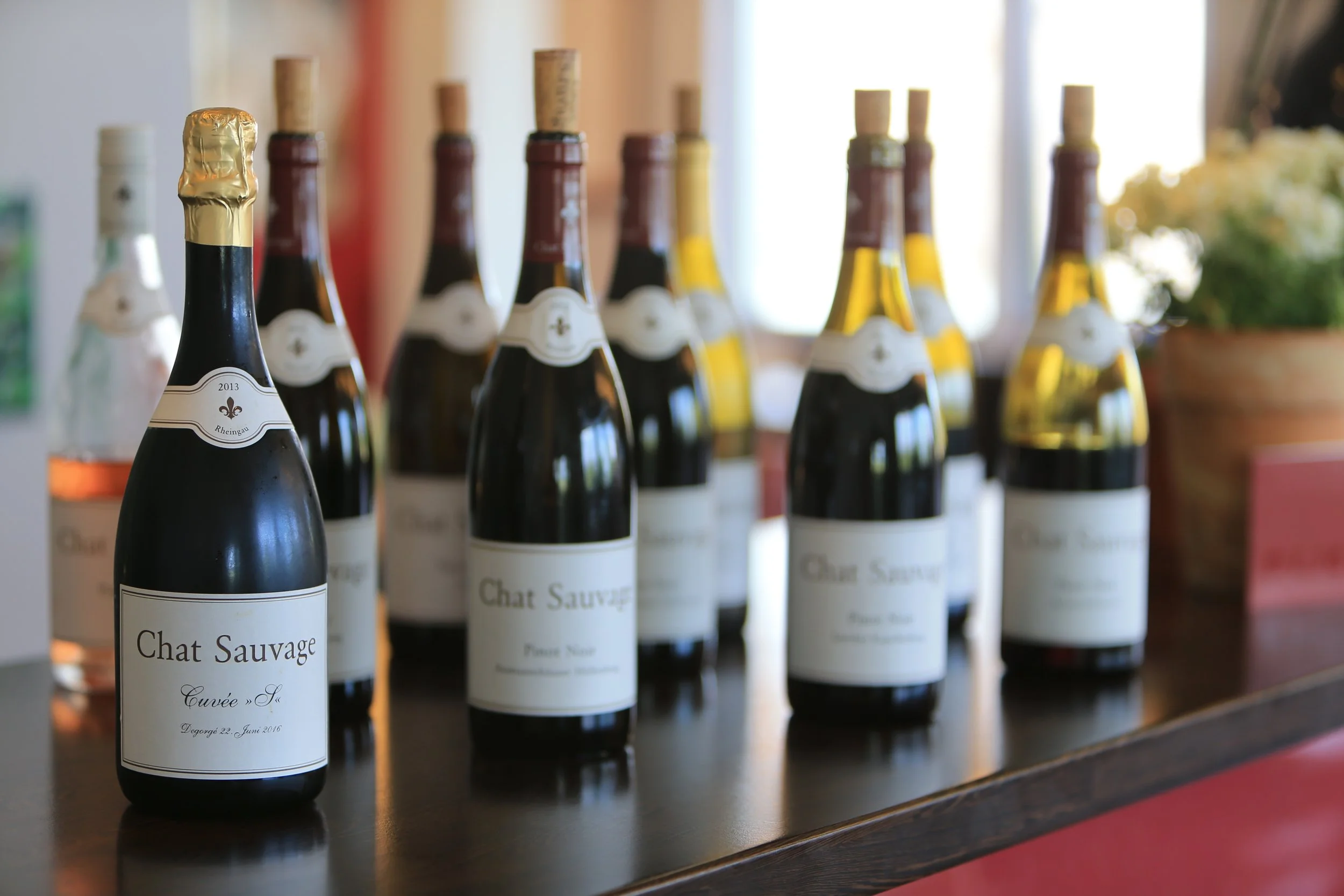
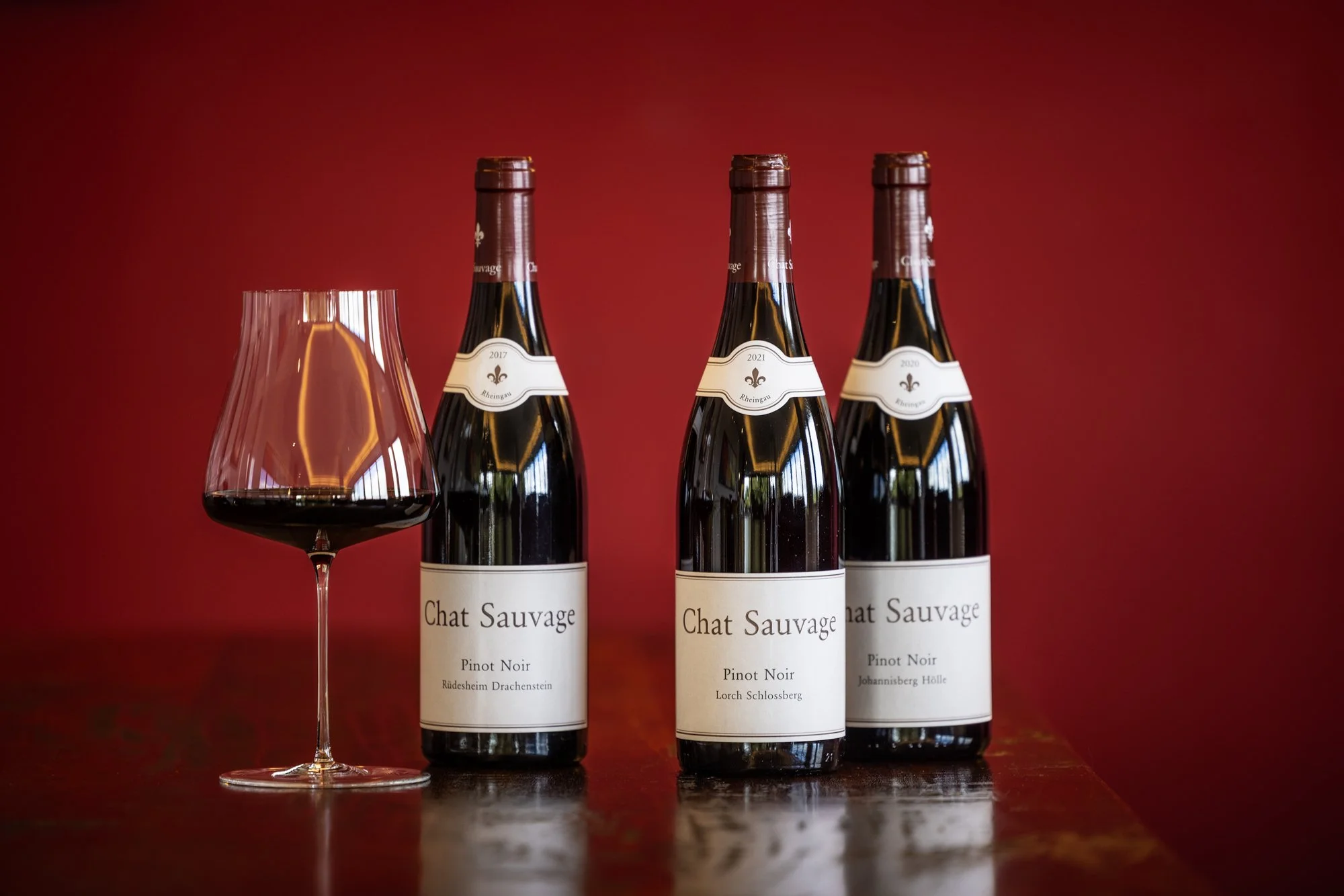
The winemaking draws consciously from Burgundian tradition: 228-litre French oak barrels, spontaneous fermentation with natural yeasts, no fining, minimal filtration. The Chardonnay spends around a year in barrel; the Pinot almost two. She blends wine from new and older barrels for the Chardonnay, so the oak supports without dominating. For the Pinot, she is chasing something precise.
"I want a Pinot that is strong but not too powerful. Elegant, with a fine tannin. The wood must support, never take over."
Climate change, she noted, has been an unexpected ally. The Rheingau's warming summers have proven well-suited to Pinot Noir — a grape that historically needed coaxing in this latitude but now finds itself at home.
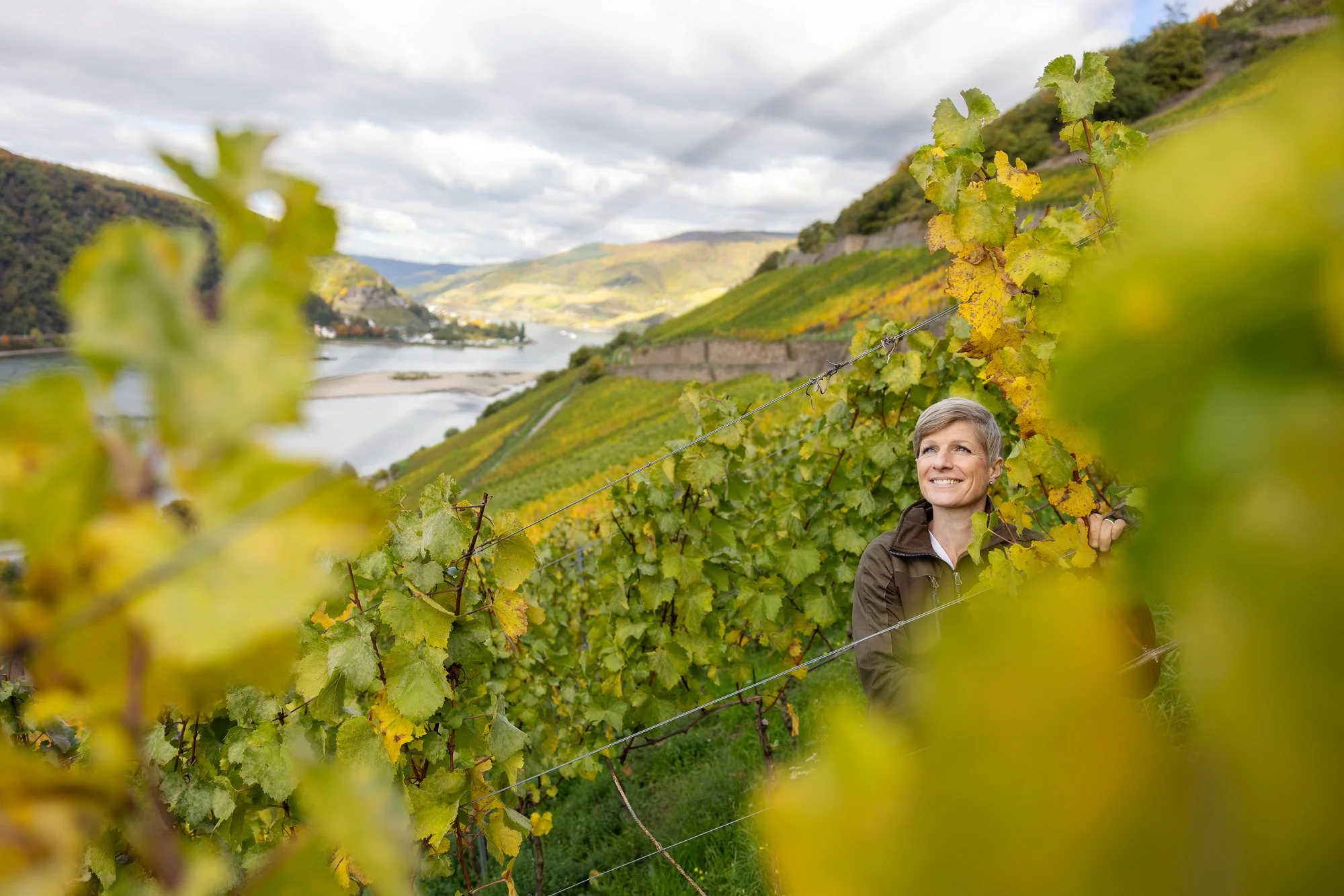
"I try to get as much of the vineyard as possible into the bottle. So that when you drink the wine, you feel that specific place. What the French call terroir. That is all I ask of the wine — to tell the truth about where it came from."
Reading the Vineyard
When I asked about ripeness decisions — the point at which analysis gives way to instinct — her answer was immediate.
"I look at sugar content first, as an indicator that harvest is approaching. But once we reach that threshold, I stop looking at numbers. Then it is only the sensory. My taste decides if we harvest or not."
The vineyards, she said, are the most important thing. Everything begins there. Asked to sum up her philosophy in a sentence, she chose the word terroir — and used it carefully.
"I try to get as much of the vineyard as possible into the bottle. So that when you drink the wine, you feel that specific place. What the French call terroir. That is all I ask of the wine — to tell the truth about where it came from."
It is a statement that would sit comfortably in almost any great winery in the world. But here, in a region where most of the great wines carry Riesling's particular fingerprint, it takes on a different texture. To say terroir in the Rheingau and reach for Pinot Noir is to make a claim — that this landscape has more than one story to tell.
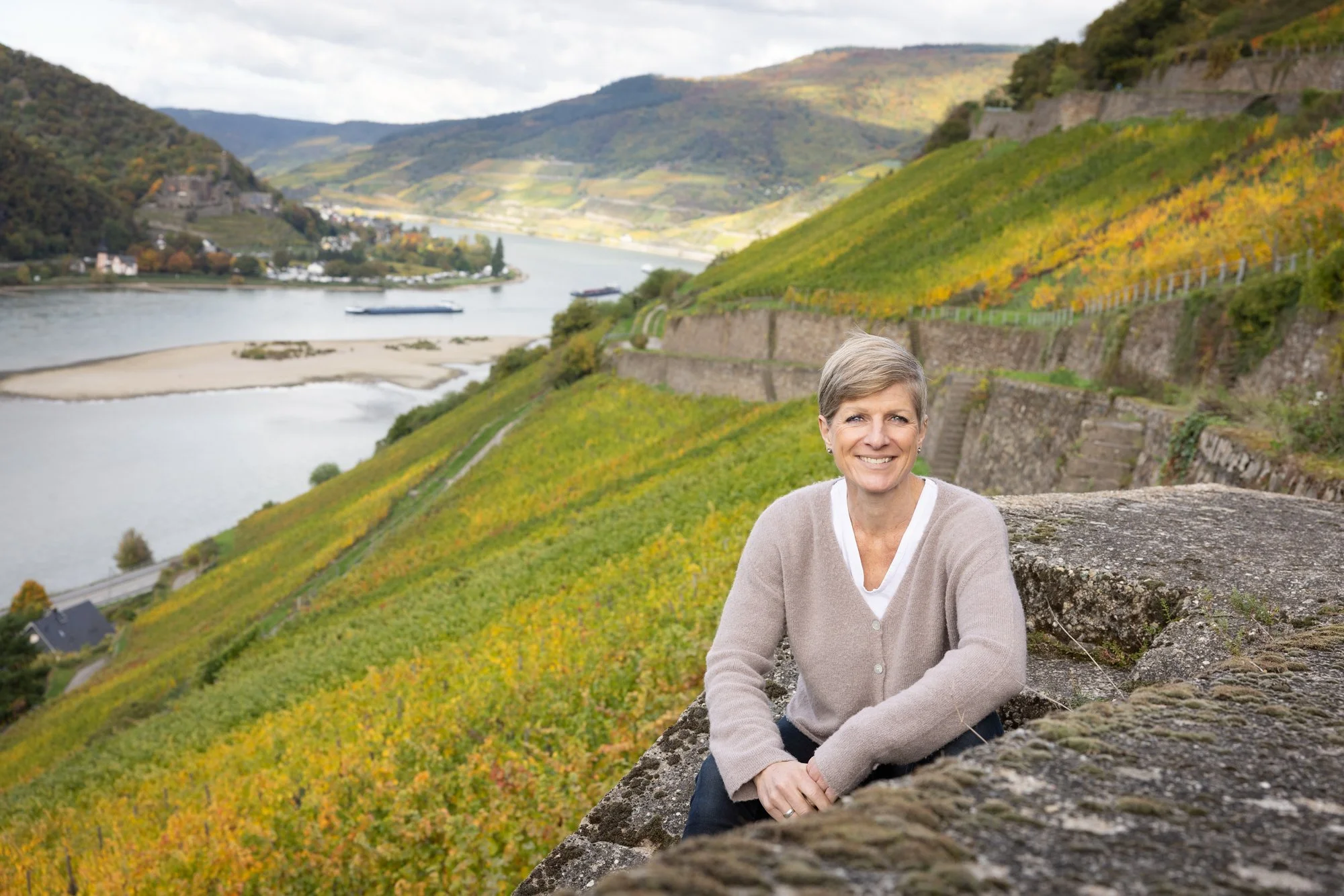
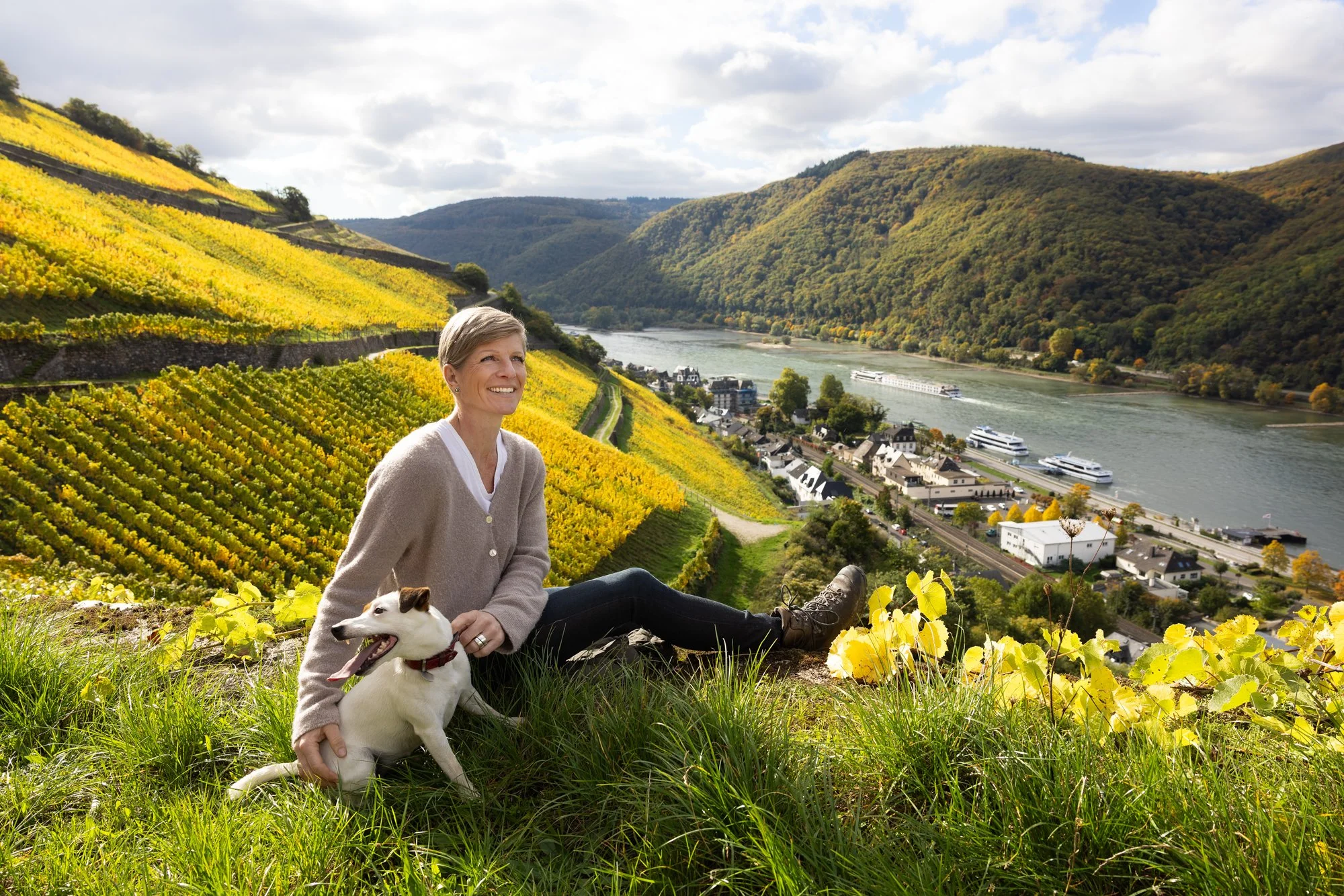
Verena Schöttle. Image: Chat Sauvage
One Wine to Know Chat Sauvage By
If you want to understand Chat Sauvage through a single bottle, she recommends the Rüdesheim Drachenstein — a single-vineyard Pinot Noir from one of the estate's most characterful sites.
"It is powerful, but also complex and elegant. It has depth. And it is a wonderful food wine — we are hunters here in Rheingau, so I love it with deer or wild boar. But it works equally well with slow-roasted lamb, braised meat, anything with herbal or spicy notes."
For serving: Burgundy glasses for both the Pinot and the Chardonnay. The Chardonnay at nine or ten degrees, not colder, and decanted — she does this herself at home. The Pinot at 16–17 degrees, with time. Open it, walk away, come back a few hours later.
"When our reds get a little air, they develop in a way you would not believe from the first pour."
Letting the Wine Speak
Near the end of our conversation, I asked whether Chat Sauvage — the name, the wild cat, the challenger spirit — shaped how she works in any concrete way.
"The vineyards are the most important thing. Everything starts there. If we do our work well outside — carefully, at the right time — then the wine will tell that story honestly."
She laughed.
"No, no. Chat Sauvage is just the name."
And maybe that is the most honest answer of all. The wines are not trying to be provocative. They are not making a statement about what the Rheingau should be. They are simply being made with great care, in a place that happens to suit them, by someone who found her home here and has no plans to leave.
When I asked what Verena Schöttle wanted Chat Sauvage to stand for — if she could be quoted in one line — she took a moment.
"The vineyards are the most important thing. Everything starts there. If we do our work well outside — carefully, at the right time — then the wine will tell that story honestly."
That is, in the end, what Chat Sauvage is: a small estate, quietly doing the work, letting the wine speak for itself.