Oliver Carr, Denmark’s Best Sommelier 2025: The Guest Is Always the Rock Star
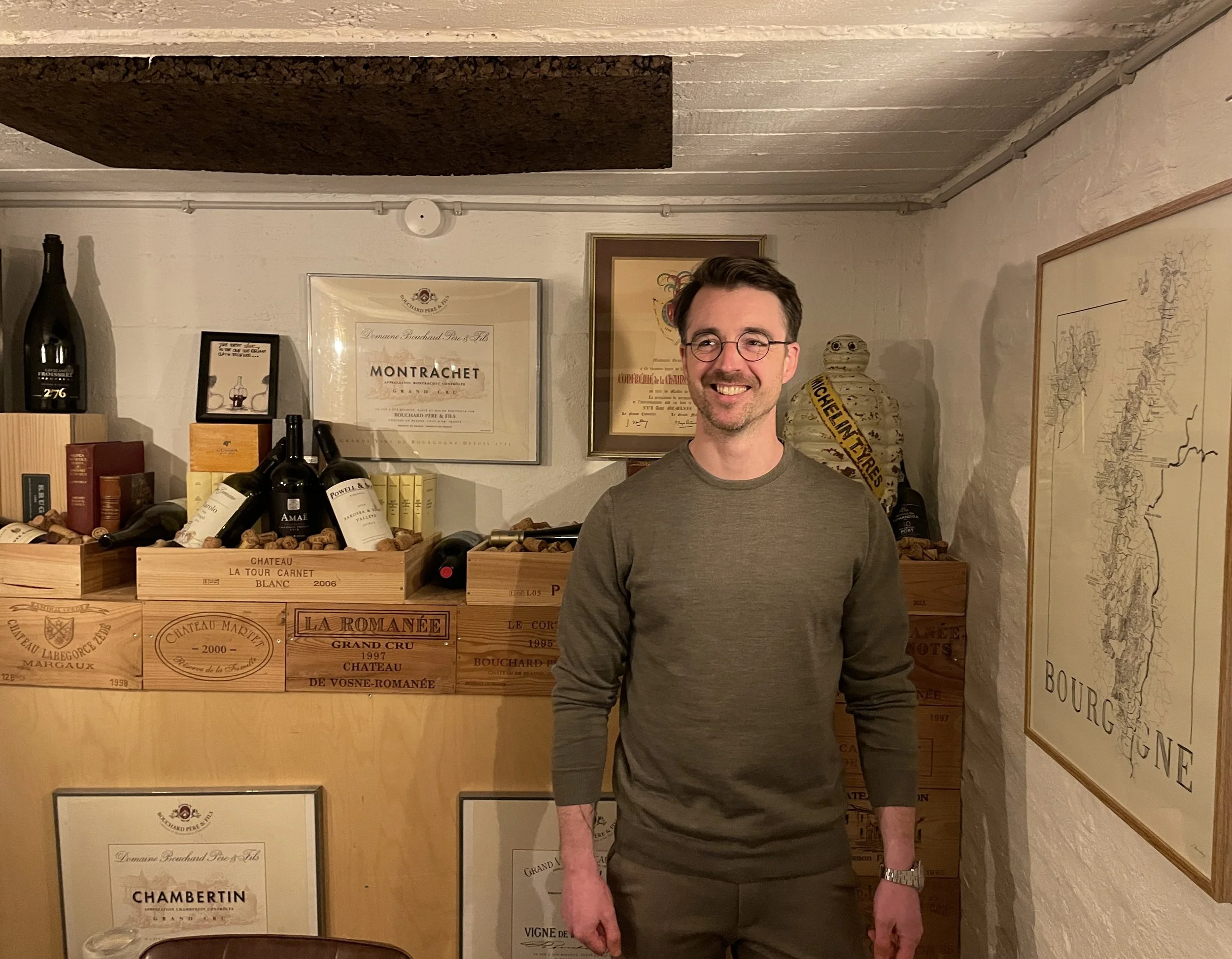
Oliver Carr. Image: Anne Køster
It is a cold, windy March day in Copenhagen, and Sydhavnens Vinbar is exactly the right place to meet Oliver Carr. He arrives to our conversation the way, I imagine, he arrives everywhere: relaxed, thoughtful, and with no apparent desire to be the centre of attention. He is Denmark’s Best Sommelier 2025 — a title he won at Moltkes Palæ on 8 September 2025, ahead of two very strong competitors — and yet the first thing he tells me is that he entered DM mostly as training for his Master Sommelier. I am soon to find out, that it is a very Oliver Carr kind of answer.
Oliver is originally from Wellington, New Zealand, grew up in a restaurant family, studied law and philosophy at university, worked in a vineyard in Central Otago, made wine in Barolo, and somehow ended up in Copenhagen just before Christmas 2017, following a tip from a friend that Jess Kildetoft might give him a job at MASH. He got the job. He met his wife. He got stuck in Denmark and now works at Vinova and occasionally at Barabba. And the rest, as they say, is history — or at least, a very good wine list.
We spoke at length about blind tasting, Instagram, Star Wars, and what it actually means to be a great sommelier. Almost none of it was what I expected.
From Law Books to Vineyard Boots
Oliver’s path to wine is one of those stories that sounds improbable until you hear how naturally it unfolded. His father owned restaurants and bars; Oliver grew up working in them. By his early twenties, he was a restaurant manager — good at it, comfortable in the role — and then he had a thought that changed everything.
“I thought, maybe I am too young to just be a restaurant manager for the next 50 years. So I looked at what I enjoyed the most. And at that time, that was the wine side of it.”
He enrolled in a postgraduate diploma in Viticulture and Oenology at Lincoln University in New Zealand, and spent a year working in the vineyard at Peregrine Wines in Central Otago. He loved it — and also quickly understood that it was not going to be his life.
“You’ll never forget how sore your back is when you’re picking and pruning. It gives you some humility. But I also wasn’t getting this wide exposure to wines anymore. And I wasn’t making enough money working on a vineyard to ever own one.”
After the season ended, a colleague asked if he wanted to stay for another year. Oliver had a different idea. He told them he was heading to Australia — Melbourne, warm restaurant, fancy French wines. The rest of them, he admitted with a grin, were going to be stuck in the vineyard.
"The role of a sommelier is: you are just a server who is an expert. We are servers and servants. The best sommelier, to me, is just the best waiter — someone who makes the guest feel at ease and happy, and who happens to know a bit about wine as well."
From Melbourne, he travelled to Europe, spent six months making wine in Barolo, and then a friend mentioned Copenhagen and Jess Kildetoft and MASH. He showed up. He got the job. Kildetoft’s exact words, as Oliver recalls them, were: “I don’t think you’re going to show up. But if you do, I’ll give you a job.”
The Sommelier Is Just a Very Good Waiter
I had prepared a question about how his viticulture background, his oenology studies, and his years of service connect for him today. His answer surprised me.
“The role of a sommelier is: you are just a server who is an expert. We are servers and servants. The best sommelier, to me, is just the best waiter — someone who makes the guest feel at ease and happy, and who happens to know a bit about wine as well.”
Sponsored banner from Østjysk Vinforsyning
This is not false modesty. It is, I think, a deeply considered position — and one that the vineyard years inform directly. When you have spent a season in the cold picking grapes, you do not take the wine lightly. And when you sit across from a guest who wrinkles their nose at a bottle someone worked very hard to make, you notice, Oliver explains.
“It is okay to say a wine is not for you. But to say a wine is bad or poorly made does a real disservice to someone who is very, very cold right now out there working.”
The scientific background — understanding carbonic maceration, barrel fermentation, the difference between whole-bunch and destemmed — matters, he says, but only as raw material for something else entirely.
“No matter how much happened before that moment at the table, it is only what the guest hears that is actually going to matter. You have to translate it in a way that makes sense for that guest. That means not too much jargon. Not too much science.”
“You want to be Obi-Wan Kenobi. They are Luke Skywalker. You advise, you serve, you guide. The guest is the rock star on the night. You are the one carrying the drums.”
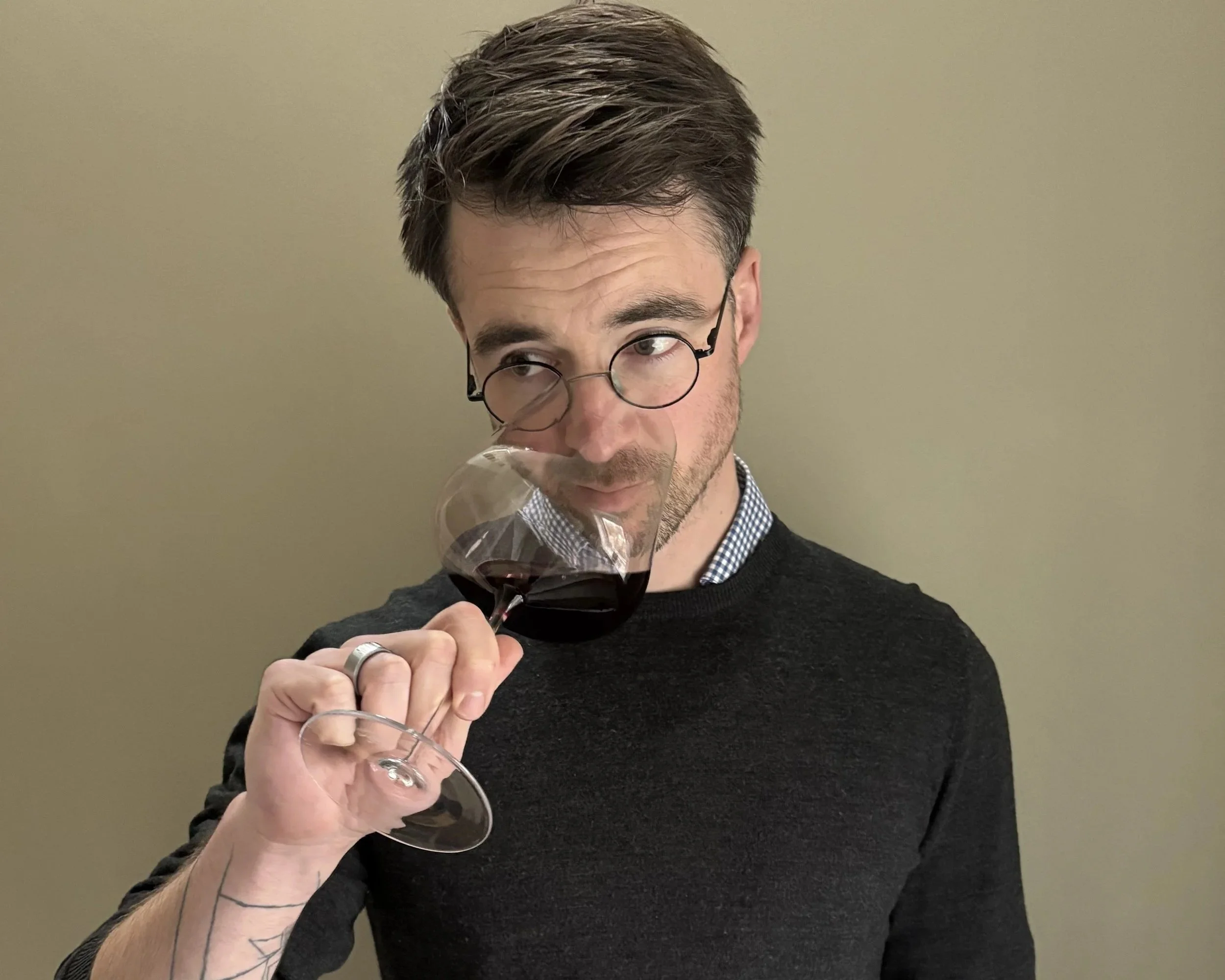
Oliver Carr. Image: Anne Køster
Why He Entered DM 2025
Oliver entered Denmark’s Sommelier Championship 2025 as a form of structured motivation. He was deep in preparation for his Master Sommelier exams — his third attempt — and wanted a reason to keep his service skills sharp in the months beforehand. DM, three months before the MS, seemed like a good deadline.
“This is going to sound horrible, but I entered because I wanted more practice at working on the floor. I wanted to make sure that while I was training for my MS, I was keeping my service at a really high standard.”
His preparation was characteristically practical. He adjusted his MS training schedule to make sure he did not miss too much. He bought a tray and a bottle basket and put them on the fireplace in his living room so he could practice classical service technique at home.
“I probably only did it ten times, but I really wanted to make sure I had some muscle memory. So that when I was on stage, I could focus on thinking.”
On the day of the final, he felt at ease — perhaps more than he should have. He saw his competitors on stage: Toke Fiedler Terkildsen and Thomas Vanhove, both formidable. He was impressed.
“What surprised me the most was winning. Those guys are really, really good.”
The Problem with Instagram
If there is one topic that clearly fires Oliver up, it is the homogenisation of wine culture — specifically what he sees as the flattening effect of social media on young sommeliers’ sense of taste and identity.
“If we are all learning about wine from what is getting the most likes on Instagram, you end up with a lot of sommeliers where it is very hard to tell what their personality is from reading their wine list.”
A great sommelier, he says, should have a wine list that tells you something about them — like a chef’s menu. You should be able to read it and think: I see what this person cares about. He cited Thomas Korby from “Mielcke & Hurtigkarl”, who won best sommelier at the Falstaff Awards the evening before our conversation, as an example: a phenomenal Portuguese section that no other restaurant in Copenhagen can match.
“Thomas Korby has a real personality, and it is reflected in the wine. That is what we need.”
"The first step that really improved my blind tasting was when I started writing down every incorrect call I made — and why I’d made it. I kept an Excel spreadsheet. After a while, you start to see the patterns. I have gotten this wrong five times. Okay. What do I need to change?"
His own personality, he told me, is strongly shaped by his origins. He loves the Loire, loves Australia and New Zealand, and is particularly enthusiastic about albaríno grown in New Zealand — a wine he describes as having a lovely saline quality, more structure than the Sauvignon Blanc the country is famous for, and almost no profile in Copenhagen yet.
“If I am in a restaurant and I get a chance to push someone towards a New Zealand or Australian wine — that is an experience that guest is really going to value. To hear the Kiwi guy talk about where he’s from, about the winemakers he has met. That is something I can give them that no one else can.”
Sponsored banner from Otto Suenson
How to Get Good at Blind Tasting
Oliver is known for his blind tasting, and I asked him how someone gets better at it. His answer was more analytical than I expected.
“The first step that really improved my blind tasting was when I started writing down every incorrect call I made — and why I’d made it. I kept an Excel spreadsheet. After a while, you start to see the patterns. I have gotten this wrong five times. Okay. What do I need to change?”
He still records every blind tasting session on audio, so he can listen back if he gets something wrong that surprises him. The goal is not to feel good about being close. It is to actually understand what happened and correct it.
“Sometimes it feels good to say: I know why I got it wrong. But you are not going to pass your exam on that. Try to be a little bit analytical. Coach yourself.”
His current blind tasting weak spots? Brunello versus Barolo. Albaríno for Sauvignon Blanc. He admits this without embarrassment. It is, after all, the pattern that matters — not the moment.
"If you keep entering competitions, keep studying, keep training — you are only going to keep going upwards. Enjoy it for what you get out of it, not for the prizes or the title."
Why You Should Enter DM
Oliver’s message to DSF members considering entering the competition is not what you might expect from Denmark’s best sommelier. He is not selling glory. He is selling the process.
“If you keep entering competitions, keep studying, keep training — you are only going to keep going upwards. Enjoy it for what you get out of it, not for the prizes or the title.”
He is equally direct about the importance of community. Isolation, he says, is the quiet enemy of good sommeliers — people who end up liking only the wines their head sommelier bought, or importers who have worked for the same company for twenty years and mostly drink their own wines. The antidote is getting out: tasting groups, competitions, turning up to importers’ events even when you have no particular reason to.
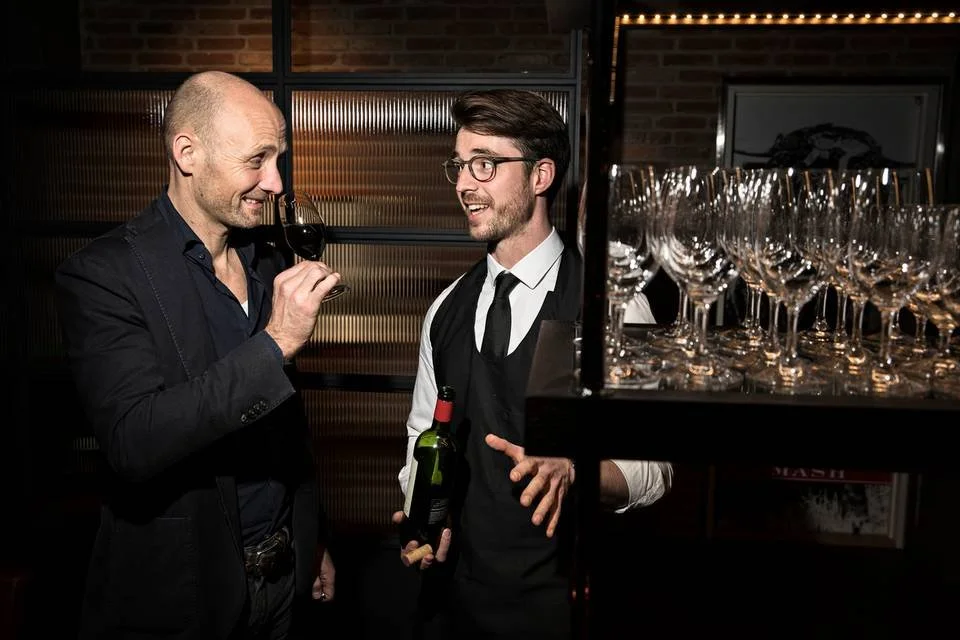
Jesper Boelskifte og Oliver Carr. Image: Oliver Carr
“You can easily become a little bit isolated. The DM is a really good way into the sommelier community here. And if you just sit back, it won’t just happen for you.”
He is currently preparing for his third MS attempt — the theory and tasting elements, in Austria — and is characteristically matter-of-fact about what passing it would mean.
“By the time I got to my first attempt, it was very clear that the MS wasn’t going to be career-defining necessarily. Your career is defined by the people you help, the value you add, the way you boost the industry. That is far more interesting than having the title.”
He paused.
“That said — when you’ve climbed all the way to the top of the mountain, it would be really nice to put the flag in.”