Nova Scotia: Maritime in Cool Climate Winemaking
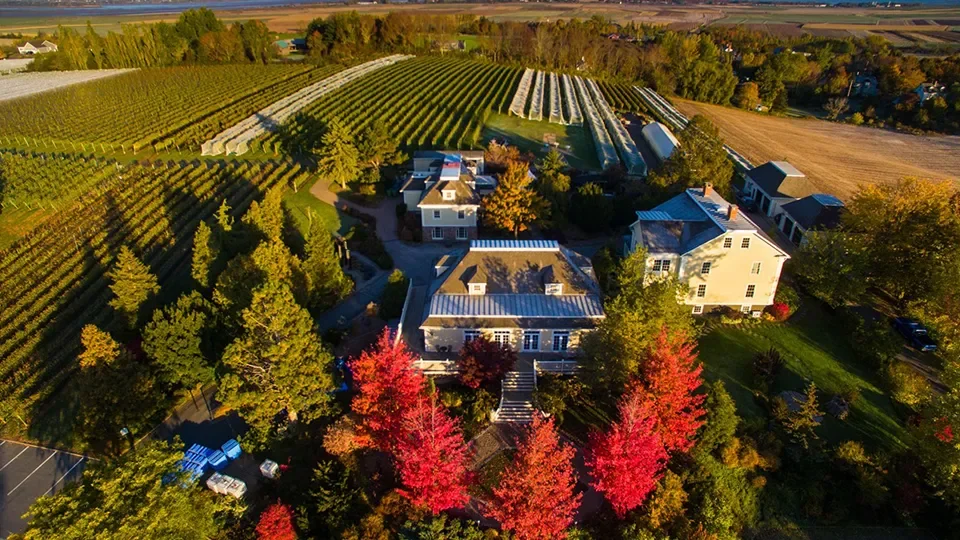
Founded in 1979, Domaine de Grand Pré is the oldest farm winery in Atlantic Canada. Image: Wine Growers Nova Scotia
I find it interesting when people go against what seems impossible. Nova Scotia, on Canada’s Atlantic coast, is one of those places. It lies far north, shaped by the sea and by a community of growers determined to turn a cool, windy climate into an advantage.
Reading about the region and tasting wines at an event organized by Wine Growers Nova Scotia at the Canadian Embassy earlier this year, I found clear parallels to other cool-climate areas such as England and Denmark. The same challenges: short seasons, frost risk, and unpredictable weather have shaped very different but equally innovative wine identities. Therefore, I wanted to look at Nova Scotia through the lens of cool-climate winemaking and make a small comparison with Denmark and England.
Climate and Latitude
Nova Scotia sits around the 45th parallel north, roughly the same latitude as parts of northern Italy, but its growing conditions are closer to England or southern Scandinavia.
The region’s uniqueness comes from its strong maritime influence. The Bay of Fundy, famous for the world’s highest tides, and the nearby Atlantic Ocean act as temperature regulators. They soften winter cold, delay spring frost, and help grapes ripen late into autumn.
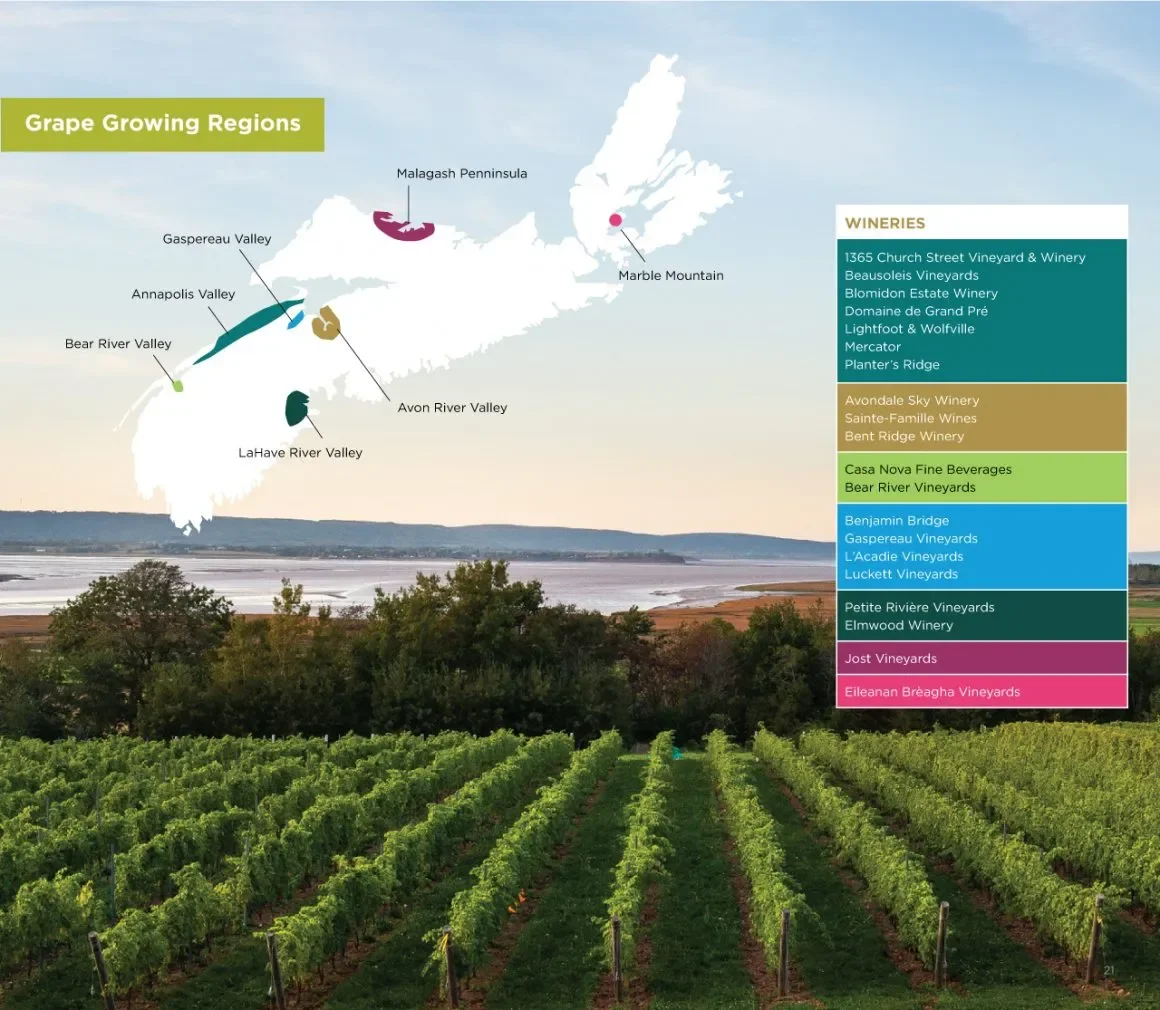
The vineyards are never far from the sea, none more than 20 kilometers from the coast. This gives Nova Scotia wines a bright, fresh character with clean acidity and a subtle maritime note.
Where Denmark has colder, more continental winters and a shorter growing season, Nova Scotia benefits from warmer autumns that allow grapes to hang longer on the vine. England’s vineyards, by contrast, rely on the warming influence of the Gulf Stream but still face frequent rainfall during harvest. Each of these northern regions has learned to work with, not against, their climates. High natural acidity, low alcohol, and pure aromatics have become a shared foundation.
"When 80% of the world’s wines are made from the same 20 grapes, we choose to be different."
Grape Varieties and Adaptation
Because of its northern position, Nova Scotia’s growers rely on both hybrid and vinifera grapes. The leading variety is L’Acadie Blanc, a Canadian hybrid developed for cold conditions, followed by Seyval Blanc, Vidal and Geisenheim. These hybrids ripen even in cooler years, maintain acidity, and resist disease.
At the same time, Nova Scotia has gradually introduced classic varieties such as Chardonnay, Pinot Noir and Riesling, especially for sparkling wines. These grapes perform well in warmer vintages and mirror the development in England, where Champagne varieties now dominate plantings.
Nova Scotia sits between the Danish and English models: experimental like Denmark but increasingly confident in traditional varieties as the climate and experience allow. Its hybrids have gained a regional identity of their own. L’Acadie Blanc in particular has become a symbol of Nova Scotia’s adaptability, used for both still and sparkling wines.
Signature Styles: Tidal Bay and Sparkling Wine
Nova Scotia has defined its identity through Tidal Bay, a regional white blend created to show the freshness of its cool climate.
To be labeled Tidal Bay, a wine must be:
100% grown in Nova Scotia
Made from approved white varieties such as L’Acadie Blanc, Seyval Blanc, Vidal and Geisenheim
Under 11% alcohol
Certified by an independent tasting panel
The result is a light, crisp, aromatic white wine with high acidity and modest alcohol. Each winery can create its own interpretation, but all share a core style of citrus fruit, green apple, and minerality.
Nova Scotia also produces traditional-method sparkling wines often from hybrids such as L’Acadie but also from more classic blends such as Chardonnay, Pinot Noir and Pinot Meunier. Several producers age their wines on the lees for five years or more, building texture and autolytic complexity. The region’s naturally high acidity gives these wines a firm, clean, and slightly saline profile.
Collaborative mindset
One of the most interesting aspects of Nova Scotia is its collaborative mindset. I even asked about it during the tasting earlier this year, as I found it impressive that they managed to create an umbrella organization that includes all wineries. The industry is small, with fewer than 25 producers, but they work closely together through Wine Growers Nova Scotia.
They created Tidal Bay collectively, agreeing on production rules and tasting panels to ensure consistency. This kind of cooperation is rare in young regions and resembles the structured approach of European appellations.
In contrast, English estates usually define their own house styles and compete in the premium sparkling category, emphasizing brand and terroir individuality(Editor’s note: Please correct me if I’m wrong. I’m aware of the national body WineGB, but their go-to-market approach seems a bit different. Neither model is better, just two ways of building a wine identity.)
Sustainability is also central to the philosophy. Some wineries, such as L’Acadie Vineyards and Lightfoot & Wolfville, are certified organic or biodynamic. The cool climate supports low-intervention farming, as pest pressure is low. Similarly, Denmark’s use of disease-resistant hybrids reduces chemical treatments.
Challenges and Progress
Cool-climate winemaking always comes with risk. In Nova Scotia, winter injury, short growing seasons, and spring frost are constant concerns. The same is true in England and Denmark, where frost fans, windbreaks, and careful canopy management are routine. Humidity brings disease pressure, though hybrid varieties reduce the need for heavy spraying.
These challenges have led to innovation. Nova Scotia’s growers experiment with canopy techniques, clonal selection, and precise site choice to capture heat and sunlight. The small scale of the industry allows for quick adaptation, something some of the larger regions struggle with.
This flexibility is similar to Denmark’s approach, where producers frequently test new resistant varieties.
Climate change has also played a role. Slightly warmer seasons now allow more consistent ripening for vinifera grapes such as Chardonnay and Pinot Noir, supporting a move toward higher-end sparkling production. England has seen the same development, moving from curiosity to serious contender within two decades.
Tasting and Pairing Perspective
From a tasting point of view, Nova Scotia wines share traits with other northern styles:
Acidity: Always high, forming the backbone of both still and sparkling wines.
Aromatics: Bright citrus, green apple, floral, and herbal notes.
Texture: Lean and often bone-dry, with a clean, mineral lift.
Their persona offer an alternative to classic European whites. For sparkling service, positioning them alongside English or high-acid Champagnes makes sense. For still wines comparing Tidal Bay to Muscadet or Vinho Verde gives guests a clear reference.
Nova Scotia may be small, but it reflects the global momentum of cool-climate winemaking. Its wines are shaped by the same forces that define England’s fizz and Denmark’s experimental whites: cold air, patient ripening and precision in the cellar.
For sommeliers the region offers lessons in adaptability and cooperation. The creation of Tidal Bay shows how a young industry can define its own standards and protect regional identity from the start. Its sparkling wines prove that quality is not limited by geography but guided by understanding and discipline.
Comparing Nova Scotia to other northern producers, whether from Kent, Jutland, or the Bay of Fundy, shows that cool climate is a style in itself.
"The Nova Scotia wine industry is made up of farm wineries and vineyards that are family-run businesses that have chosen farming and winemaking as their passion and profession."