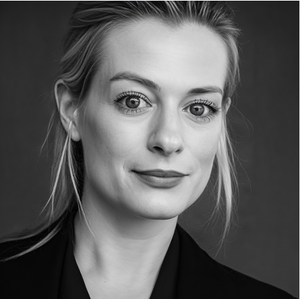
Michael Rønne Sørensen: From Trying Everything to Finding Wine
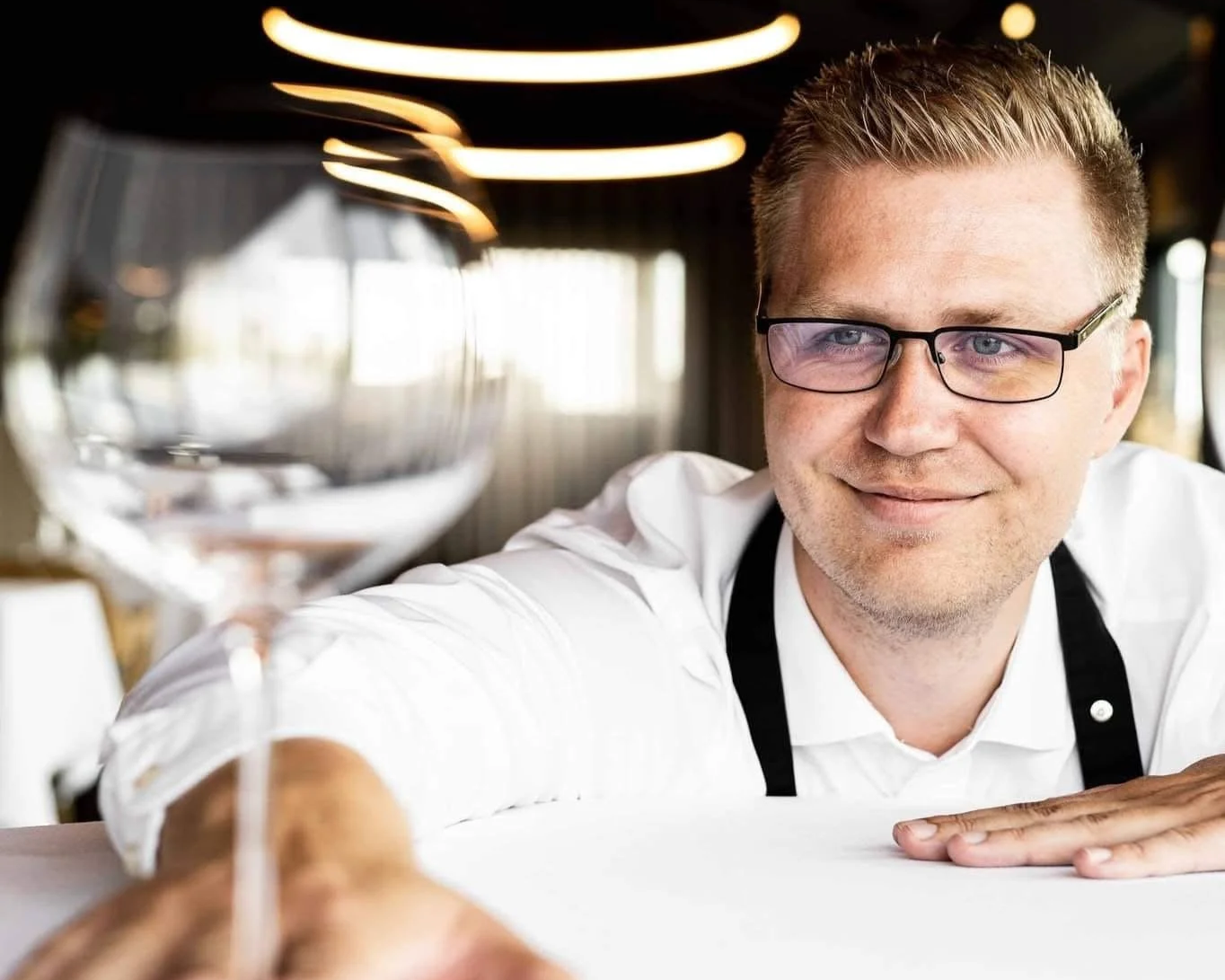
Michael Rønne Sørensen. Image: Michael Rønne Sørensen
Third place at the Danish Sommelier Championship, ASI bootcamp experience, and a clear philosophy on service. Michael Rønne Sørensen shares his approach to wine competition and the long game of becoming a better sommelier.
I first reached out to Michael Rønne Sørensen on Instagram. Only later did I realise he had deleted the app from his phone. We ended up connecting on Facebook instead, and as he informed me, Instagram had ended up taking too much of his time. There is something about Michael that seems to resist unnecessary noise. When we finally sat down over Zoom, he was in Northern Jutland, expecting his second child, and with no immediate plans of travelling to Copenhagen. He comes across as direct, honest and without decoration (in a positive way).
Not the Obvious Path
Michael does not present himself as someone who was always meant to work with wine. Quite the opposite. His story begins with trying and failing at most things. He describes moving through basketball, football, and handball without much success, laughing at how “everything with a ball” simply never worked for him. But what stayed with him was not the failure itself. It was the mindset that came with it. “I like competing,” he says, “but I’m more into self-development than actually winning.”
After dropping out of both business school and high school, he found his way into the restaurant world through his mother’s work and a fascination with what he saw on television. “I watched Gordon Ramsay in the kitchen and thought it looked fun.”
"I drink all wine. I don’t enjoy all wine, but I drink all wine."
The kitchen gave him structure, rhythm and for the first time, a sense that something might fit. But the reality of the work slowly revealed itself.
“You make beautiful dishes, but you don’t have time. You have to be quick. And I realised I wasn’t actually that good at that part.”
The shift came not from cooking, but from stepping out of the kitchen. “I started helping on the floor… and I loved it.”
When Wine Finally Made Sense
Wine was not the entry point. At first, it was something to memorise. Descriptions learned like lines in a script. “I could say everything, but I didn’t actually know what I was saying.” That changed during his training. “For the first time in my life, I could read something, understand it and it stayed with me.” That moment still defines how he approaches wine today. “When you’ve been bad at everything, and suddenly there’s something you’re really good at, you go all in.”
From there, his perspective on wine shifted. “I used to think: this I like, this I don’t like. Now it’s more like, why don’t I like it?”
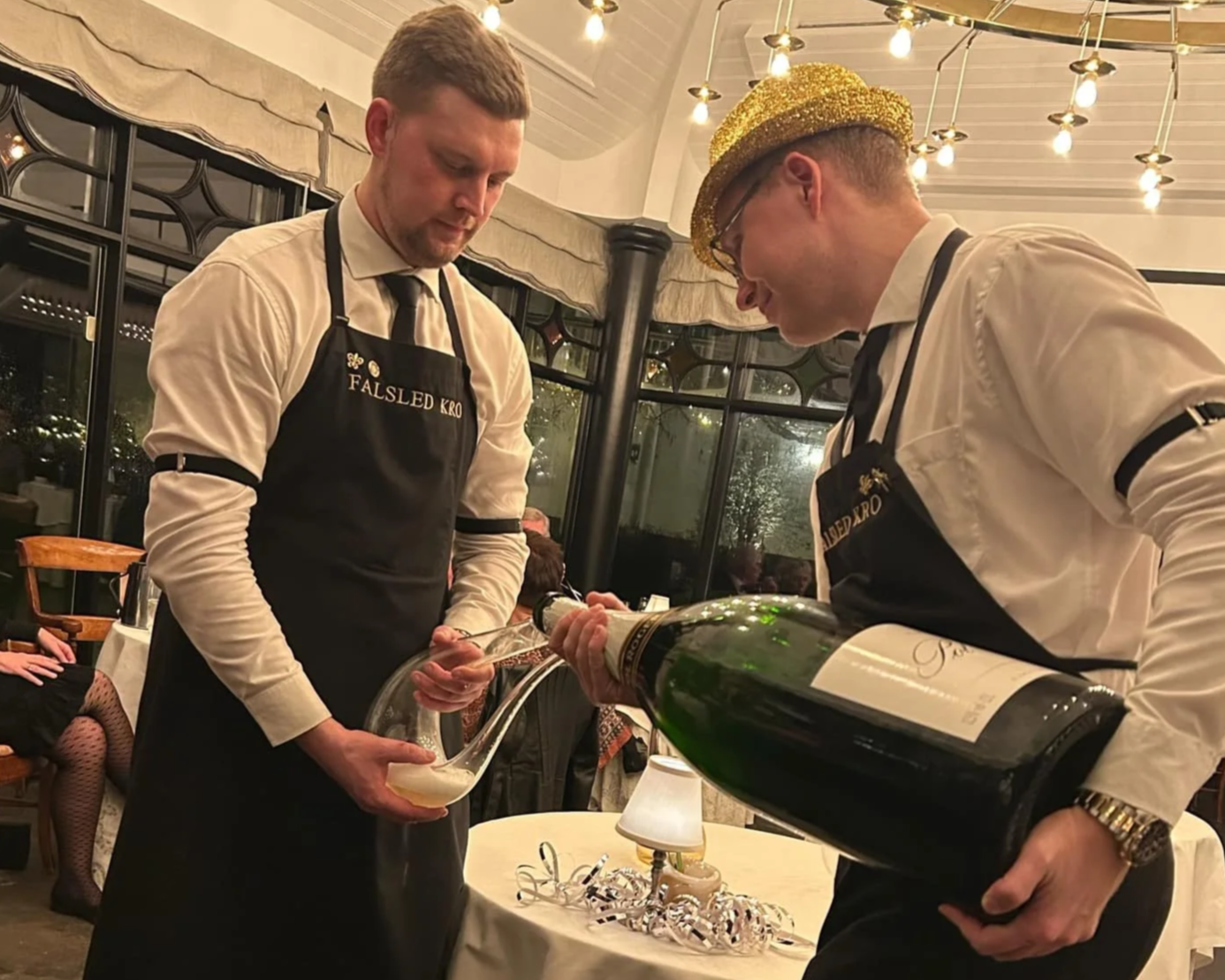
Michael at Falsed Kro. Image: Michael Rønne Sørensen
“I drink all wine. I don’t enjoy all wine, but I drink all wine.” It’s not about preference anymore. It’s about understanding.
Choosing the Sommelier Path
Like many in Denmark, he moved into a restaurant manager role early on, not out of ambition but necessity. “If you want to have something to say about the wine list, you have to be the restaurant manager.” But the role never fit. “I’m not a restaurant manager. I’m a sommelier.”
A key chapter came at Falsled Kro, where he stepped into a more ambitious environment. At the same time, he had just become a father. The role required him to be away from home for days at a time. It worked, but only for a while.
Eventually, he returned to Jutland and his current role at HimmerLand, where he could continue working at a high level while staying present with his family. That balance is not theoretical. A hip injury at one point forced him out of the industry entirely. “It was a really dark time. I didn’t know what else to do.”
Competing to Learn
Michael placed third at the Danish Sommelier Championship in 2024 and has participated in the ASI bootcamp. But he does not speak about competition as a way to win. “If your goal is just the prize, you’re doing it wrong.”
Instead, he sees it as a tool. “If I can perform under that pressure, how easy is it to perform at work?” He describes opening a competition paper and immediately realising what he doesn’t know. “That’s where you learn.” Even the smallest details become part of that process. “If you can pour eight equal glasses under pressure, you can do it anywhere.” And that’s his whole point: “It’s okay to fail as long as you learn from it.”
What Pressure Reveals
Listening to Michael talk about competition, it becomes clear that what interests him is not the format itself but what it exposes. Because beyond the theory, the memorisation and the preparation, there is a moment where none of that quite behaves the way it should. You sit down. You open the paper. And suddenly, the familiar feels unfamiliar. “What is this?” he remembers thinking. “I didn’t even think about that.” It is a simple reaction, but it says everything about the nature of pressure.
Sponsored banner from Copenhagen Sparkling Tea
The same happens on stage. Tasks that feel automatic in daily service, pouring, presenting, speaking, shift under observation. The body reacts differently and the mind hesitates. “You can shake when you pour champagne,” he says. “Even if you never do that at work.”
And that is exactly the point. Because if you learn to operate in competitions with an audience where control is slightly out of reach, everything else becomes easier. There is a transfer that happens. From stage to service. From pressure to presence. In that sense, competition is not separate from the job. It is a concentrated version of it.
Reading the Room
At one point in our conversation, we touch on something that sits at the core of service but is rarely articulated directly. How quickly you have to understand the people in front of you. Michael mentions a lesson he once heard early on, that every guest should be treated the same. At the time, it sounded right. Fair, even. Today, he completely disagrees. “Everyone should have a great experience,” he says. “But that doesn’t mean treating everyone the same.”
It is a subtle distinction, but an important one. Because what defines a great experience is not consistency, it is relevance. And relevance requires reading the room. It happens in seconds. The way someone walks in. The way they sit down. The energy at the table. Whether they are celebrating, relaxing, or simply passing through.
"When you find something you’re actually good at, you go all in."
As sommeliers, we don’t talk about it much, but we all do it. That immediate calibration. Adjusting tone, pace, level of detail. Deciding whether to lean into storytelling or step back. Whether to guide or simply facilitate. Michael doesn’t describe it as a technique. More as something you grow into.
Ambition, on His Own Terms
On the floor, his style is simple. When I ask him how he describes his style, he says: “Down to earth.” He focuses less on tasting notes and more on story. “The guest can taste the wine. That’s not the important part.” Instead, he creates context and, whenever possible, introduces something unexpected. “If they leave thinking, ‘I’ve never heard of this, but it was amazing,’ then you’ve given them something more.”
Looking ahead, his ambitions remain, but with clear boundaries. Becoming a Master Sommelier is still a goal. “I don’t want to sign up unless I can fully commit.” Outside of wine, he allows himself to be something else entirely. Gaming, tabletop role-playing, Magic: The Gathering.
“I used to hide it,” thinking it was a bit too nerdy, but now, “I think it’s important to be who you are.” Spending time with Michael, what stands out is not just his ambition but his consistency.
Across everything, the same principles repeat:
- development over recognition
- curiosity over comfort
- honesty over performance
or, as he says himself: “When you find something you’re actually good at, you go all in.”