G.D. Vajra: Barolo 2022, A Vintage Shaped by Decisions
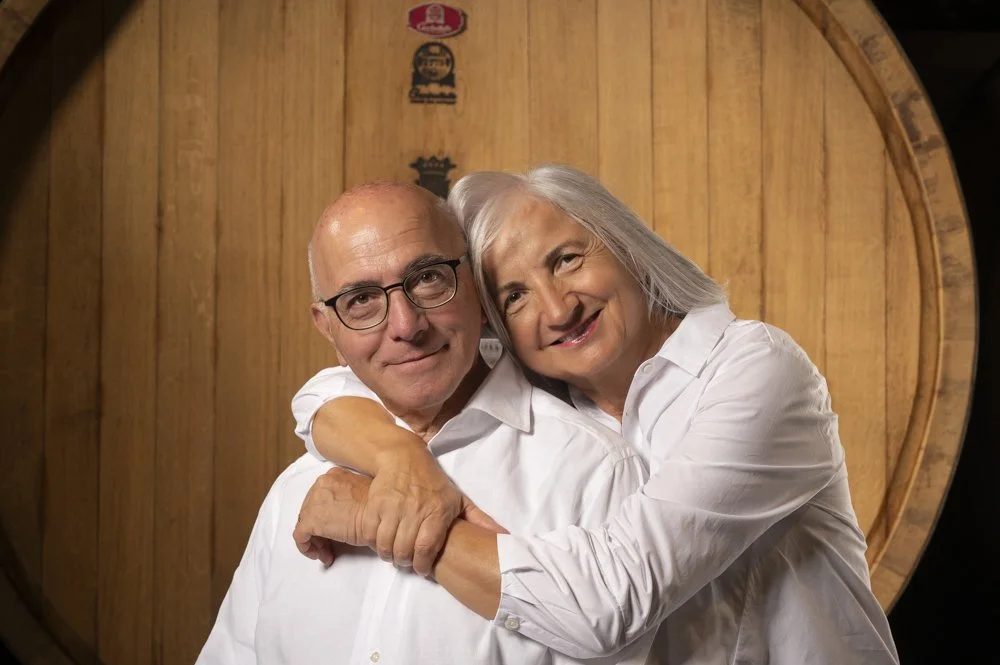
Aldo and Milena Vaira. Image: Matthew Molchen
The 2022 vintage in Barolo has already earned a reputation. Warm temperatures, drought, and difficult decisions in both vineyard and cellar have led many to describe it as a challenging year. But at G.D. Vajra, the conversation began elsewhere. Not with what went wrong, but with how growers respond when conditions become demanding. As Giuseppe Vaira put it: “When something is difficult, you do not reject it. You double down on your care.”
I visited G.D. Vajra about a year and a half ago during a trip to Piemonte with my sister. What stayed with me was the warmth of the welcome and the calm, generous atmosphere that seemed to define the place.
On a personal sidenote, I have always been drawn to Marc Chagall. One of my earliest childhood books was filled with his works, something my parents would almost use as a picture book when I was very young. So encountering the colourful stained glass windows at the winery, created by Father Costantino, felt unexpectedly special.
As the estate explains, the connection came from a wish to commission Chagall himself. When that was no longer possible, Father Costantino became the one to carry the vision forward.
But Today, the Focus is Elsewhere: the 2022 Vintage in Barolo
A year already described by many as difficult. Yet when Giuseppe Vaira, representing the next generation at G.D. Vajra, introduced the wines, he did not begin by outlining the challenges. Instead, he chose a different starting point.
“I think there is a concept we need to rethink when we talk about difficult vintages,” he said. “When something is difficult, you do not reject it. You double down on your care.”
The story of 2022 began before the growing season had even started. Giuseppe referred to an old saying, something that sits somewhere between folklore and experience. If there is a full moon on Christmas night, expect drought. On Christmas 2021, there was a full moon.
“It is not something you can prove. But it is something you can choose to act upon and at G.D. Vajra, they chose to prepare.”
Pruning was delayed as long as possible, stretching into the very end of February. It is a risky decision. The later you prune, the later the vines wake up, which can be beneficial in warm vintages, but it also compresses the working window. At the same time, they avoided leaf removal and topping, allowing the canopy to protect the fruit rather than expose it. Even the cover crops were managed differently, kept low to avoid unnecessary competition for water.
Slow Things Down, Protect the Vine, Do Less but Do it Precisely
The growing season confirmed their concerns. It was dry and it was warm. Harvest started early, already in mid-August. But something shifted towards the end of the summer. Temperatures dropped, especially at night and the conditions for Nebbiolo began to improve. Despite the early start, most of the Nebbiolo was picked in October, almost in line with the previous vintage.
For Giuseppe, this was one of the key successes of the year. Not that the conditions were easy, but that they had managed to guide the vines back into a more balanced rhythm.
"When something is difficult, you do not reject it. You double down on your care."
If the work in the vineyard was about restraint, the work in the cellar was about clarity. The approach did not change dramatically, but the level of precision did. Giuseppe described their thinking through a simple image. If you are about to take a long flight, you want the plane to have strong wings. In their case those wings are long macerations.
The wines underwent extended skin contact using submerged cap fermentation, a method deeply rooted in Piedmontese tradition. It allows for extraction to continue beyond fermentation, building structure while protecting the wine from oxidation. But in a vintage like 2022, this only works if the fruit is perfectly clean.
That meant strict sorting,they removed nearly all sunburned berries before fermentation. What sounds like a small adjustment becomes something else entirely when you see the volume of fruit that never makes it into the tank. One berry at a time turns into piles. But it also changes the quality of what remains.
With clean fruit they could extend maceration without fear. The wines could develop structure without picking up harshness. It is a small detail, but it carries weight.
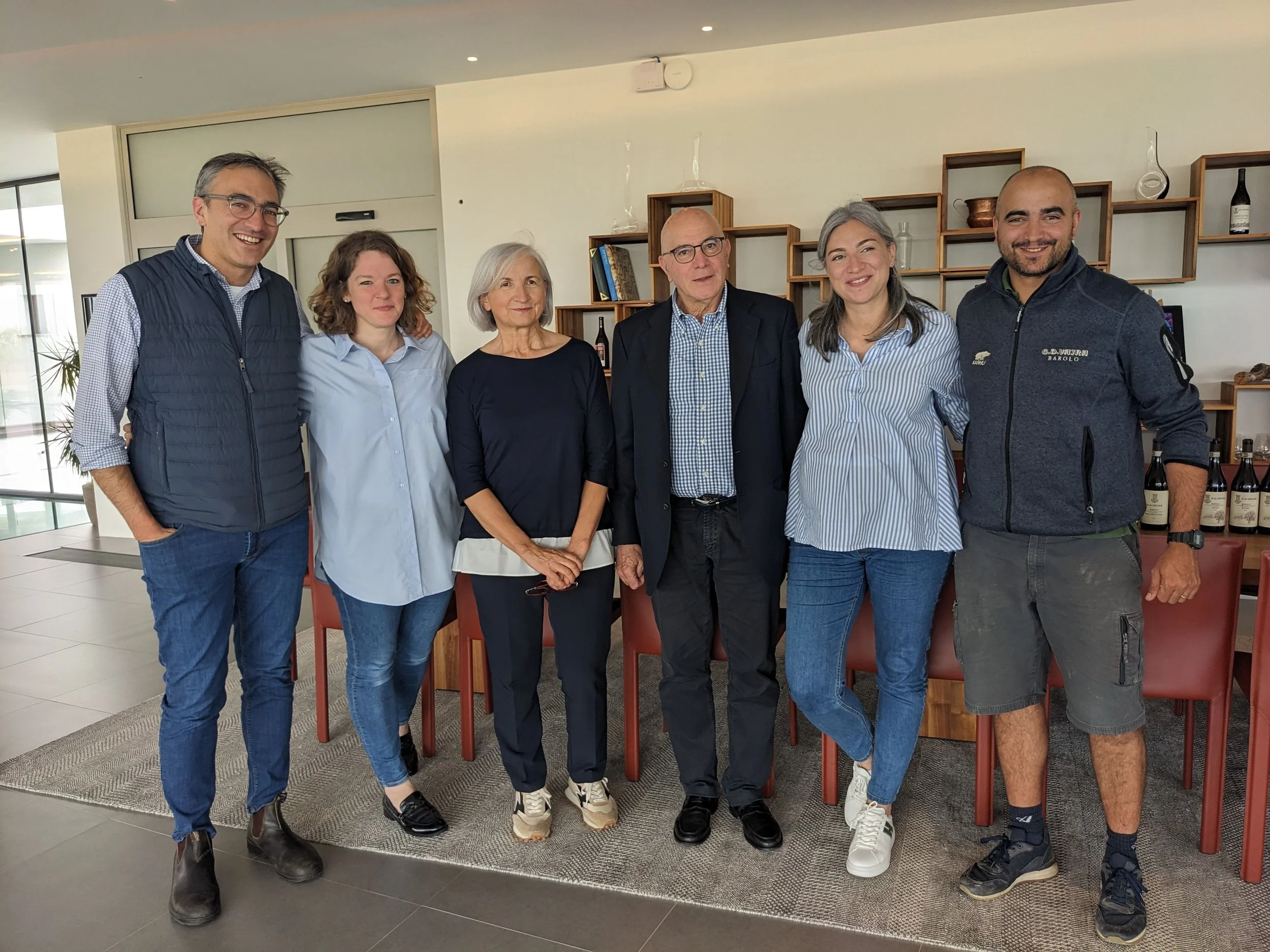
Vaira Family. Image: G.D. Vajra
The most defining decision, however, came later. After fermentation, when it was time to think about aging.
In a warm vintage, there is often a temptation to build more structure, to give the wines longer time in cask to add depth and breadth. Giuseppe described it as a choice between making the wines broader and more open or keeping them tighter and fresher.
They Chose Freshness
All the Barolos from 2022 were aged for 22 months in large Slavonian casks. Slightly shorter than usual. The intention was not to simplify the wines, but to preserve a certain energy. A sense of crunchiness, as he called it. Something that keeps the wines alive rather than weighing them down.
As we moved into the tasting, beginning with Barolo Albe 2022, it became clear what he meant. Albe is often introduced as an entry point to Barolo, a blend of vineyards that offers accessibility. But Giuseppe spoke about it differently. For him, it is a reflection of tradition. Not in a nostalgic sense, but in the way different sites come together to create harmony.
He told a story from his childhood. Watching his parents open a second bottle of Barolo from the same producer within a few days. In their house that was unusual. Dinner was a time to explore new wines, not repeat them. When he asked why they made an exception, the answer was simple: Look at the level in the bottle, it is empty!
That was the lesson. Not about prestige or rarity but about drinkability.: about a Barolo that invites you back for another glass without losing its complexity.
That Idea Runs Through the 2022 Vintage
At one point, someone asked which vintage it could be compared to. Giuseppe mentioned 2015, almost reluctantly. Not because they are identical, but because of a shared openness. The aromatics are expressive, the wines are approachable, and there is a certain generosity that shows early. But he was careful not to push the comparison too far. The more you try to compare vintages, the more you realise how individual they are.
Sponsored banner from H. J. Hansen
The more important question was about aging. Whether 2022 would be a long distance runner?
Compared to vintages like 2019 or 2021, which carry more structure and tension, 2022 feels more immediate. That does not make it weaker. It simply shifts the window.
“I think the strength of this vintage will be how well it runs in the first part of its life,” he said.
There is a generosity to the wines. A sense of openness that makes them enjoyable early, even if they will still evolve over time. He described it as a vintage that smiles.
That impression carried through the rest of the tasting. Across vineyards, across styles, there was a consistent thread. Balance, not built through power, but through decisions. Through small adjustments in the vineyard, careful selection in the cellar, and a willingness to adapt rather than follow a fixed recipe.
Yields were lower, roughly twenty percent down compared to 2021. That was expected. Drought, stricter sorting, and green harvesting all played a role. But the reduction in volume seemed less important than the increase in precision.
Towards the end, Giuseppe stepped back from the details and reflected on something broader. On what it means to farm in a time where vintages are becoming less predictable.
“If you look at the history of agriculture,” he said, “people stopped being hunters and became farmers. And in farming you don’t run away. You stay.”
FACT BOX
Founded 1972 by Aldo Vaira
Family-run Now led by Giuseppe Vaira and siblings
Farming Early adopters of organic viticulture in Barolo
Style Traditional approach with long maceration and large Slavonian casks
Focus Balance, freshness and vineyard expression over power
Key sites Bricco delle Viole, Ravera, Coste di Rosa, plus blends in Barolo Albe