Inside La Sapata: Low-Intervention Wines from Dobrogea, Romania
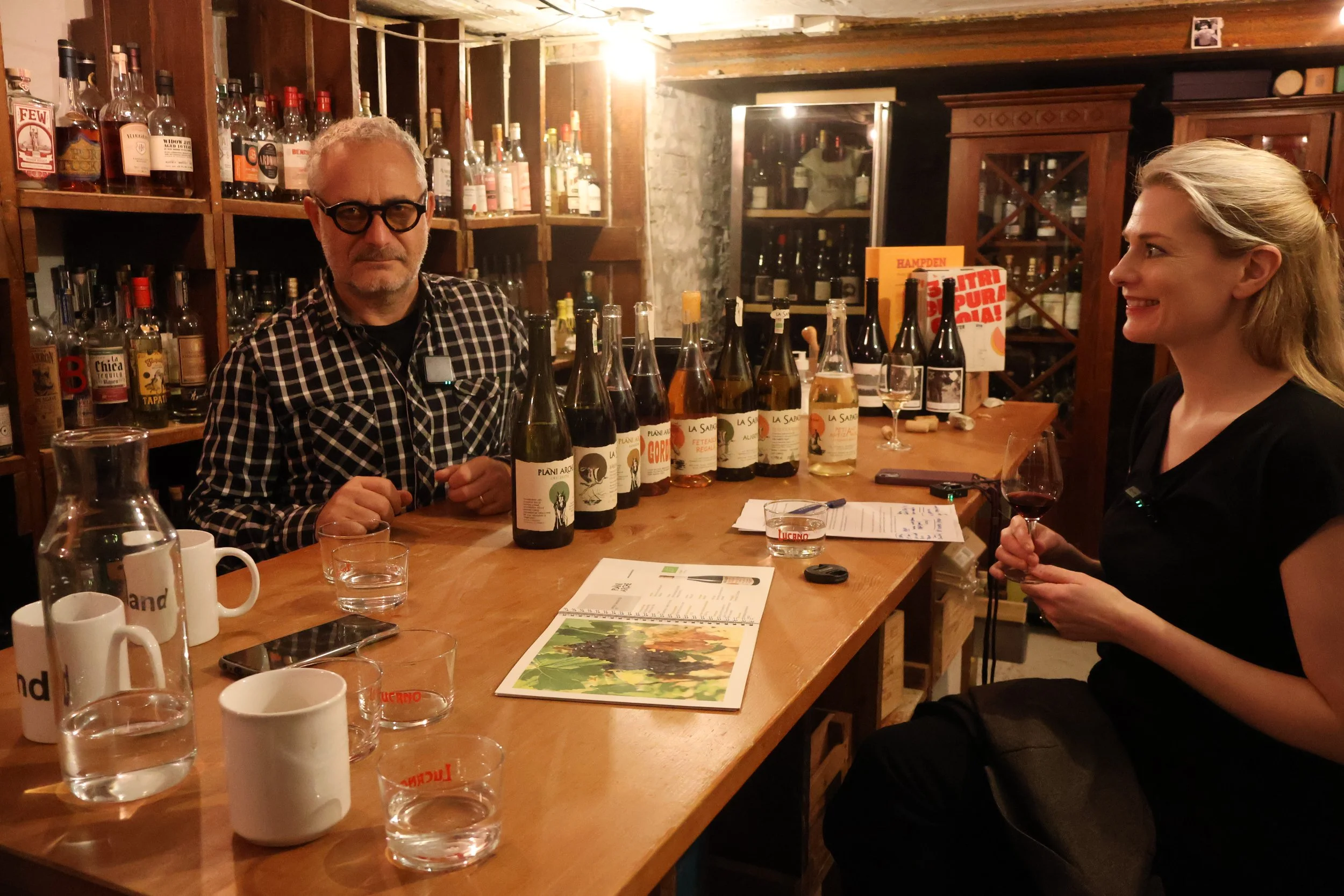
Roberto di Filippo visting Copenhagen. Photo Dansk Sommelier Forening
It was a rainy morning in Frederiksberg. I met Roberto di Filippo and his daughter Bianca in the Juuls shop, just before opening. Anders Regout from Juuls Engros had set up the interview for me. We went down to the basement to sit down, talk and taste. Roberto showed me his hands, smiled, and said, “You can tell I am used to working in the fields.”
They were in Copenhagen only a few days before heading to the UK. “It is hard to leave the winery now,” he said with a small smile. It is a busy time there, but he seemed happy to be here, present in the moment.
I wanted to understand why an Italian winemaker chooses to farm in the Danube Delta of Romania. I also wanted to know what his wines taste like, how he makes them, and what values sit behind all of it.
Before we began tasting, I asked him about the shape of Romanian wine today.
"You find huge concrete buildings from the Soviet time. The ‘combinate’. Fertilizer, iron, aluminium, wine. All produced in one big place. We decided to build a small winery."
“I can tell you what our experience was in these fifteen years,” he said. “We arrived in 2009. We did a small test harvest the same year. I travelled around. I saw famous areas like Dealu Mare and Valea Călugărească. I decided to establish the winery in a wild area on the Danube Delta. Probably there is a kind of wild energy catching you.”
He talked about the past. “You find huge concrete buildings from the Soviet time. The ‘combinate’. Fertilizer, iron, aluminium, wine. All produced in one big place. We decided to build a small winery.”
I asked where those wines used to go. “Romania, but also Japan, Russia, Cuba. In the sixties and seventies, Romania was one of the big producers.”
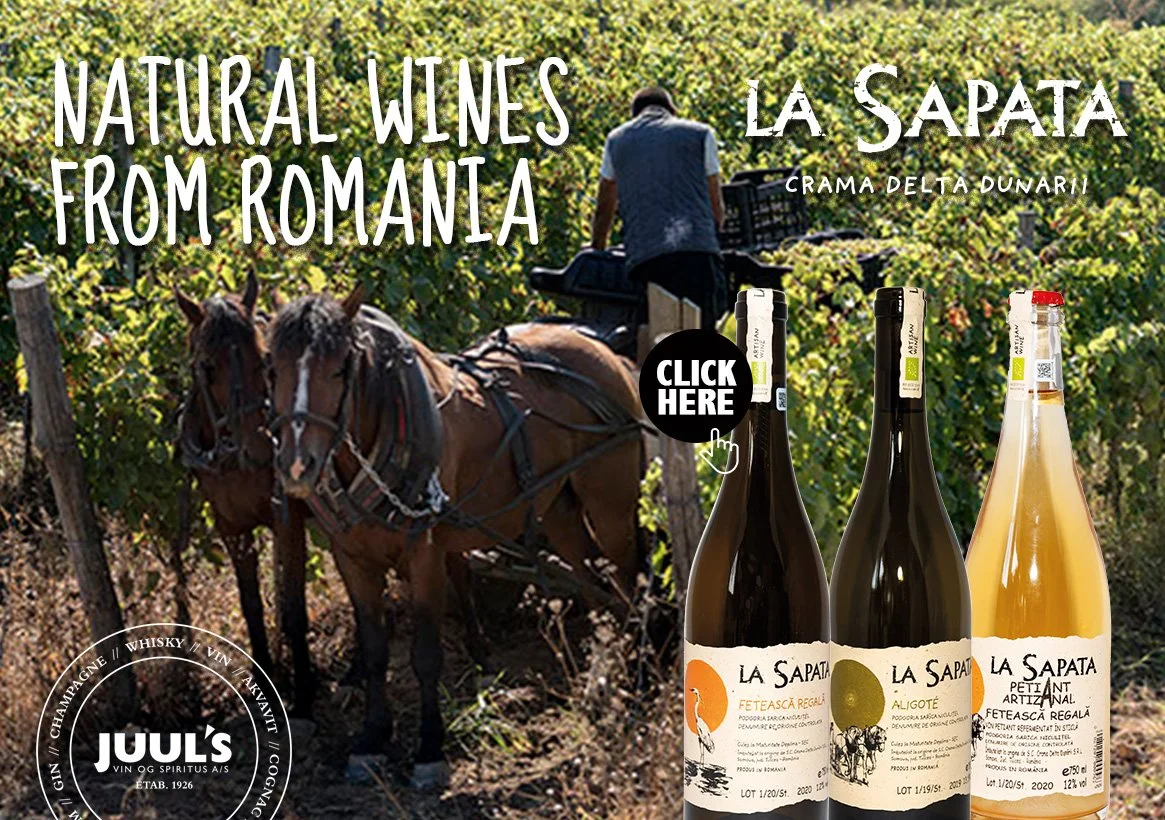
Sponsored banner from Juul´s Engros
The history lesson moved from Romania to Moldova and even Georgia. He spoke about the vast tunnels of Cricova, once limestone mines and later turned into one of the world’s largest underground wine cellars. He also spoke about how, under the Soviet system before Gorbachev, wine was produced in huge volumes at low prices. Then came Gorbachev’s anti-alcohol campaign in the 1980s, which ordered many vineyards to be destroyed.
The result today is mixed. “The average quality increased,” he said. “But many big wineries can miss personality. They work a lot with international grapes like Merlot, Cabernet, Pinot Noir. Now they start to invest in local grapes like Fetească Regală, Fetească Neagră, Băbească Neagră, and Aligoté.”
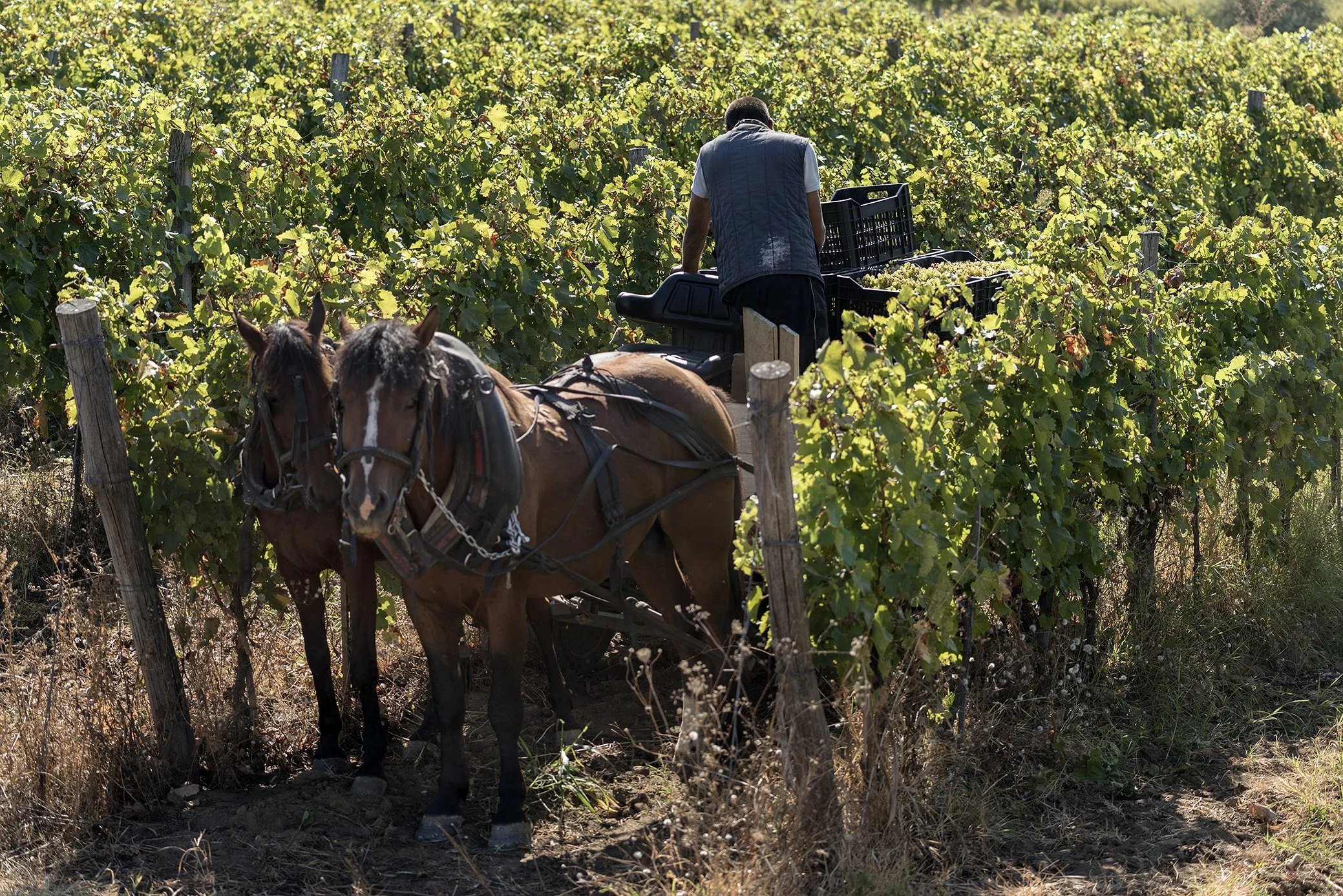
Image: La Sapata
I liked that line about personality. He explained that real character comes from the terroir and the grapes themselves, not from tricks in the cellar.
I asked what drew him to the Delta in the first place.
“I come from Umbria. The wines there are more complex. In Romania I found sandy and limey soils near the Măcin Mountains. On the slopes the rock is close to the surface,” he said. “You have minerality and freshness.”
He has seen change. “When we arrived, winters could be minus 20. Now it is more like minus five. Harvests were later than in Italy. Now they are the same. Sometimes even earlier.”
He also talked about water. “We can miss rain for two or three months. But the plants do not suffer too much. The soil keeps humidity underground. We do not push production with fertilizers or chemicals.”
"After 2000, people asked about grapes, territories, appellations. We moved from bulk wine to bottled wine, with labels and identity, and we started to export. Denmark was one of the first countries to buy from me."
Then came the part about values. “I knew it would be a big human investment. I wanted organic farming, to work with local people, and use local materials.” That is not a small sentence. It is a choice.
He explained the European funding system for planting vines. Often the money leaves the country because many inputs are imported. “We did the opposite. We hired twenty people from the village. We bought wooden poles in Transylvania. We used Romanian plants.” He paused and added, “Ninety percent of the investment stayed there. We built a link with the local people. That is the ethical engagement.”
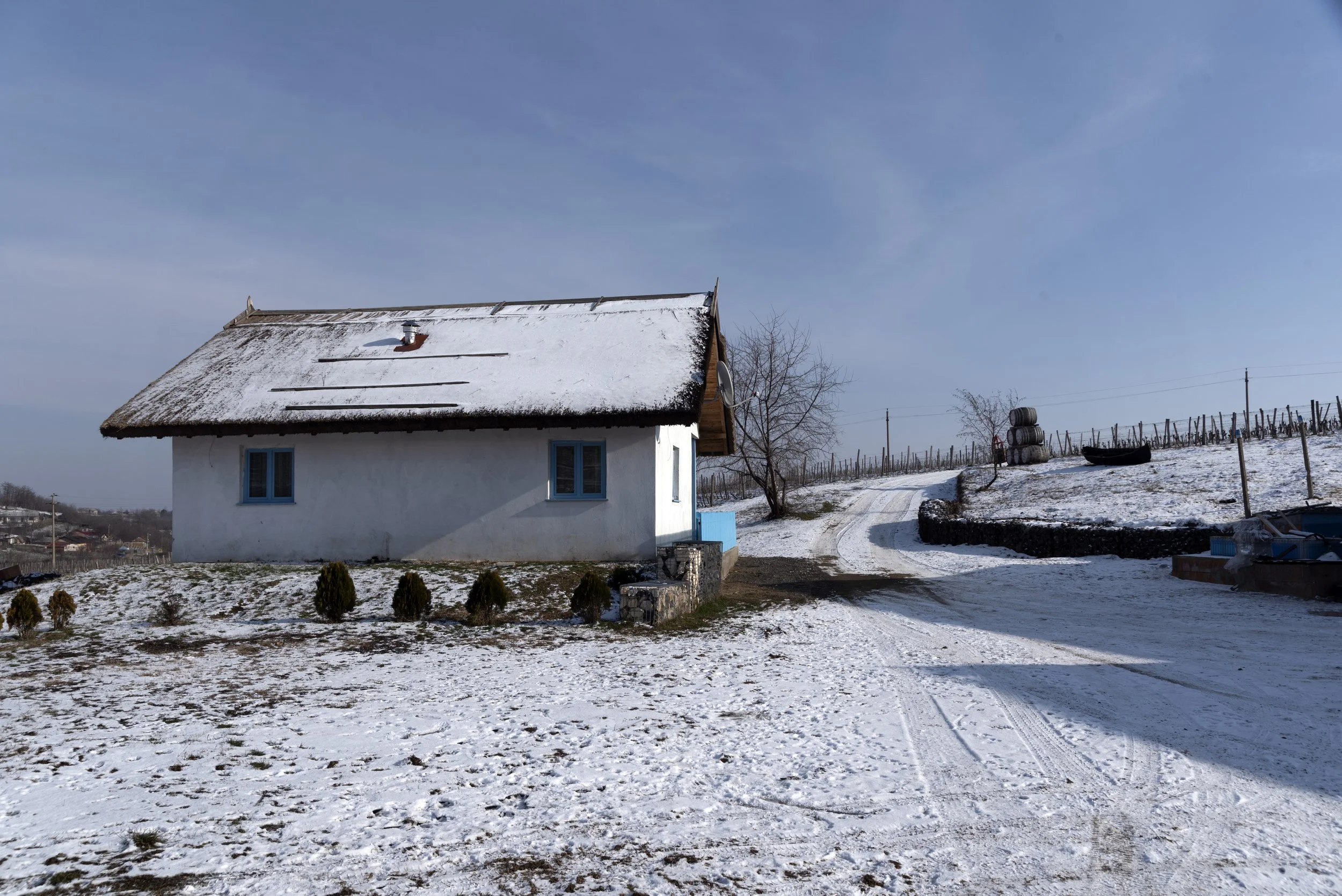
Image: La Sapata
Who and what
To place Roberto, here are the basic facts I used to prepare:
Roberto Di Filippo is an Italian winemaker and farmer from Umbria who works with low intervention and ethical farming. After more than 35 years with the Di Filippo winery, he left the family estate in 2021. Today he and his wife Elena run Plani Arche in Umbria.
Together with his partner Roberto Pieroni, he also owns La Sapata, the brand of the estate Crama Delta Dunării in Dobrogea, near the Danube Delta in Romania. There they focus on organic viticulture, the use of horses in the vineyard, and social engagement with the local community. The project is rooted in the local terroir, people and culture.
The Dobrogea site has around 20 hectares on sandy, poor soils that suit low yields and clear flavours. Winters can be cold and summers hot and dry. The main grapes include Fetească Regală, Băbească Neagră, and Fetească Neagră. They also grow Aligoté and a few international grapes.
A farmer before a winemaker
I asked about his background. “I started to make wine in 1986.” He laughed at the number. “Too much.”
He studied oenology in Conegliano. He has seen the consumer change from daily drinkers to curious drinkers. “After 2000, people asked about grapes, territories, appellations. We moved from bulk wine to bottled wine, with labels and identity, and we started to export. Denmark was one of the first countries to buy from me.”
He still wants to feel like a farmer. “I like to wet my hands with wine. To smell the grapes during harvest.” He told me about walking the soil in Romania before starting. “I touched the soil. I smelled the herbs. They tell you what soil you have.”
Low intervention
I asked him to explain the winemaking. He was clear. “Terroir has a big influence. The soil is sandy and limey, with rock under. The climate is cold and fresh in winter, dry and windy in summer. We need few treatments.”
In the vineyard they keep low yields and work organically. In the cellar they keep it simple. “For Fetească Regală we press whole clusters. The orange wine has four to five months of skin contact. Red wine is classical. We settle the juice overnight and start with indigenous yeasts.”
He does not like the word natural when it suggests magic. “I prefer to say low intervention. All wines are from grapes. But low intervention makes sense. It does not mean you do nothing. You refuse some tools, very low sulphites, no filtration and minimal stabilization. It is more difficult than classical winemaking. You need more knowledge.”
He also said: “There are two wrong ideas. That natural wine has to be faulty. And that if a wine is faulty, it is authentic. Both are wrong.” He looked me in the eye for that one. “You have to make a pleasant natural wine.” I liked that.
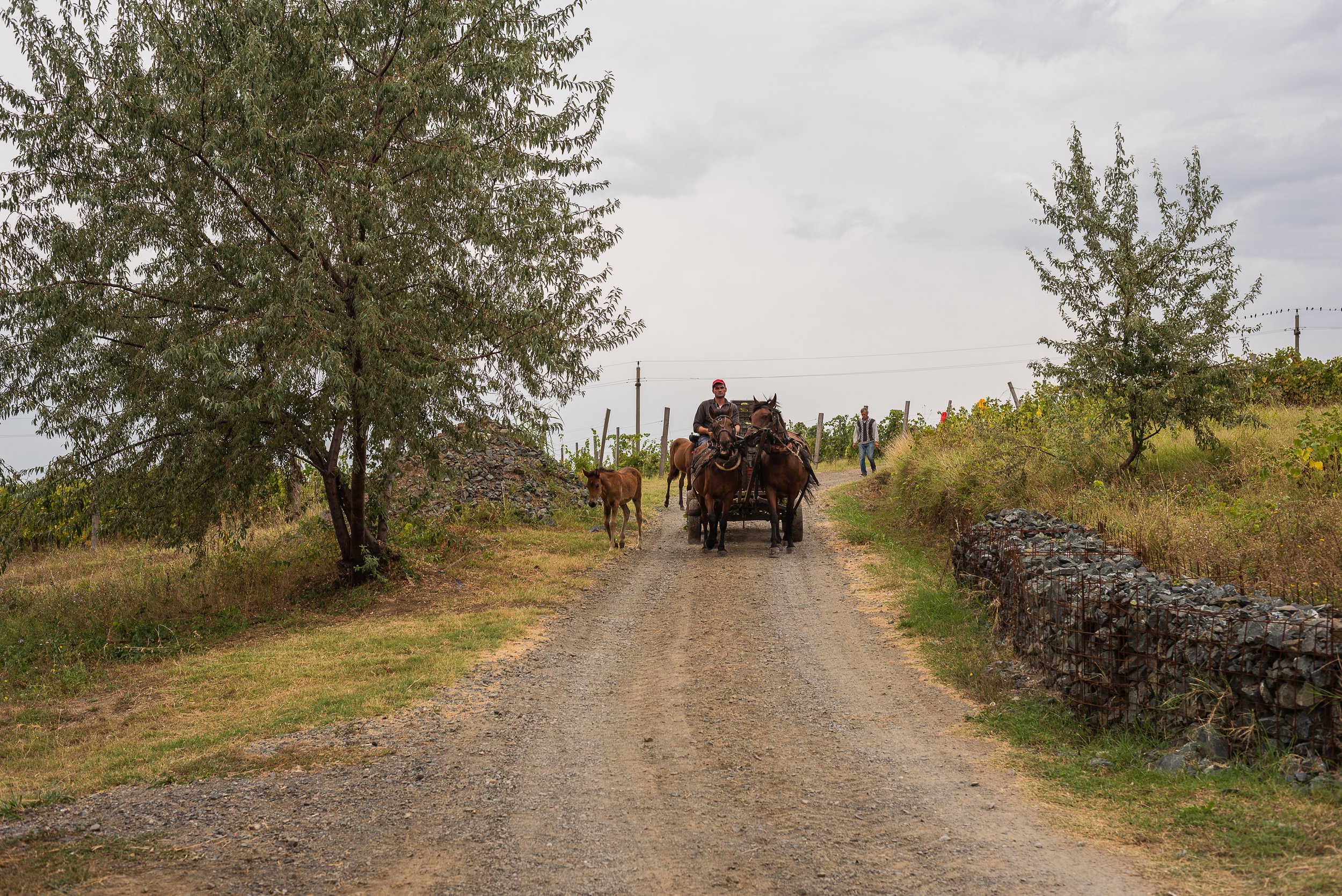
Image: La Sapata
Why local grapes
I asked him about varieties. He listed them with care. “The most important grapes for us are Fetească Regală, Băbească Neagră, and Fetească Neagră. We also have a little Fetească Albă.” Then he added: “I also consider Aligoté almost local.”
When we talked about white grapes, he smiled and said, “Chardonnay is often too jammy, too concentrated, too boring, both in Romania and Italy. Not like Burgundy.” For him, Aligoté is the opposite: a grape that keeps freshness and character even in warmer conditions.
Fetească Regală is not easy. “It is semi aromatic. It has many catechins. You can get orange colour and harsh tannins. We have to be very soft. Harvest in small cases. Whole-cluster press. If you taste it from the north like Jidvei or Timișoara, it is different. We are southern. More Mediterranean.”
Băbească Neagră is gentle. “Like Ciliegiolo. Big berry. Not much colour. Mild and fruity. We make rosé, pét-nat rosé, and red. Small production in barrel and amphora too.” Fetească Neagră is the opposite. “Small berry and more concentration. We make around 2,000 to 2,500 bottles, all barrique. Very ripe. A kind of Amarone from my area.” They keep that one mostly at home.
The logic is clear. “It is not easy to find a red grape that works in Romania. International varieties can be green or harsh if you push too much. If you use nitrogen and systemic chemicals you get green polyphenols and harsh tannins.”
A quick tasting
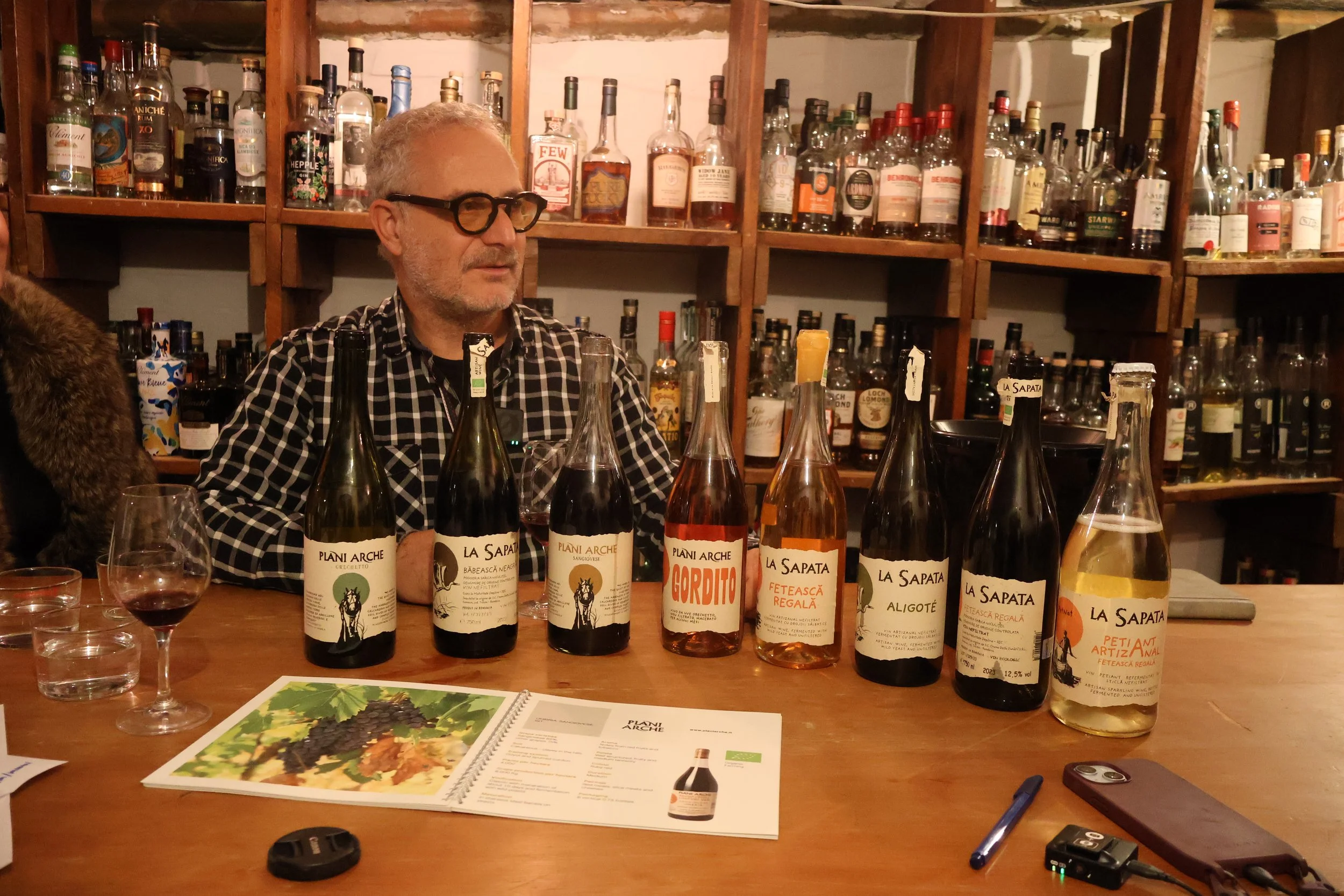
Winetasting. Image: Ronja Bo Gustavsson, DSF
We tasted. We started with the Pét-Nat made from Fetească Regală. The fruit opened slowly as Roberto said it would. At first it was tight, then after a few minutes the aroma grew rounder, with yellow fruit and a hint of herbs. On the palate it felt full, not thin as some Pét-Nats can be. There was a gentle grip and a clean, dry finish that made me want another sip.
Then we moved to the still Fetească Regală. It showed more clarity in both colour and taste. The nose had peach, apricot and a floral tone. Despite the ripe aroma it was completely dry. The texture was smooth with a touch of bitterness at the end, like orange peel.
The Aligoté came next. Pale in colour, with notes of lemon, green apple and flowers. On the palate it was fresh and firm with a salty, mineral line that lingered. It felt like it had a dust of chalk running through it. There was also a creamy roundness from the lees, giving balance to the high acidity. Roberto said that saltiness comes from the rocky soils and low yields.
Later we tasted his orange Fetească Regală, which had a perfume of tea, dried fruit like peach and apricot and soft spice. The tannins were gentle, already well integrated after the long skin contact.
We finished with Băbească Neagră. It had red fruit, roses and a light leathery tone. The tannins were soft and the wine had an easy flow.
Across all the wines I noticed a line of freshness and texture that seemed to come from the soil rather than the cellar.
"We also work with animals in the vineyard, geese, hens and ducks, about three hundred in total. It is a kind of agroforestry that makes the farm more efficient and gives better quality while using less energy. But you have to invest more in people."
We talked about pairing in Denmark. “Aligoté with your seafood. Băbească as a house wine because it is fruity and easy. The most popular here is the orange Fetească Regală. Mild and aromatic. It can pair with many things.”
Horses, geese, people
I asked about the horses, a central part of his approach to farming both in Italy and Romania.
“We still work with horses. In Italy we managed twenty hectares with four horses and two people. In Romania we have three horses and one man for seventeen hectares,” he said. “It can be thirty percent cheaper than tractors. We did research with a university.”
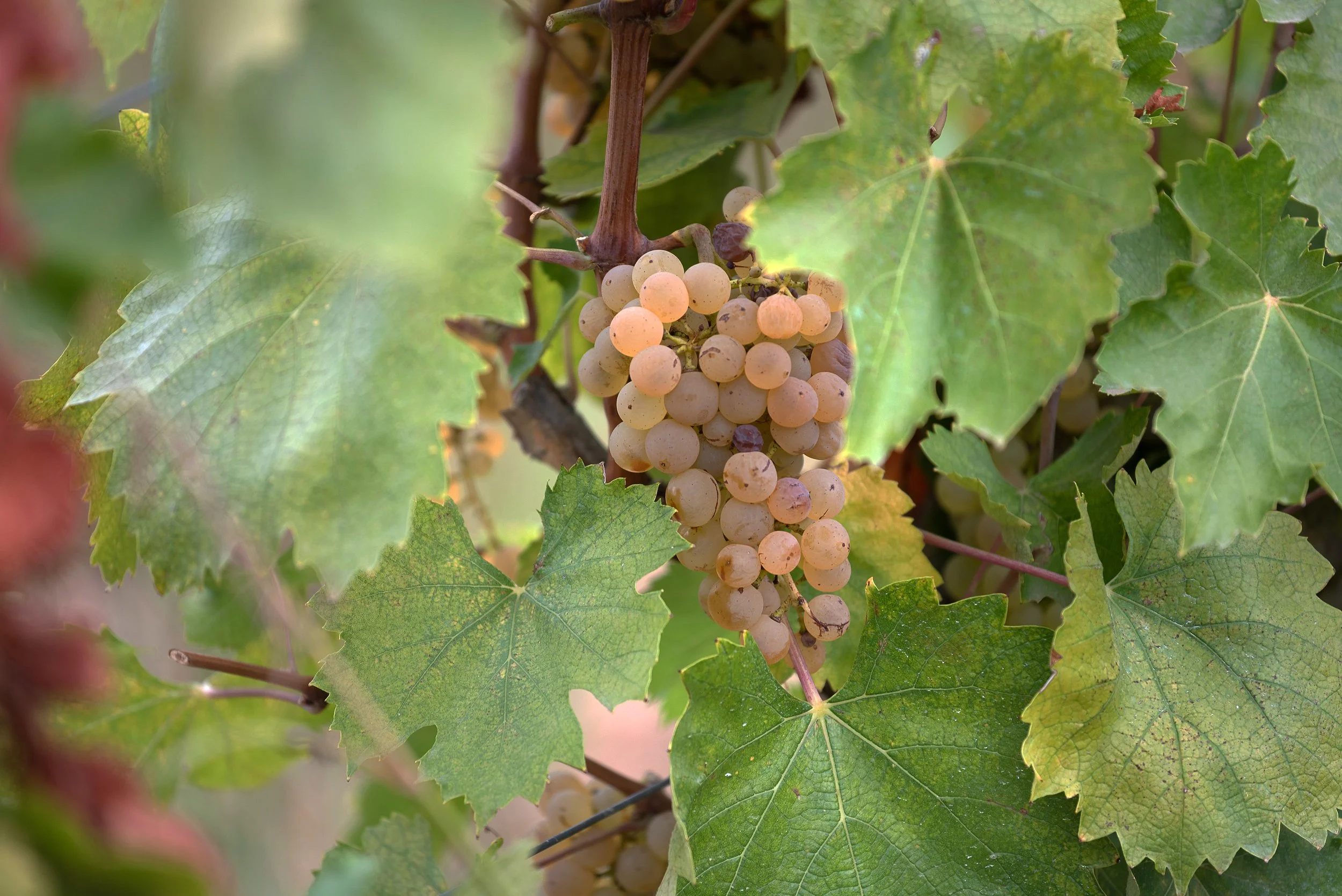
Image: La Sapata.
Tractors break. People forget that labour and maintenance are part of cost. “We love technology but it does not always give what you expect. You need balance.” He does not say everyone should return to horses. He calls it a provocation. A way to make us think.
“We also work with animals in the vineyard, geese, hens and ducks, about three hundred in total. It is a kind of agroforestry that makes the farm more efficient and gives better quality while using less energy. But you have to invest more in people. The modern way does the opposite, investing in machines and removing humans.”
He believes a healthy economy is possible without more machines. “Our winery works well. We have good business and good profit. Managers come to see us for staff training. They want to see another way.”
I asked how many people he employs. “In Romania five full time. During pruning and harvest up to twenty. In Italy less than half. Full time it is me, my daughter, my wife. During harvest we are ten to twelve.”
The horse story goes beyond cost. It touches character. “You have to be stubborn. In the beginning I broke my legs twice. I have pieces of titanium. I did not stop.” He learned tools from Amish farmers and French growers. He built his own. “Sometimes the horse is faster than the tractor. When something breaks, you fix it with a hammer or a welder.”
He looked happy when he said this next part. “The horse is a mirror. He feels your mood. If you are fair, he follows you. Managing horses teaches you to be a better leader with people.”
The border question
Considering the winery is about five kilometres from Ukraine, I had to ask him about the war. I asked if and how it has impacted him.
He took a breath. “At the moment, almost nothing. At the beginning we had many refugees. We are on the Danube with a ferry. Families came across. “Now it is stable. The main effect is on goods because Odessa is blocked. Containers move through Romania and Bulgaria.”
He has not seen fighting there. “In our area it is a low-intensity war. Some drone strikes on grain or fuel stores.” He has never crossed over, even though it is so close. There was a ferry for a few months before the invasion. “I was never able to go.”
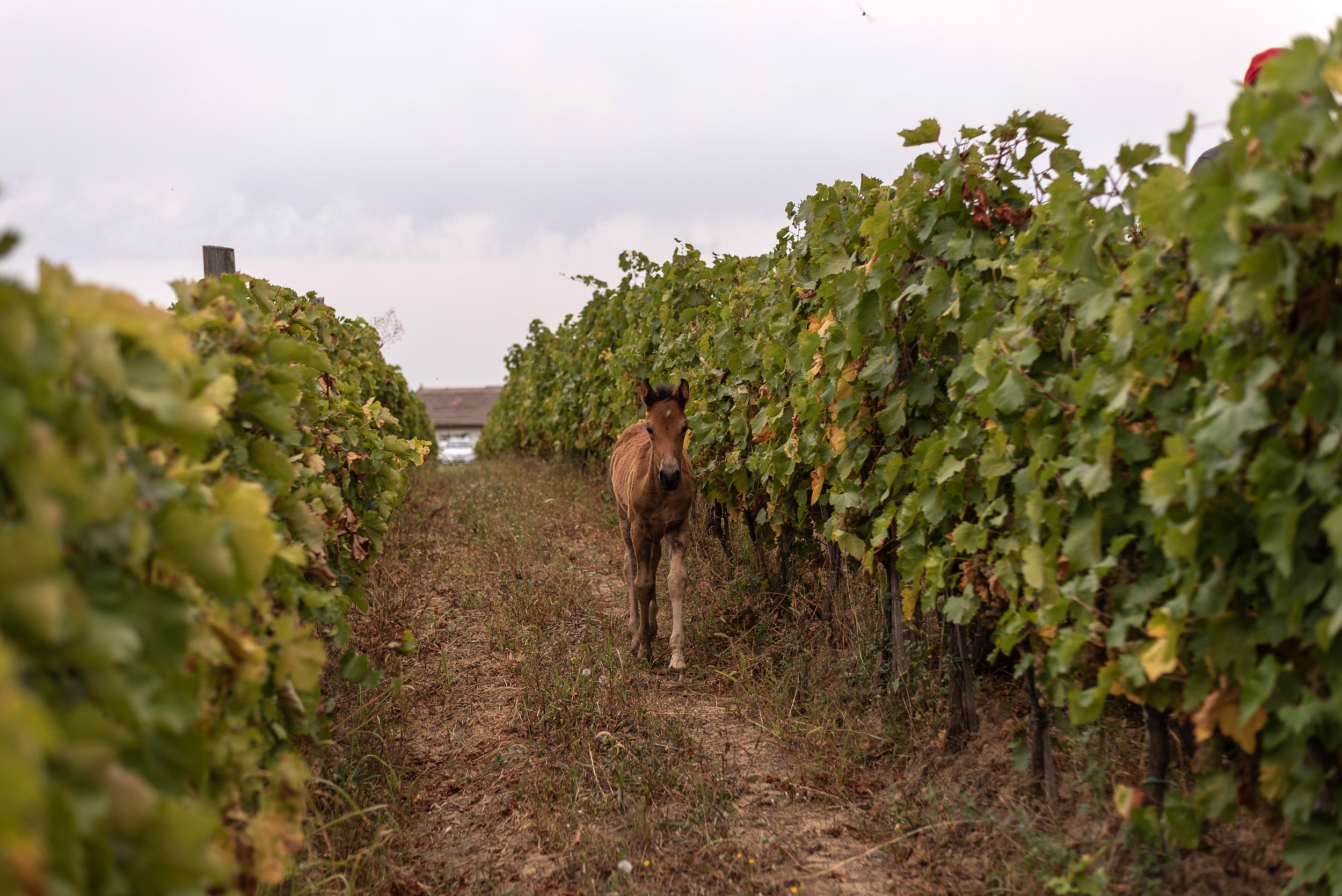
Image: La Sapata.
A project that is Romanian at heart
We came back to the core of La Sapata. I asked what makes it special.
The place feels like a frontier, a new chapter for many wine drinkers. The story is one of rediscovery, built on low-intervention techniques and mostly indigenous grapes. The focus is ethical, with local plants and wood, and jobs kept in the village. Horses replace tractors, geese wanders, and the cellar stays simple.
“If you want a wine with real character you have to invest in the vineyard and the terroir.” He said it earlier and I wrote it down again. It explains the whole project in one line.
How I left the room
Before leaving I asked him one last thing. Why does he keep choosing the hard road? Horses. Local wood. Wild yeast. Low sulphites. Community work. He laughed: “You have to be stubborn.” He said it like a farmer who has had broken bones and kept going. “Make a pleasant wine. Invest in people. Respect the place.”
“It is not easy, but I like it.” And the line I wrote at the top of my notes:
“Terroir plus human beings gives you the final result.”