Wine tour to Savoie, Piedmont & Trentino/Alto-Adige
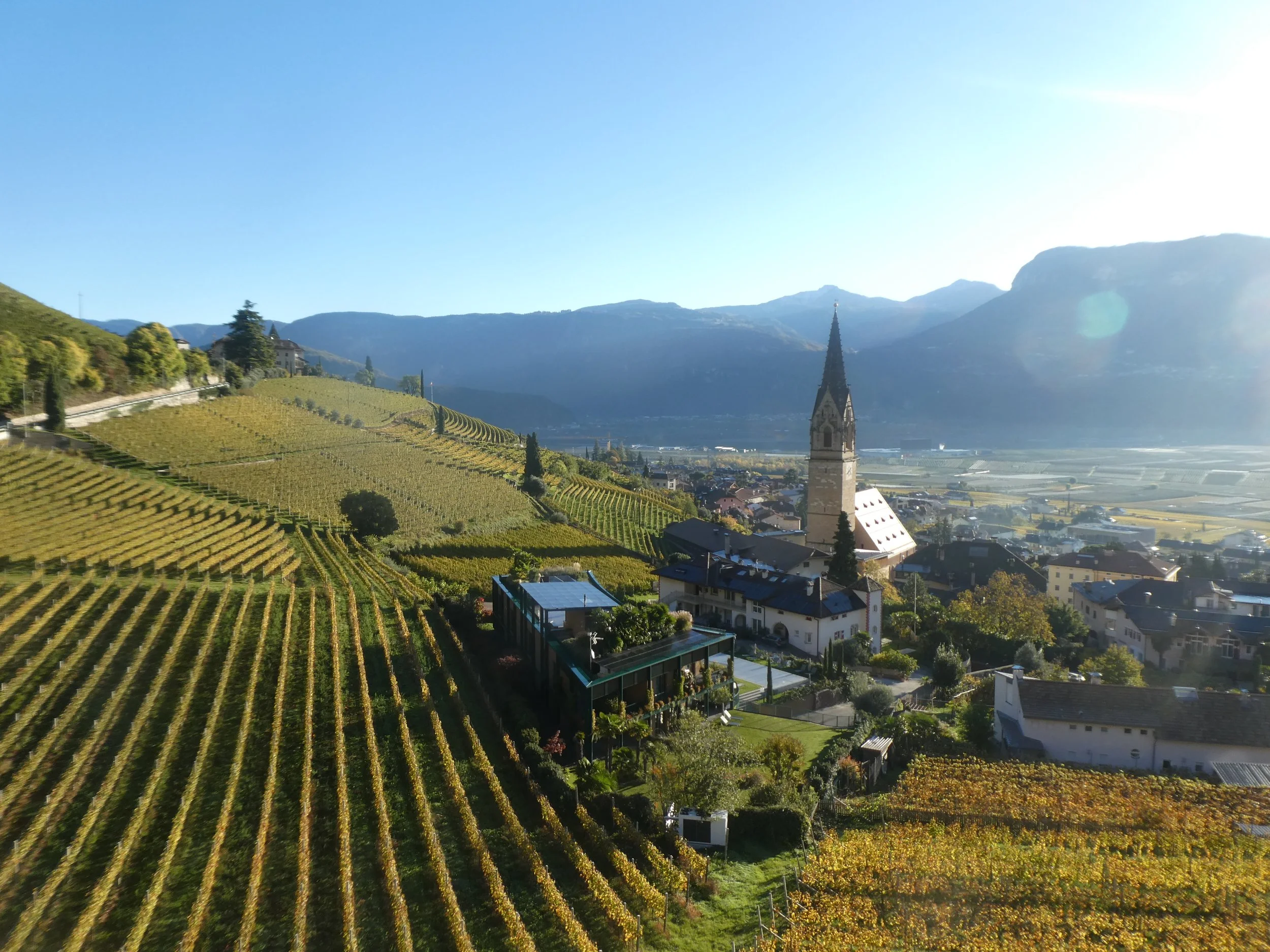
Image: Kenny Jess Brandt
The red numbers on the digital clock show 14° and 10:40. I am sitting in a tourist bus on my way up through Germany towards Denmark. To my right, in the front seats, are my good friend and tour guide, Anders Bager Eriksen, who owns the travel agency Historiske Rejser.
Since 2016, we have organized wine tours for Danish tourists every other year and have so far been to Italy, France, Germany, Austria & Hungary. Behind me are 24 guests, thinking back on a beautiful and eventful 9-day tour that has taken us to the wine regions of Savoie, Piedmont & Trentino-Alto/Adige.
With me, I have taken Politiken's great book Italiensk vin as well as H.C. Andersen's novel about his trip to Italy, Improvisatoren, and a collection of selected short stories, De forbyttede hoveder, by the great German author Thomas Mann.
But for there to be an end, there must be a beginning. So we turn the clock back eight days.
"On these trips I always encourage my guests to drink wine from the areas we are in, so for dinner it is of course Weissburgunder, Grauburgunder & Spätburgunder that are poured in the glasses."
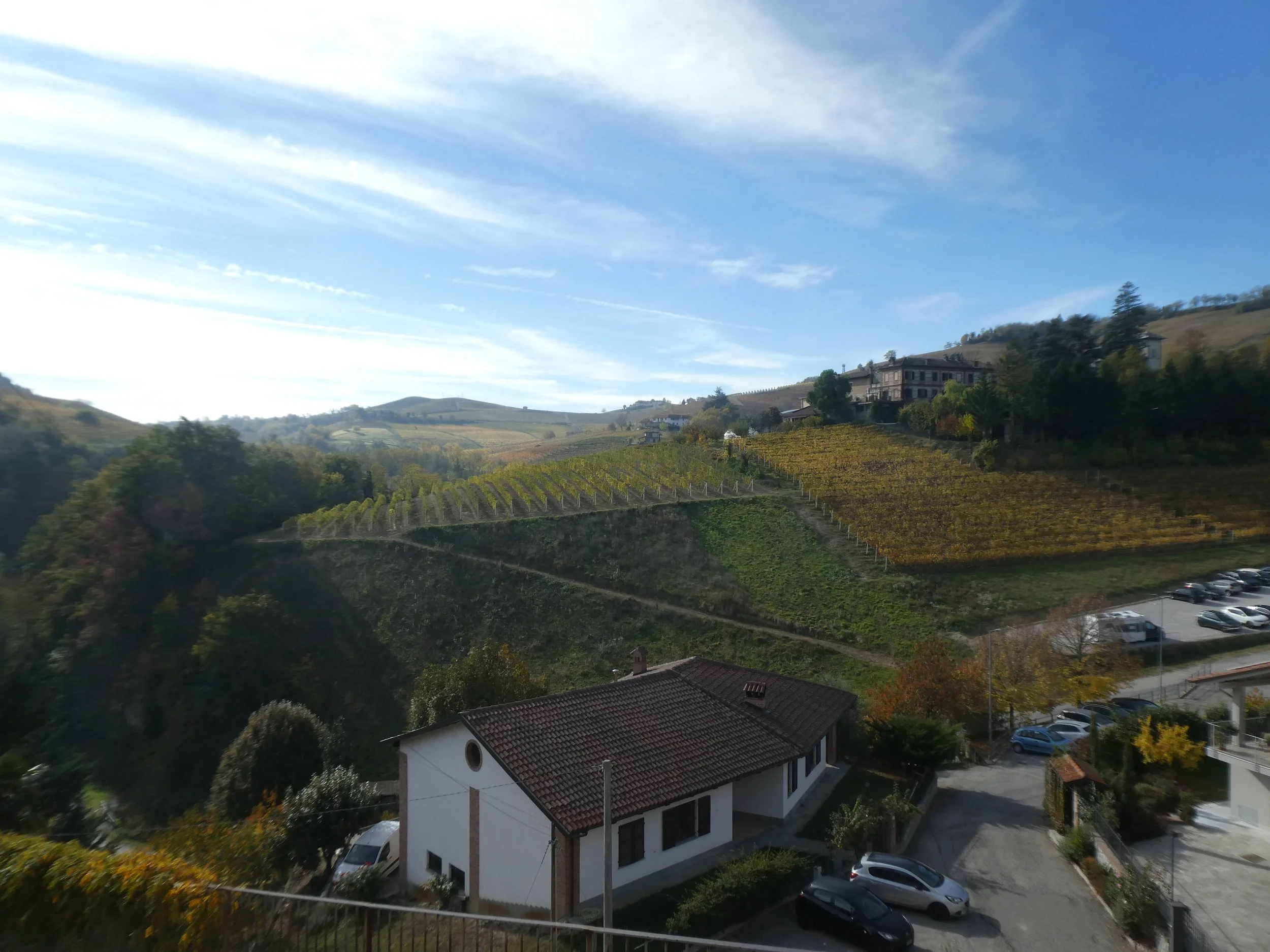
Image: Kenny Jess Brandt
Day 1 – Grey weather in Baden
It is Tuesday, October 21st, and the alarm clock on my long-outdated Nokia phone tells me that it is 4:30 a.m. and that I need to get up. Twenty minutes later I am standing outside my apartment in Molsgade, Aarhus, with a suitcase, 24 wine glasses, 6 bottles of wine, 27 sandwiches, my fjällräven on my back and the book Italiensk vin under my arm.
The sun has not yet risen, but two of the guests, who are going on our wine tour, has, and they have been kind enough to take me to our meeting point in Stilling near Skanderborg, where 35 minutes later we step into the tourist bus that will take us south and down to warmer skies.
Sponsored banner from Østjysk Vinforsyning
The first day is always a driving day, but since the concept is a wine tour, guests should not be cheated of getting a little wine in the glass, which takes the form of a motorway tasting somewhere in central Germany, where we find a rest stop and tune in to the taste buds – and set our minds to nine days of wine – by tasting an Australian Sauvignon Blanc, a German Riesling Kabinett and a Spätburgunder from Pfalz.
Most of the guests on the tour are around or over retirement age and have chosen to learn a little more about wine by joining us on this tour. None of them work with wine, but are rather driven by a healthy curiosity to know more about what they drink on a daily basis.
Over half of the 24 guests have been with us before, so there is a calm, cozy and expectant atmosphere in the bus, which on this first day, where the weather is gray and damp outside, takes us down to the northernmost part of the Baden wine region, where we spend the night in the small, cozy town of Hirschberg-Grossachsen.
On these trips I always encourage my guests to drink wine from the areas we are in, so for dinner it is of course Weissburgunder, Grauburgunder & Spätburgunder that are poured in the glasses.

Image: Kenny Jess Brandt
Day 2 – Chasselas and the Swiss Alps
The second day is a beautiful drive all the way down along Germany's Burgundy, which Baden is not without merit called, a short trip through Alsace and further into the beautiful Switzerland, where the Alps begin and the many beautiful lakes adorn the landscape with their mirror-like, blue surfaces.
The sun is shining, it is 18° and after a quick lunch in the fabulously beautiful city of Bern – and a cool glass of Chasselas – we continue down through the western part of Switzerland, where the vineyards are reflected in the lakes, the air is crystal clear and the mountains rise majestically from the ground.
Early in the evening we drive back into France, more specifically Savoie, and set our sights and the bus towards the city of Chambéry, where we will spend the night.
Day 3 – From Savoie to Piedmont
After breakfast we pack our bags again and drive 16 km east, where the first real visit of the trip awaits us at Domaine Claude Quenard et Fils in Chignin. We are welcomed by Guy Quenard, who has 17 hectares of vineyards planted with Jacquere, Altesse, Roussanne, Chardonnay & Mondeuse. Organic and biodynamically certified with a production of 50.000 bottles per year.
We rush under the half roof as a heavy rain shower passes by and the clouds settle over the beautiful mountains, whose clear yellow, brown and dark green shades have followed us all the way to the vineyard. As expected, the wines are light, fresh and fruity with good minerality and a distinct elegance that speaks the language of the mountains.
For just over half of the guests this is their first meeting with a winemaker, and spirits are high along the tables, which are located inside the winery in the middle of the oak barrels.
After the visit we continue southeast, enjoying the mighty mountains, whose snow-capped peaks reach up to the sky. The weather is humid and the landscape is beautiful, rugged and rural, as we drive into Piedmont, through the many tunnels and out on the other side of the Alps, where Turin awaits ahead.
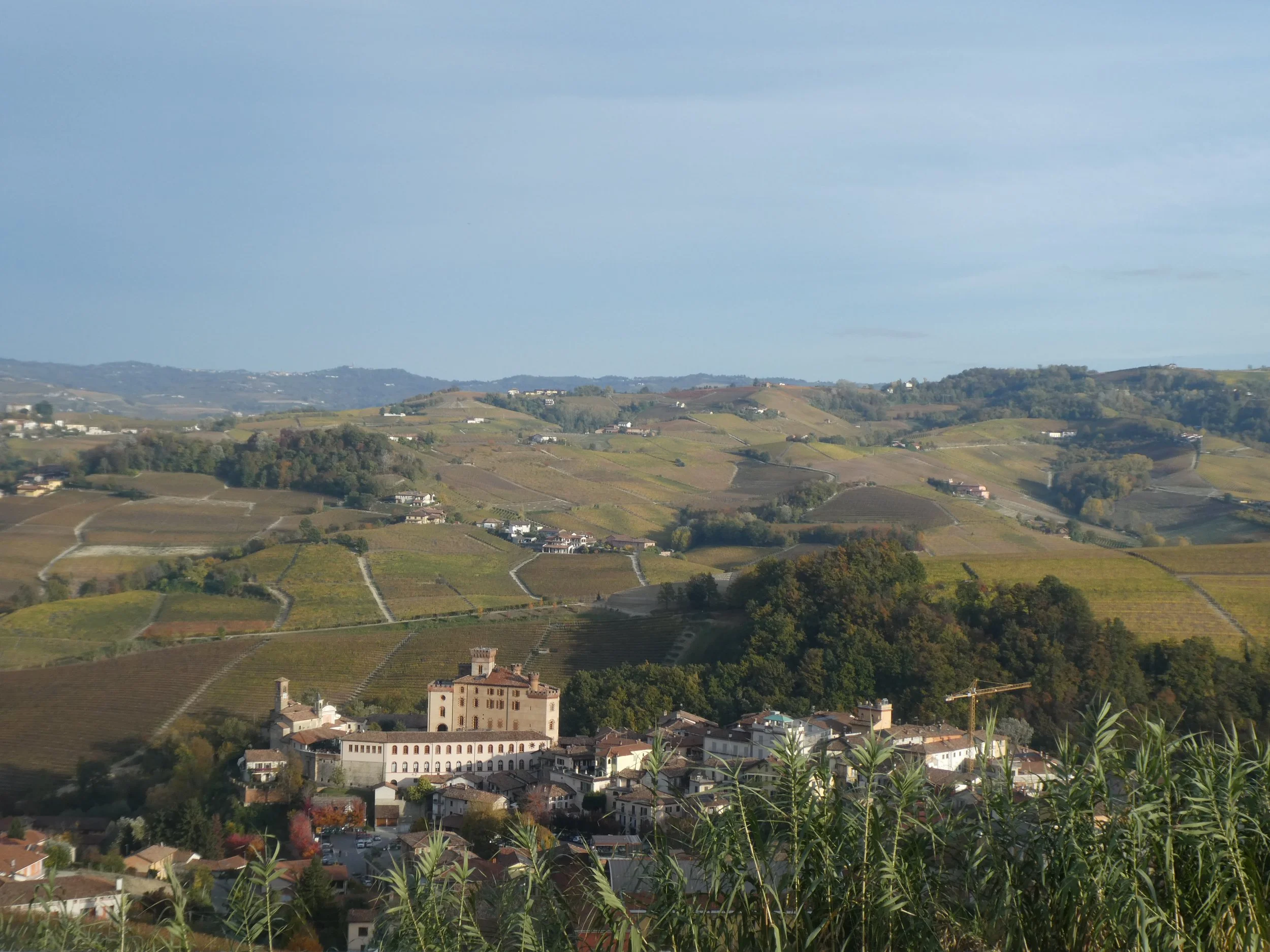
Image: Kenny Jess Brandt
Day 4 – Around Turin
Today is a rest day in Turin with a city tour. The sun is shining, it is 18° and we enjoy the Piedmontese capital with its many large, beautiful buildings, where people walk around dressed in classy clothes – as Italians does – and young and old characterize the cityscape.
For me, these cultural encounters mean almost as much as the wine visits, as they not only tell us something about the area's inhabitants and their mentality, but also about the tradition on which their culture is based.
Day 5 – The king of wine and the wine of kings
I will not hide the fact that I have been looking forward to this day. Nebbiolo and Piedmont have been very high on my list for many years, as I love the landscape with the many small villages, vine-covered hills, warm valleys and of course the powerful and tannin-rich, but still elegant Nebbiolo grape.
Despite the fact that we are well out of season and that only a measly 750 inhabitants live in the town of Barolo, this Saturday morning the town is already bustling with life, with wine tourists making the pilgrimage on foot, by bike, car or bus. And you can understand why, the town is unusually cozy and there are as many wine shops in the town as there are famous cru vineyards around its many slopes.
The thermometer shows 18° again, the sun is shining, and after a quiet morning on our own it is lunch at Brezza's restaurant, after which we walk down the stairs to the winery, where today's tasting awaits us. The lineup is as expected, as we settle in around the tables. Chardonnay – Dolcetto d'Alba – Barbera d'Alba – Langhe Nebbiolo – Freisa – Barolo.
Brezza owns 20 hectares of vineyards, was founded in 1885 and produces around 100.000 bottles annually, all of which are certified organic. The style is however lighter than I thought it would be, no oak on the Chardonnay, Langhe Nebbiolo is served before Barbera d’Alba and the maceration times are a bit shorter than expected, which results in light, fresh and modern wines.
Day 6 – The Plague in Bergamo
We leave Turin in the morning and continue east, through Lombardy with its many plains and hills towards Bergamo, where a city tour awaits us followed by lunch.
In addition to my love of wine, I also have an academic background in philosophy and literature, so I thought it was only fitting that on the bus I read J.P. Jacobsen’s short story Pesten i Bergamo to our guests. And it doesn’t get any less current to think that it was here that CoVid-19 had its epicenter in the winter and spring of 2020, with many deaths as a result, just like the plague, which killed up to half of Europe’s population in the years 1347-1353.
After visiting the charming town with its old city wall and cozy cable car, we head north, driving through Veneto and up into Trentino, just a stone's throw from Lago di Garda, where we have an appointment with the producer Cesconi.
We are welcomed by Franco Cesconi, who is the 2nd generation in a distinguished wine family, which we quickly realize when we not only meet his 87-year-old father, two of his three brothers, his wife, a couple of sons and a nephew, who of course all take part in the family business. Even his old father, who Franco compares to an old tractor, helps out and completes the picture of a pure wine family.
The wines are made from a blend of authentic, local grape varieties such as Nosiola, Lagrein and Teroldego, as well as Pinot Bianco, Gewürztraminer, Pinot Grigio, Sauvignon Blanc & Cabernet Franc. They own 20 hectares, are organically certified with biodynamic measures and produce 150.000 bottles per year. And the style is very clean with beautiful and fruity wines to follow. Definitely a good visit, and we also buy quite a few cases of wine after the tasting.
It is dark when we arrive in the small town of Tramin in South Tyrol, where we will stay at Hotel Vineus, which is located high above the town, surrounded by vineyards and with a fantastic view of the area.
Day 7 – Up in the mountains

Sponsored content from skærsøgaard vingård
When we wake up the next day, we are greeted by a fantastic view of the vineyards and this small, cozy town, with the large, beautiful church down in the square, which is the birthplace of the Gewürztraminer grape. It is only 8°, but the sun is shining and it promises to be another beautiful day.
The first destination of the day is the fantastically beautiful Sella pasa high up in the Dolomites, which with its 2,218 meters of altitude provides a view that few are privileged to witness. First, however, we have to leave Tramin, where the vines stand on the slopes and countless apple orchards characterize the valleys. No less than 10% of all of Europe's apple production is located in Südtirol, centered in the area around Tramin, which also draws the line for the language border in this northernmost part of Italy. South of here lies Trentino, where Italian is spoken, and just north of Alto-Adige, also called Südtirol, where German is spoken.
So we move up into the German-speaking landscape, where thousands of trees color the mountainsides yellow-green, before the actual mountains, the Dolomites – also called the Italian Alps – emerge with their characteristic light red glow and snow-capped peaks.
When we reach the Sella pass, the sun shines from a cloudless sky, it is 2° and the air is fresher than ever before. We stand at one of the highest points in Italy and gaze out over the most fantastic mountains, which paint this landscape with their beautiful, pure and cynical brush.
After we have caught our breath again, we drive down towards Bolzano, where the last wine visit of the trip awaits us – in 14° and sunshine … – at Weingut Reyter, which makes natural wine on a modest 3.5 hectares with an annual production of 20.000 bottles of wine. The grapes are Chardonnay, Schiava and Lagrein, and all the wines, white as well as rosé and red, are only released after a minimum of two years of bottle aging, most of which are first aged in barrels for also up to two years. This is a serious producer we have come to, and the wines are also extremely concentrated and perfect in form.
Day 8 – Apples in the valley and wine on the mountainside
The trip is drawing to a close, as we wake up to another beautiful day in Tramin, where the sun is shining and sending its life-giving rays down over the beautiful landscape that surrounds the city.
The day is spent on a city tour of Bolzano, before we turn our noses north, where – after the beautiful route through Soprabozen with its many small wine villages – an overnight stay awaits us at Frau Schuster's Hotel Schuster in the Bavarian town of Greding. First, however, we pass the Brenner Pass and the Europabrücke and end the day with a beautiful sunset out on the southern German horizon.
"That good wines happen to be one of these many opportunities, for that I am very grateful; one almost dares to say that it is the tip of the iceberg, but what a mountain, I just say. What a mountain!"
Day 9 – Heading home
Back in the bus on the German motorway. Our driver's GPS tells us that there are exactly 700 km left of the wine tour. Since the morning we saw the sun rise in the east, and now it has moved a few degrees further south and is shining on us from the side as we continue up through Germany.
Below us, resting next to all the suitcases in the trunk, lie the many boxes of wine that our guests have bought from the four wine visits we have had during the trip. People seem tired but satisfied. Satisfied with the many not only wine-related, but also cultural experiences we have had. Some may already be looking forward to serving some of the wines they have bought home to their friends and family sometime in the near future. To pass on their experiences and in that way also to relive them themselves.
Because wine is not just about sitting with a good glass and enjoying it in the present. It is also the nostalgia of memories by remembering great wine moments and the joy of anticipation by looking forward and hoping for new ones. To give of what you have and accept what is to come.
With this thought in mind, I sit here in the bus, we are approaching the Danish-German border, and I think back on the journey. All the beautiful, rugged and mountainous landscapes, the beautiful yellow, green and brown colors of autumn, the enormous difference between valley and mountain, which has shaped the wines we have tasted during the trip, and finally the completely banal and fundamental prerequisite for all of this; that we are alive to experience it; that we have been given something, existence, and thus the opportunity to witness what life holds.
That good wines happen to be one of these many opportunities, for that I am very grateful; one almost dares to say that it is the tip of the iceberg, but what a mountain, I just say. What a mountain!
Kenny Jess Brandt
October 29, 2025
Somewhere south of Berlin