Chenin, Purity and the King of Foods
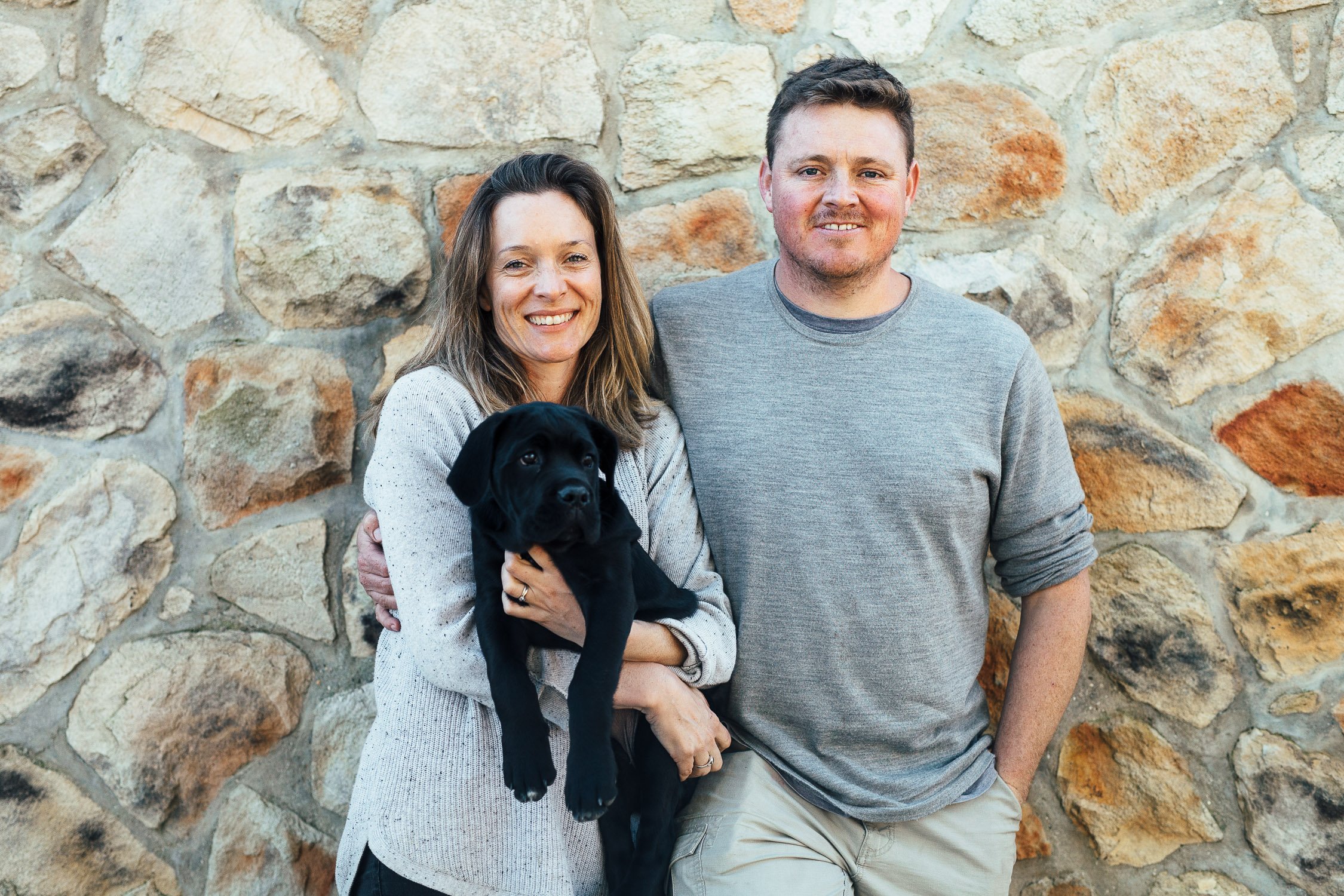
Suzaan and Chris Alheit. Image: Chris Alheit
Chris Alheit doesn't seek attention, doesn't do social media, and won't sell a wine he isn't fully confident in. He just happens to make some of the most coveted Chenin Blancs on the planet.
The interview with Chris Alheit was not supposed to start the way it did. Arriving at the agreed time, the plan was to sit down and talk. Instead, Chris was found deep in conversation with Per Buhl, director of Laudrup Vine — the two of them entirely absorbed in a discussion about sherry. Not a polite, industry-networking kind of conversation. A real one, animated and detailed, the kind where the surroundings disappear.
When Chris finally noticed, he was genuinely embarrassed. He apologised several times, with the slightly flustered sincerity of someone who is not used to pretending. It was, in retrospect, the perfect introduction to the man: someone so genuinely captivated by wine — by flavour, by history, by the ideas that flow between people who love the same thing — that a scheduled interview simply could not compete with a good conversation about fino and manzanilla.
"It’s not just soil, climate and culture — it’s also genetics. And the Cape’s genetics are irreplaceable."
That quality — the utter absence of ego or self-promotion, replaced by a real and almost helpless curiosity about wine itself — runs through everything Chris Alheit does. Alheit Vineyards was founded in 2011 by Chris and his wife Suzaan, initially making wine in a friend’s barn, miles away from the old vineyards they were sourcing. The business was built quietly, without a social media presence, without a marketing strategy, almost without intention. The wines found their audience anyway.
"I don't think I'm extra special. I do think I'm good at communicating about the vineyards and telling people why I think they're special. What's been good for us is that I've been very strict with our philosophy — the things I will tolerate and not tolerate with the wines. I won't sell somebody something I don't believe in."
A Grape With 370 Years of History
The focus at Alheit is almost entirely on Chenin Blanc and Sémillon — heritage grapes that have been present in the Cape for 370 years. Three hundred of those years predate the nursery era, which means the vines were multiplied through self-selection over centuries. The genetic material is, in Chris's view, irreplaceable.
"When we talk about making really South African wine, it's not just soil, climate and culture — it's also genetics. Very important. We have fantastic vineyard heritage in the Cape. The resources are already there. It just took a few of the early pioneers, and then eventually people like us, to repurpose an existing, high-quality resource that was undervalued."
Chenin’s reputation as a workhorse grape — planted widely across the Cape for bulk wine, brandy, and sweet wine production — turns out to have been an accidental blessing. All that planting was done in the traditional way: dry-farmed, bush-trained vines. Chris speaks about bush vines with something close to reverence.
"Bush vines are wonderful things. If you imagine the arc of the sun passing around that crown shape, some of the grapes are going to be on the outside — a bit more exposed, a bit riper — and some will be sheltered inside. So it gives you a natural range of ripeness per vine. I think that adds a really interesting facet to the wine."
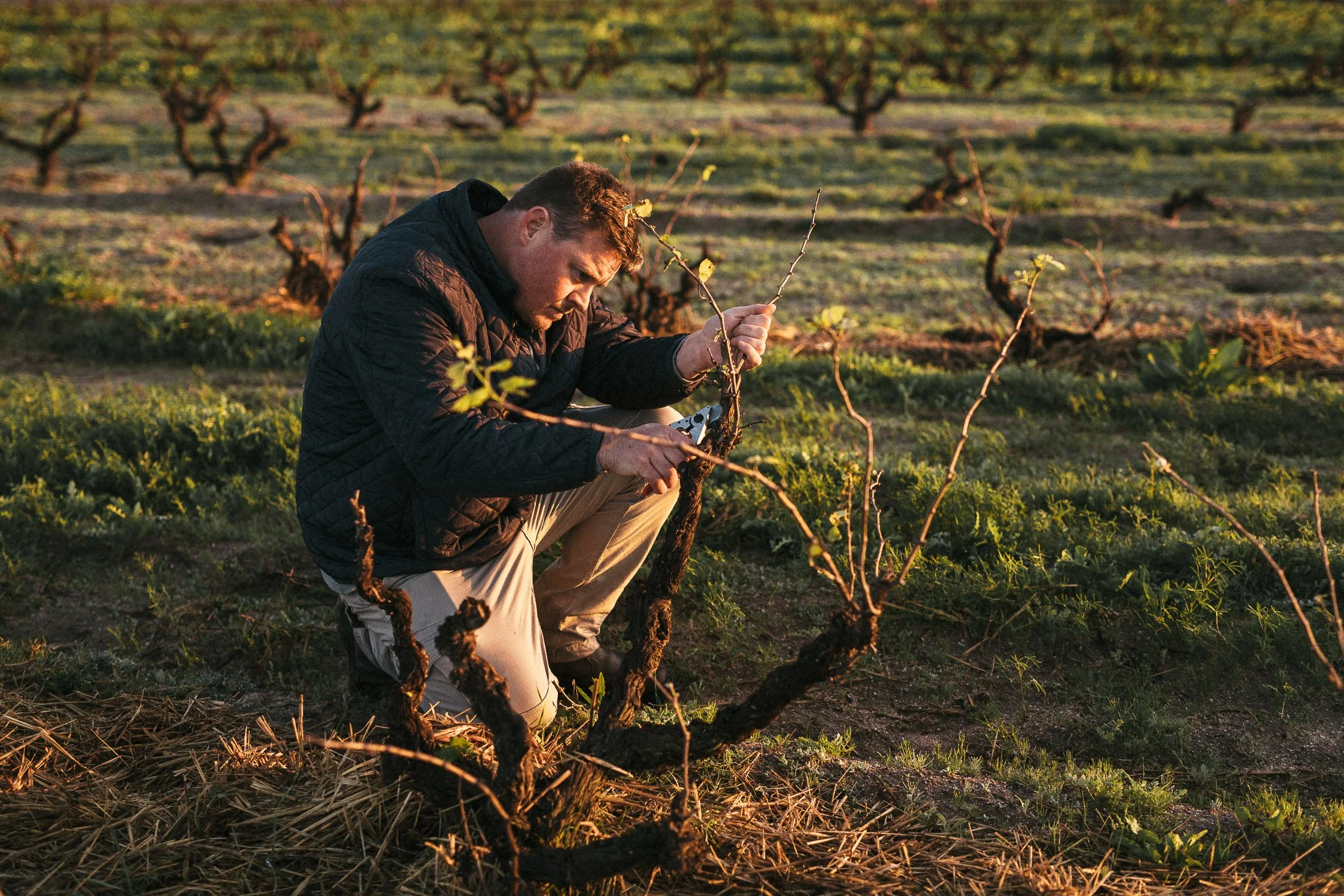
Chris Alheit in the vineyard. Image: Chris Alheit
"It's not just soil, climate and culture — it's also genetics. And the Cape's genetics are irreplaceable."
Nothing to Hide
The winemaking at Alheit is stripped to its essentials — deliberately, almost defiantly so. Chris transports the grapes himself, presses them whole cluster, racks the juice once overnight with zero gas cover and no cooling, and fills whatever vessel he has chosen: old barrels, old puncheons, concrete eggs, concrete diamonds. No cultured yeasts, no acidification, no new oak.
"I definitely do not want a beautiful, old South African vineyard to smell like a French tree. Vanilla-free zone. I don't want any outside influence on the taste of the wine. I apply exactly the same simple, careful winemaking to all the vineyards — and then I see what the vineyards do. And what they do is absolutely extraordinary. It really takes the pressure off the winemaker having to be too clever, because the vineyard is going to do the job."
The simplicity is not laziness — it is a strict ethical position. He is blunt about what he will and will not do, and about what he expects of others.
"I'd rather cut off an arm than do the wrong thing with the wines. I will never acidify wine and sell it to people and tell them it isn't acidified. I would not use a yeast that doesn't come from a vineyard. I would not flavour my wine with oak — for me that's almost disrespecting the vineyard. If what I'm telling people is that the wine is pure, it had better bloody well be pure. I think people need to revisit ethics with winemaking — do what you say you're doing, and don't do what you say you're not."
"I recommend that sommeliers drink somewhere nobody’s watching — double, triple check that bottle — just to put themselves in a good mood before they serve it."
The King of Foods
One of the more striking things Chris says — and he says it with complete conviction — is that he regards wine as food. Not as a beverage, not as a luxury, not as an experience. As food. Specifically, as the king of foods.
"I feel very disconnected from the clinical, technical winemaking I learned at university. I find wine more interesting as an agricultural product — as a way of almost preserving food. It's on the table with the food, and it's a way of catching a growing season and, quite literally, fermenting it to preserve it for time to come. I can revisit the summer of 2017 any time I want to. That's extremely rare in the world of food. It is booze, but I regard it as food — and the absolute king of foods."
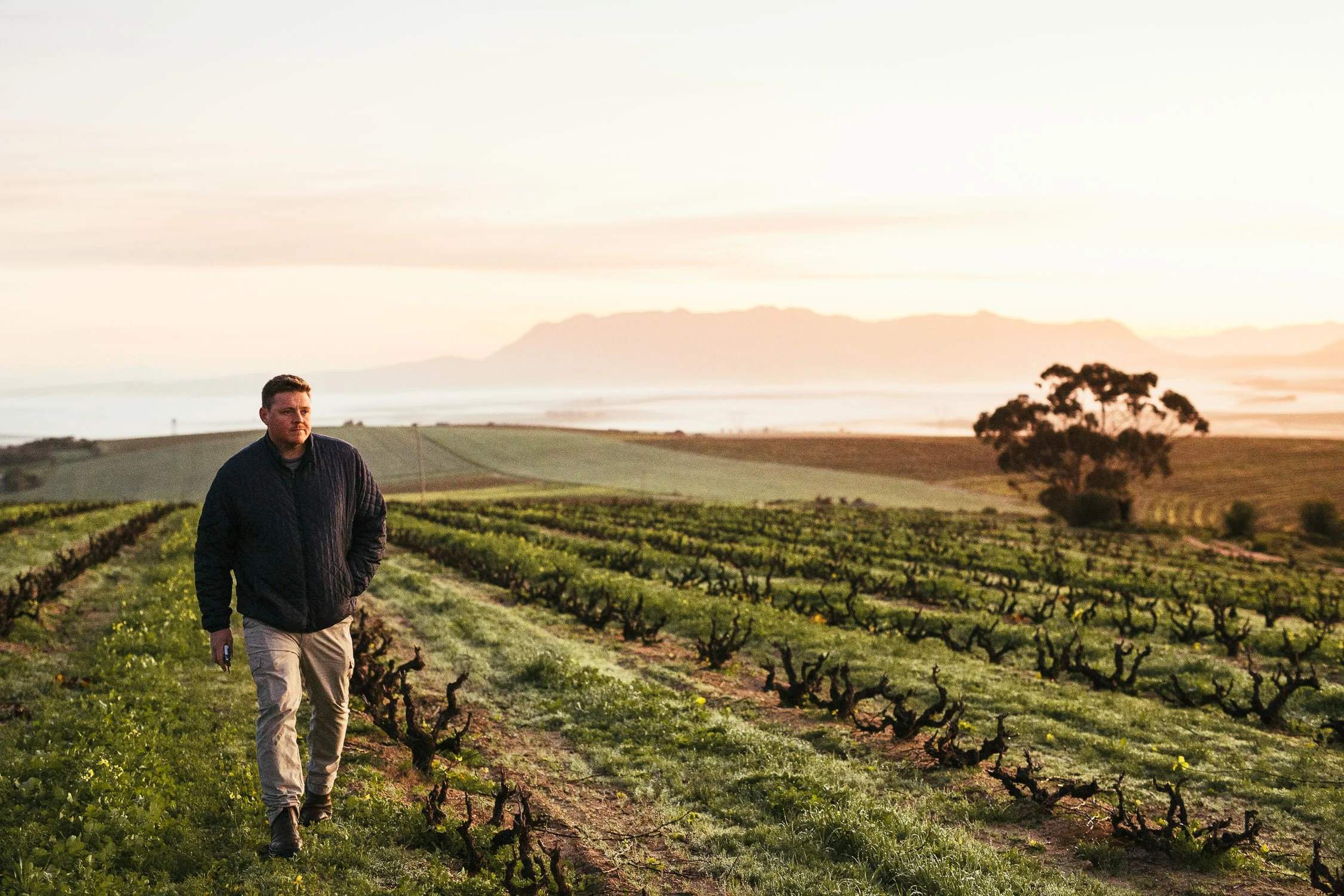
Chris Alheit in the vinyard. Image: Chris Alheit
On the question of food pairing, he is characteristically direct. Weight for weight is his principle: match the palate weight of the wine to the weight of the food, rather than chasing flavour correspondences. The wines do well with creamy sauces, he says. They struggle with anything sweet.
"I recommend that sommeliers drink somewhere nobody's watching — double, triple check that bottle — just to put themselves in a good mood before they serve it."
"I can revisit the summer of 2017 any time I want to. That's extremely rare in the world of food."
A Trust Transaction
Alheit Vineyards has no social media presence. Chris does not seek press. He is aware that in certain markets the wines are heavily in demand — more demand than supply, in fact — but he deflects the question of why with a shrug. He is genuinely grateful, and genuinely puzzled.
"I live in a small town in South Africa, trying my best to make nice wines — and then there are actually people around the world who are interested in that. It blows my mind every time. I like it. It's cool."
What he has built, he explains, is not a brand in the conventional sense. It is a trust transaction — one that he takes entirely seriously.
"Our brand is completely based on trust. It's a trust transaction: they're giving me money — time that they've spent to earn that money — for time that I've spent to make the product they want to buy. We're exchanging time, which is a finite resource of massive value. They're trusting me that they haven't wasted their time. I want to keep their trust by giving them my best work."
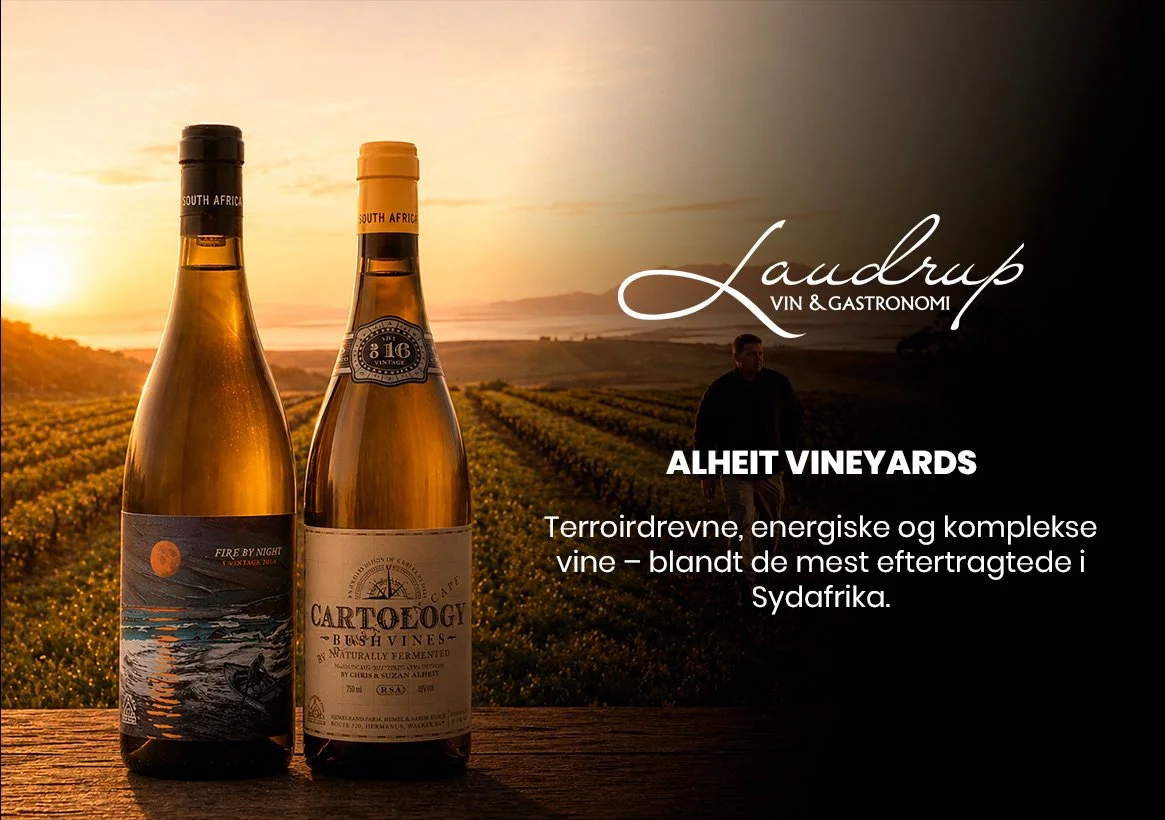
Sponsored banner by Laudrup Vin
When the subject of natural wine comes up — a movement that Alheit’s methods would easily qualify for — Chris is characteristically relaxed about having kept his distance.
"Everything we do in the vineyard and the winery qualifies us to be part of that world. But we didn't associate ourselves with it — because that world has a shelf life. It's better that somebody buys your wine because of quality and trust, rather than because you're in the zeitgeist of a fashion that's going to move. Just make the wine that the place wants to make, and don't try to panel-beat the place into something that it isn't."
"I’m not going to make a style of wine that is fashionable in the sommelier world for the sake of it. I want to make wines that I really like — and when other people really like them, I’m really grateful for that. "
"Just make the wine that the place wants to make. Don't panel-beat it into something it isn't."
No Fashion Chenin
Chris Alheit is not trying to please everyone, and he is at peace with that. He makes wines he genuinely likes — and when others like them too, he is deeply grateful, but not entitled. It is, in many ways, the healthiest possible relationship a winemaker can have with their audience.
"I'm not going to make a style of wine that is fashionable in the sommelier world for the sake of it. I want to make wines that I really like — and when other people really like them, I'm really grateful for that. If they don't like them or don't understand them, it's fine. There are plenty of other wines out there. But when people have a personal connection with our wines, I love that. Because it's a huge effort to make those wines."
Chris flew home the day after. He doesn’t like being away from his children. He likes fishing, hunting, and talking to people — about wine, yes, but also about life: where they are, who they are, what matters to them. Wine, he says, used to be the only thing in his life. Then he got married, had kids, and found other things to love. The wines, if anything, got better.