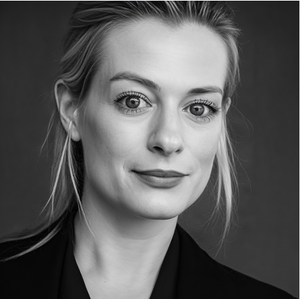
Lucy Manukyan on AI in Viticulture
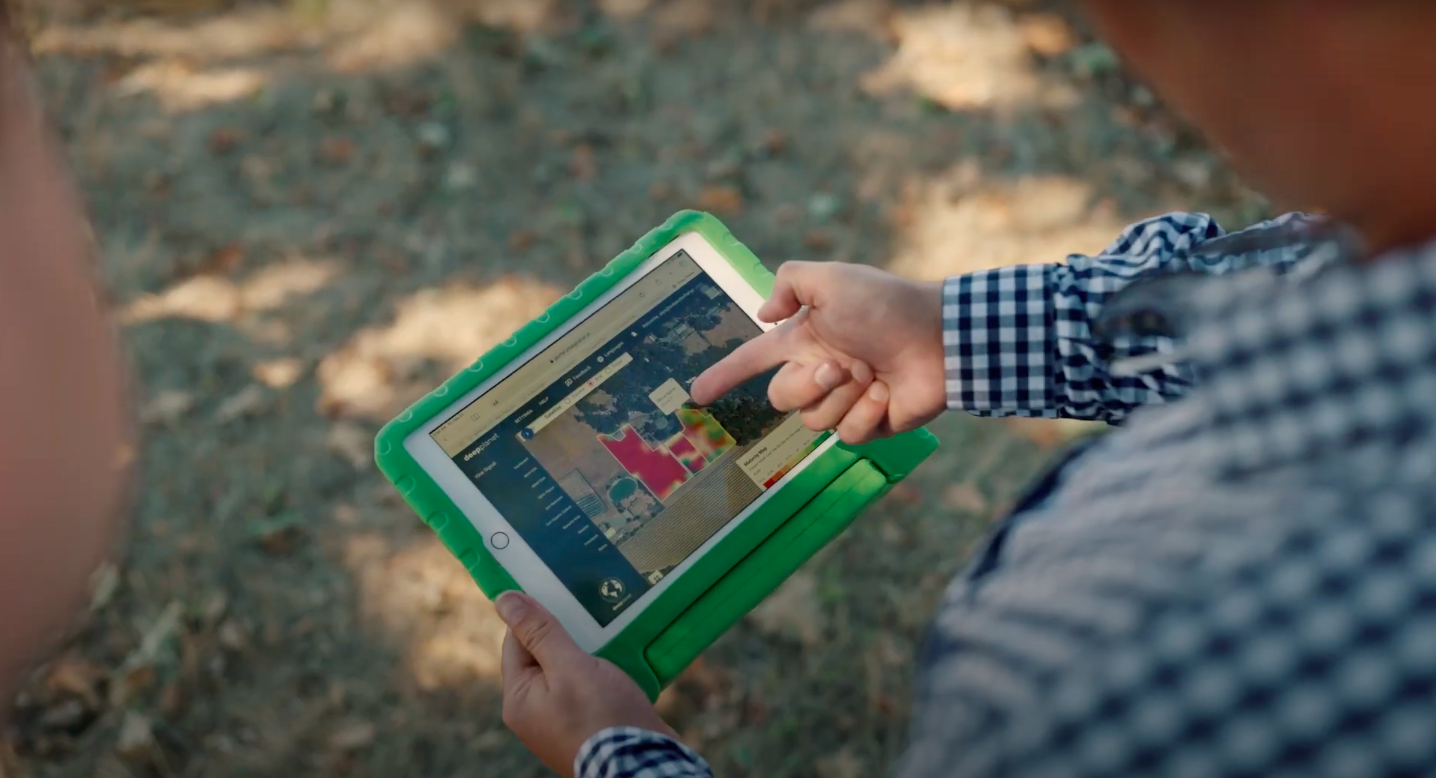
AI for Geospatial Data. Photo: Deep Planet
Lucy Manukyan’s journey into the wine industry is anything but conventional. A plant scientist by training, Lucy began her career in biological sciences, with a focus on genetics and ecology. Her early research at the University of Illinois in Urbana-Champaign involved genetic modification techniques aimed at improving crop yields for subsistence farmers in Sub-Saharan Africa.
"Knowing what’s happening in the vineyard helps us tell that story and connect the dots between old-world knowledge and new-world tools."
Editor’s Note
You might be wondering why DSF is talking about technology, especially AI and machine learning and what that has to do with sommeliers. The truth is, AI is already changing the way wine is made. It helps winemakers work more efficiently, make better decisions, and care for the land in smarter, more sustainable ways. AI isn’t here to replace anyone, it’s here to support the craft and keep traditions alive.
For sommeliers, it’s becoming more and more important to understand these changes. Guests and consumers are asking deeper questions, not just if a wine is sustainable, but how it’s sustainable.
Knowing what’s happening in the vineyard helps us tell that story and connect the dots between old-world knowledge and new-world tools.
Sponsored ad from Vintur
Back in January, I stumbled across a BBC documentary called “Agri-tech and the Future of Farming Programme.” In it, they interviewed Chateau Pape Clement about how they’re using Deep Planet AI to adapt to climate change.
I wanted to learn more, so I reached out to Deep Planet and that’s how I met Lucy Manukyan, a plant biologist and part of the Deep Planet team. We booked a Zoom, and I got the chance to ask her all my questions.
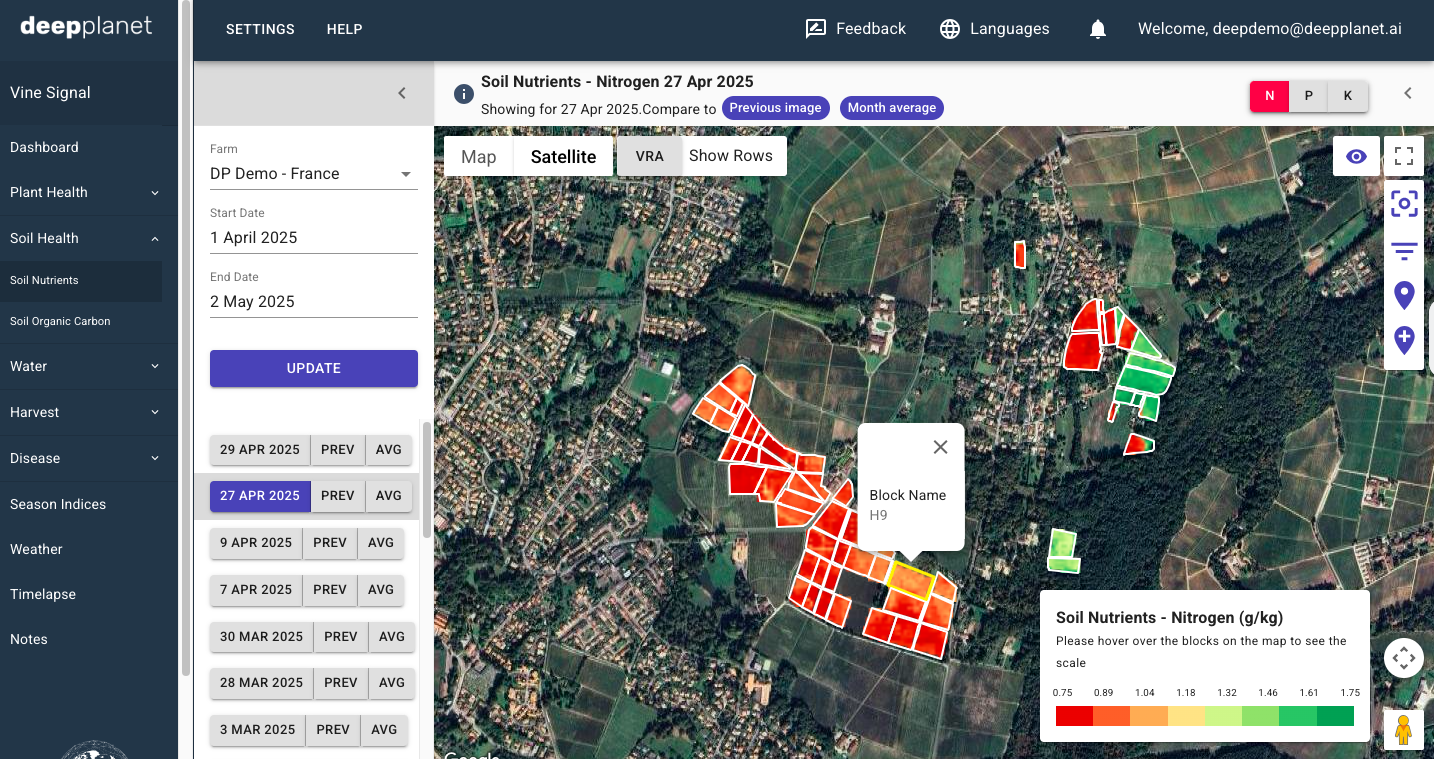
AI for Geospatial Data. Photo: Deep Planet
From research to industry
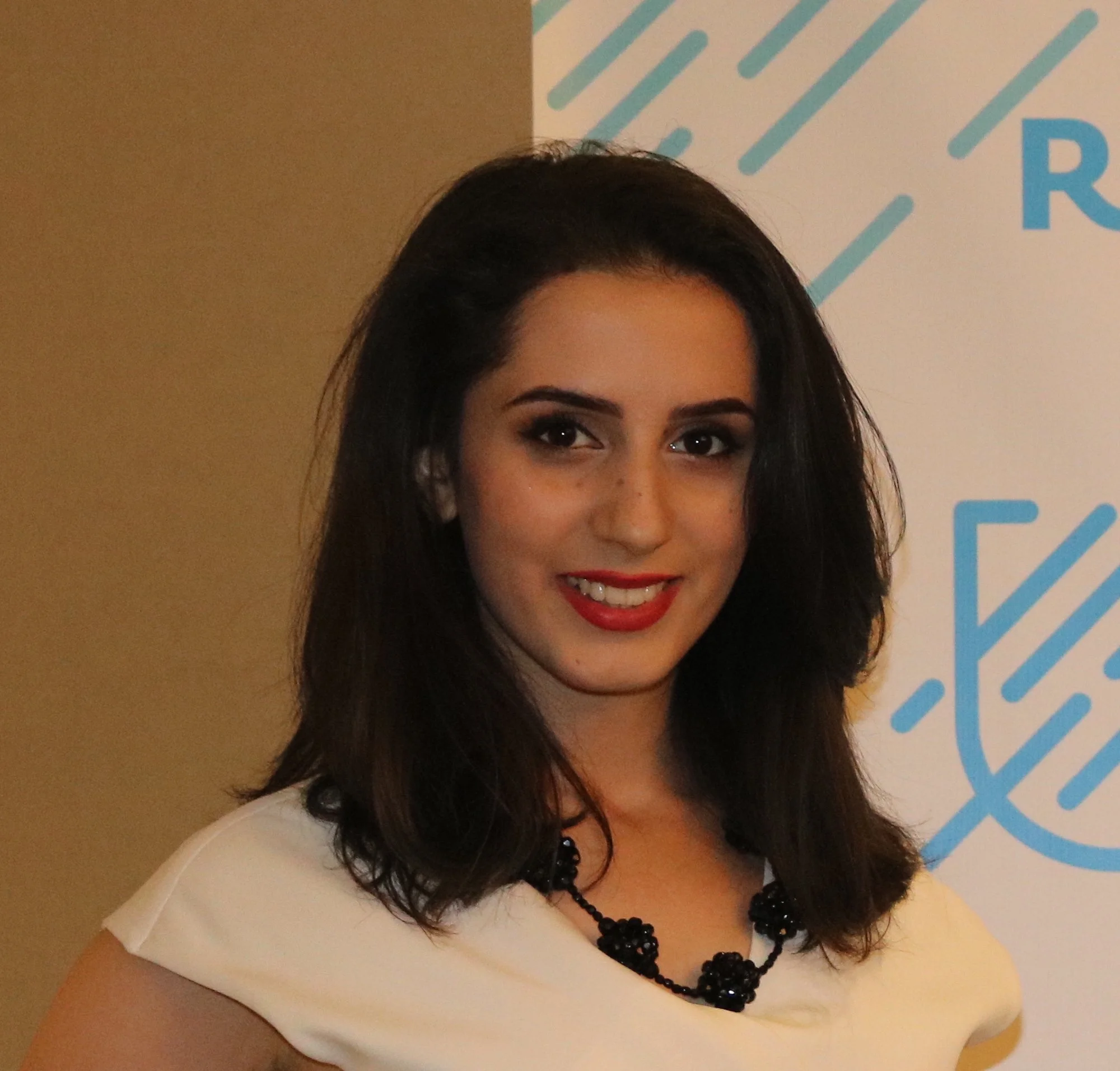
Lucy Manukyan, Deep Planet. Photo: Lucy Manukyan
Lucy Manukyan’s journey into the wine industry is anything but conventional. A plant scientist by training, Lucy began her career in biological sciences, with a focus on genetics and ecology. Her early research at the University of Illinois in Urbana-Champaign involved genetic modification techniques aimed at improving crop yields for subsistence farmers in Sub-Saharan Africa.
Despite her passion for scientific research, Lucy realized she wanted to step outside of academia.
“I enjoyed research, but I wanted to see more immediate impact,” she explains. “That’s what led me to industry, where I could apply scientific knowledge in real-world settings and see direct results.”
Lucy, who has Armenian heritage, continued her studies at the University of Oxford, where she deepened her understanding of AI applications in agriculture. During our conversation, we joked about how fitting it is that she now works in wine, given that Armenia is home to the world’s oldest known winemaking site.
Through her network, she was introduced to Deep Planet, an AI-driven company in vineyard management. The company was founded by scientists and engineers from Oxford University, leveraging research in AI to develop solutions for agriculture. After a short internship, she joined the commercial team and now plays a key role in helping growers adopt AI solutions tailored to their specific challenges.
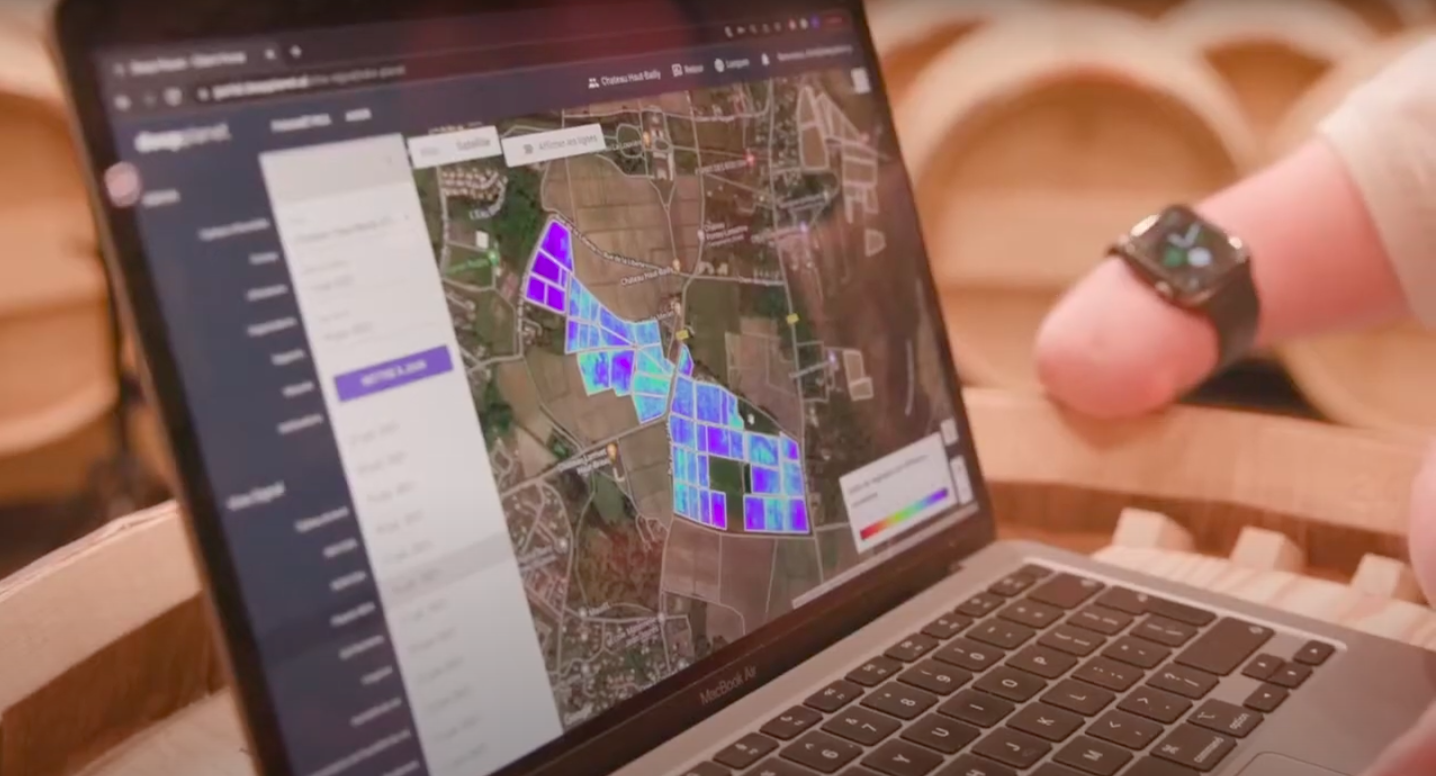
AI for Geospatial Data. Photo: Deep Planet
"During the dry months, they managed to reduce water usage by 60%, while also cutting operational costs by 30%."
Bringing AI to Viticulture
One of Deep Planet’s products, VineSignal, is designed to provide vineyard managers with real-time insights using AI and machine learning.
VineSignal offers several key capabilities that help vineyard managers optimize their processes. It predicts the optimal time for harvesting, assesses soil nutrient levels and moisture, and tracks vineyard health by detecting plant vigor and disease risks. The software also optimizes irrigation by reducing water waste and improving efficiency, while providing regional monitoring insights across multiple vineyards.
Lucy explains how the software works:
“Our AI processes satellite imagery beyond the human visual spectrum, detecting variations in plant health, soil moisture, and disease risk. We integrate this with live and historical data from weather stations, soil sensors, and growers’ own records. By analyzing these layers of information, we can provide predictive insights, for example, alerting growers about potential disease outbreaks before they spread or identifying areas that need irrigation adjustments.”
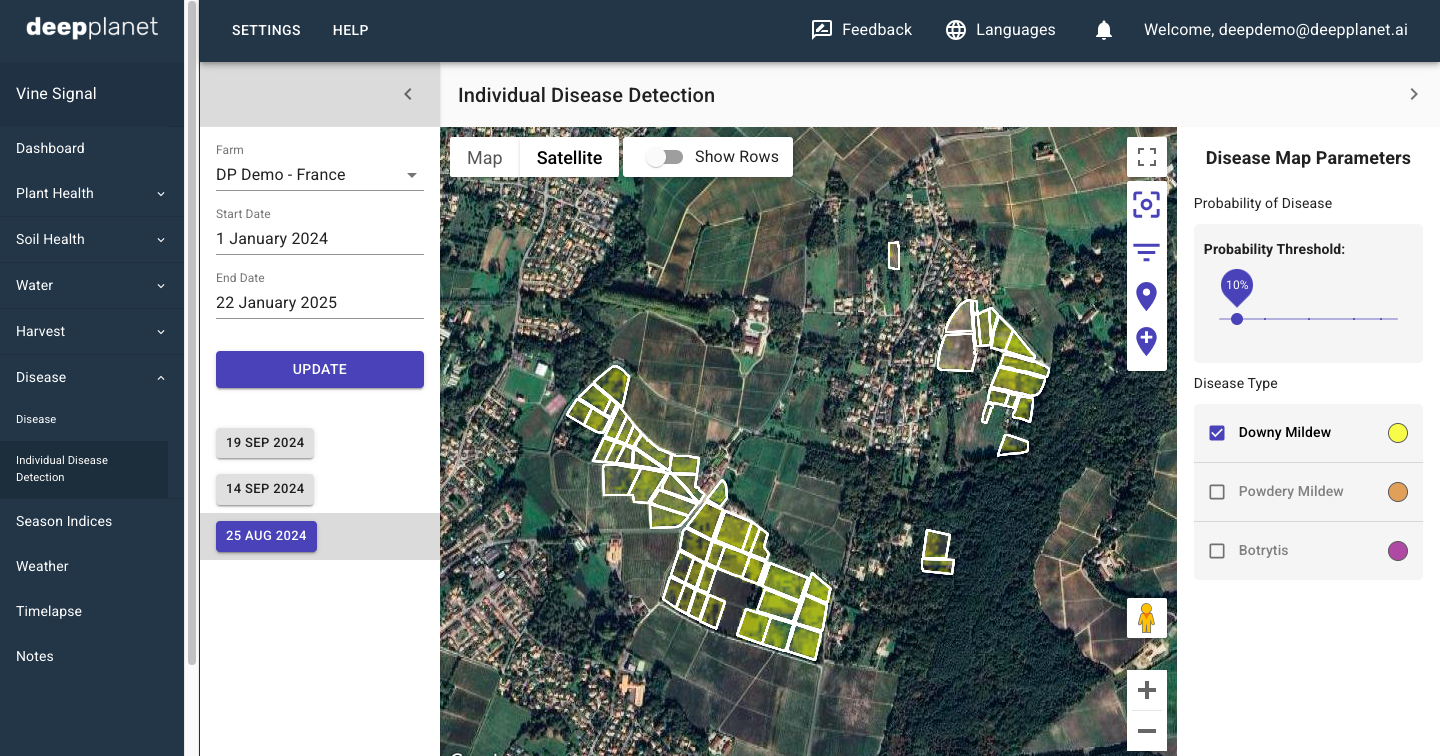
Disease detection via AI. Screenshot: Deep Planet
She continues:
“The beauty of VineSignal is that it simplifies complex data. Instead of requiring vineyard managers to interpret raw satellite readings, we present actionable insights in an intuitive dashboard. Growers can see at a glance which parts of their vineyard need attention and adjust their strategies accordingly.”
Editor's note: What is Machine learning?
Imagine you have a friend who wants to learn how to recognize different musical genres. Instead of explaining all the theory, you let your friend listen to lots of songs from jazz, rock, classical, and hip-hop. Over time, your friend starts picking up on patterns, like rhythm, instruments, and vocals, and can tell what genre a song belongs to just by listening.
Machine learning works the same way. It looks at large amounts of data (like weather patterns, soil moisture, and plant health) and learns from it. The more data it processes, the better it gets at predicting things, like when a vineyard needs watering or if a plant is getting sick.
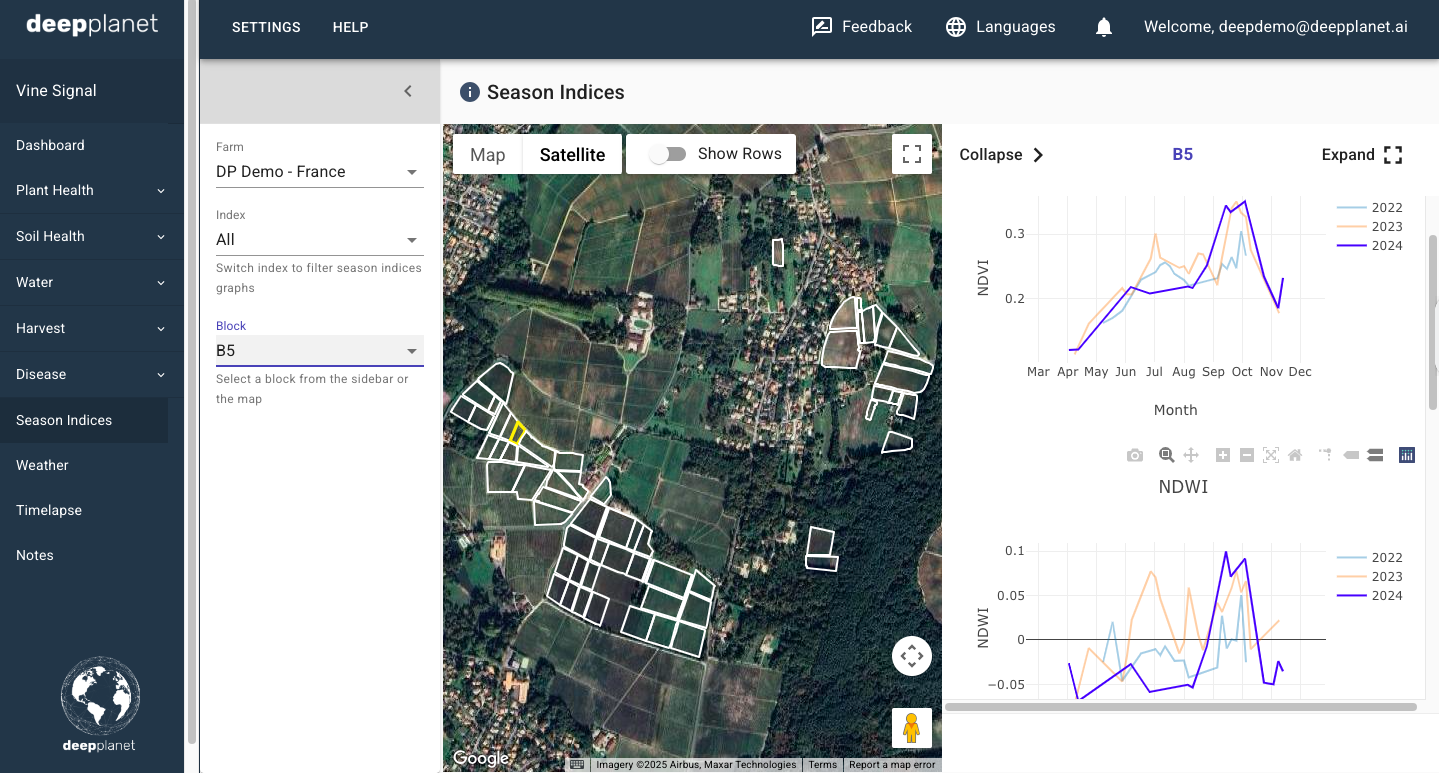
AI for Geospatial Data. Photo: Deep Planet
The Challenge of AI Adoption
New World wine regions are more receptive to technology compared to Old World regions, though VineSignal now works with vineyards across Australia, the UK, Spain, Italy, Portugal, the Netherlands, the U.S., and Argentina.
“Education is just as important as the technology itself,” Lucy explains. “Once growers see how AI can improve efficiency and sustainability, they’re much more open to it.”
"Sommeliers who understand AI-driven vineyard management can better communicate these efforts to customers."
Koonara Wines
One of VineSignal’s examples comes from Koonara Wines in Australia. Lucy explains how the platform supported Koonara and its owner, Dru Reschke, in making meaningful changes across their vineyard. During the dry months, they managed to reduce water usage by 60%, while also cutting operational costs by 30%. Perhaps even more significantly, they were able to detect disease early, helping them prevent outbreaks and avoid major losses.
“These are the kind of results that change minds,” Lucy says.
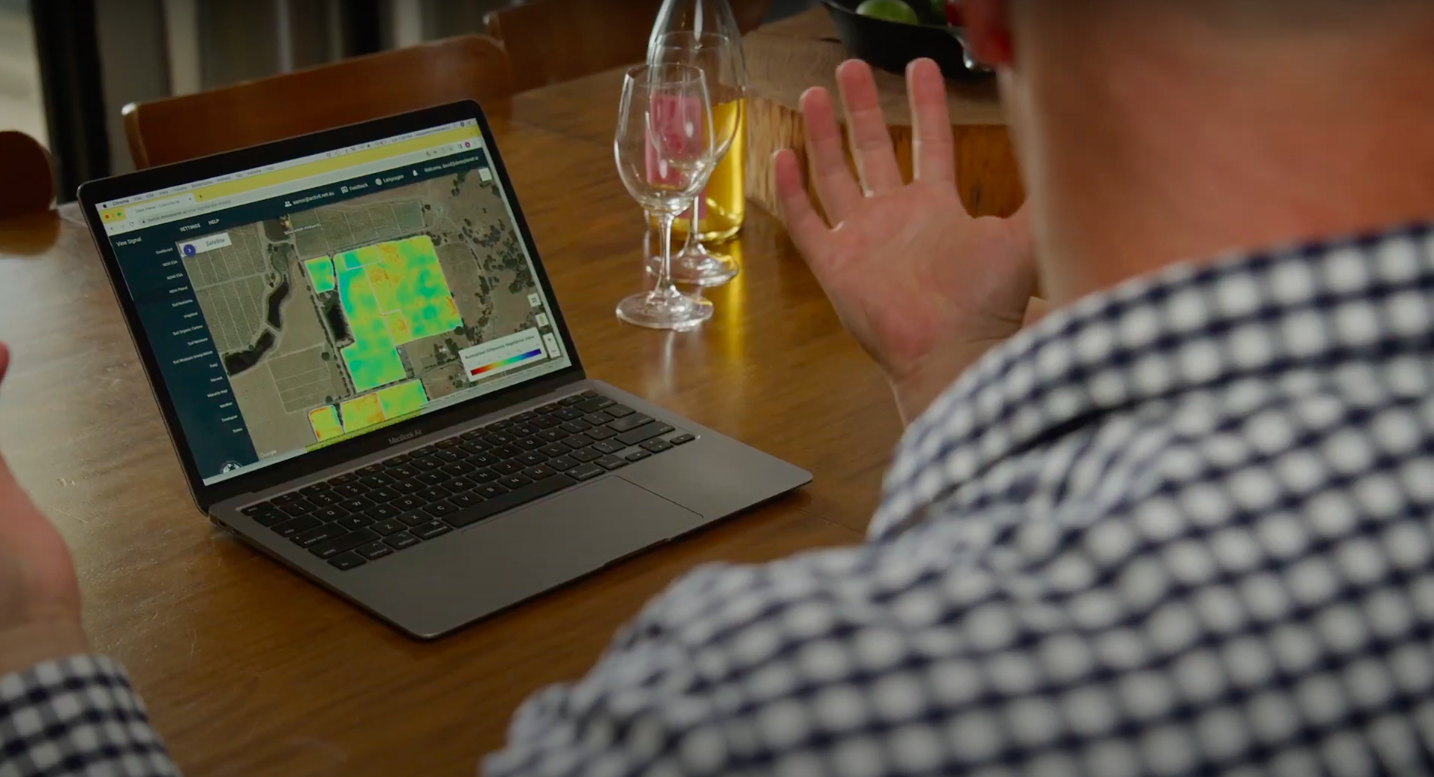
Photo: Deep Planet
The Future of AI in Viticulture
Looking ahead, Deep Planet is refining VineSignal based on grower feedback and expanding into other agricultural sectors. With climate change increasing unpredictability in vineyard conditions, Lucy believes AI will become a standard tool in viticulture.
“AI is a powerful tool for vineyard managers, not a replacement for their expertise,” Lucy clarifies. “With climate change creating unpredictable conditions, vineyard managers need data-driven insights to make informed decisions. Our technology helps them anticipate risks, optimize resources, and respond quickly to environmental changes, ultimately improving sustainability and efficiency.”
What has AI to do with Sommeliers?
With sustainability becoming a major concern for consumers, Lucy sees sommeliers playing a key role in bridging the gap between technology and wine culture.
“Consumers are asking more questions—about sustainability, vineyard practices, and how their wine is made,” she says. “Sommeliers who understand AI-driven vineyard management can better communicate these efforts to customers.”