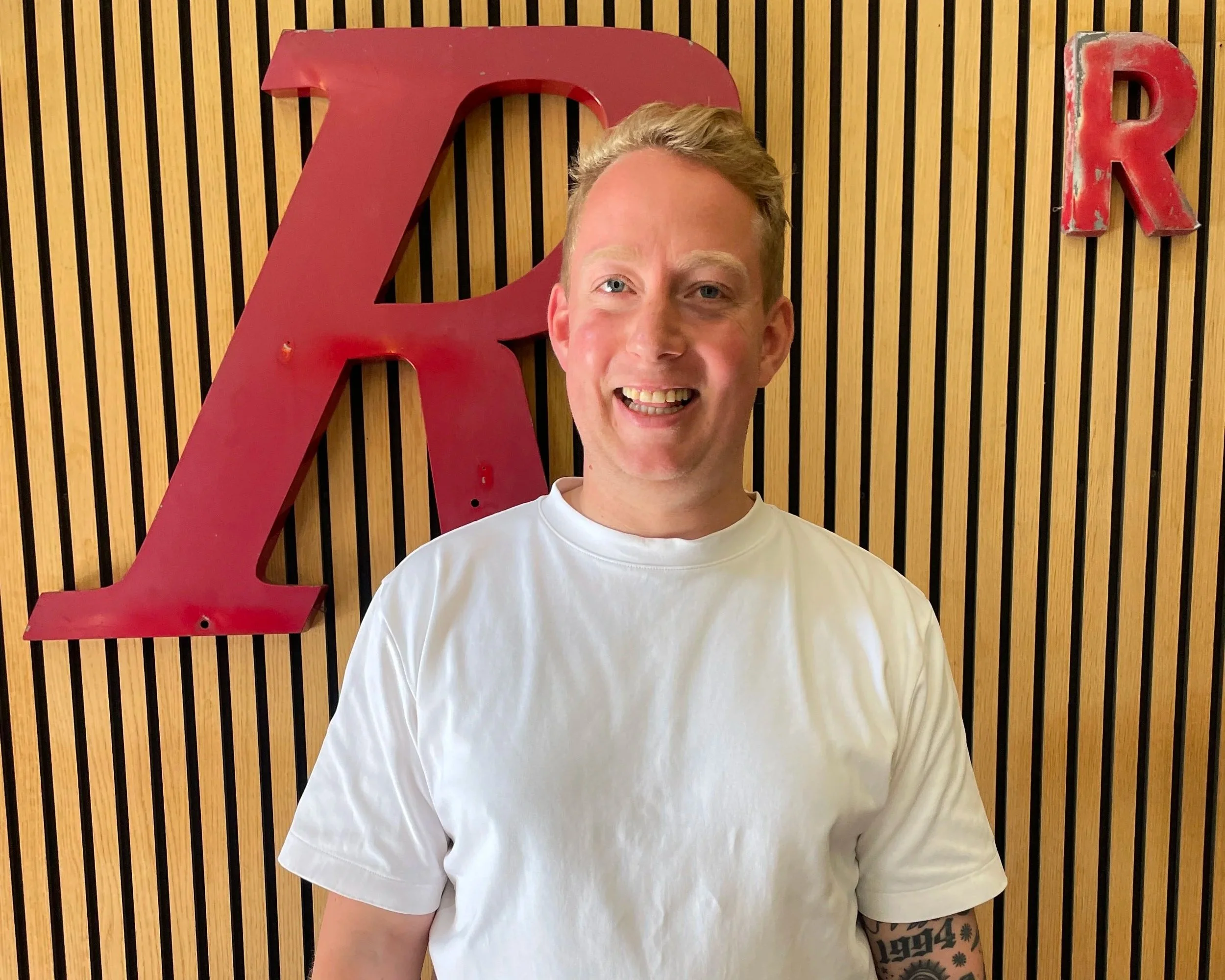
Philip Persson. Image: Anne Køster
There is a particular kind of magic in being made to feel unique: in a room full of other guests, at a table that isn't yours to keep, for the length of a single meal, someone notices exactly what you need before you've said a word. Philip Persson knows that magic intimately. He has spent his entire career chasing that feeling as a guest, and even more so, pouring it generously into others.
It's a journey that started far from any wine list. A boy from Amager who, at eighteen, bought a bottle of Dom Pérignon at a nightclub mostly to show off, and instead of letting it go the next morning, couldn't quite shake it. He eventually found, in the restaurant industry, something he hadn't known he was looking for: not just a career, but a family.
He first felt it at twelve years old, at Sletten Kro. A perfect steak, cooked exactly right, served with the kind of quiet attention that makes a child feel like the most important person in the room. He didn't have the vocabulary for it then. He does now. "Being watched," he calls it, not in the sense of being observed, but of being seen. It is the thread that runs through everything he has done since.
Philip grew up in Amager, the son of a chef who moved between big hotel kitchens and, later, large institutional catering. Cooking together never quite clicked for him, but talking about food, about flavour, about why a dish worked, that he loved. It was proximity to the industry without being of it yet, and it planted something.
The Bottle at the Nightclub
The signs came early and unglamorously. While still in gymnasium (Danish high school), Philip and his friends pooled their money one night and bought a bottle of Dom Pérignon at a nightclub, the kind of reckless, thrilling splurge teenagers make without quite knowing why. For most of his friends, that was the whole story: a good bottle, a good night, forgotten by the weekend. For Philip, it was the beginning of something. He photographed the label before it was even empty, started noting vintages, and began quietly reading up on Champagne on his own time, no one asked him to, there was no assignment, just a pull he couldn't explain yet. Most teenagers don't do that. At eighteen, he did something equally atypical: he invited two friends to Formel B for his first real Michelin experience, a decision that would turn out to be the pivot point of his life.
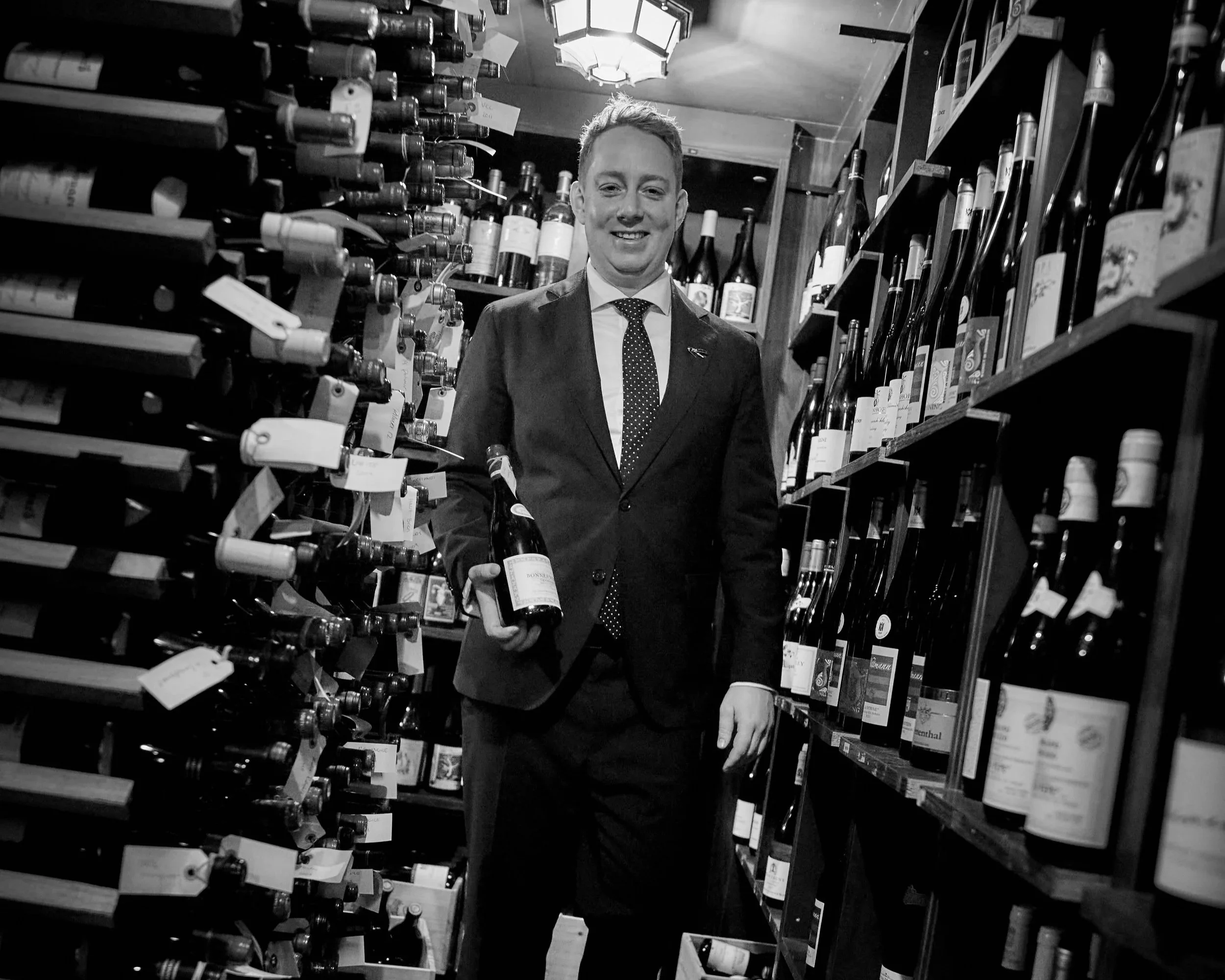
Philip Persson at Søllerød Kro. Image: Jesper Bøjlund
That night, he was poured a Philippe Pacalet Chablis and a Pacalet Chambolle-Musigny. He describes it plainly: that was when he was "awakened." A white and a red from the same producer, showing him two completely different expressions, the Chablis, he says, tasted "like a Champagne without the bubbles." Wine stopped being something you photographed and became something you needed to understand.
A Choice Between Two Kitchens
After high school, Philip went straight into apprenticeship, no detour through waiter school, no working his way up from the bottom. Destiny brought him to Søllerød Kro, where he started as a tjenerelev.
Once he'd completed his waiter apprenticeship, Jan Restorff, the restaurant's legendary sommelier, told him to take a year off before continuing his journey at Søllerød Kro, and the next step was Alchemist. When Philip did eventually arrive at Alchemist, he found a wine world he thought he already knew from Jan, and discovered it was something else entirely, a world that stretched far beyond traditional wine, into territory like tea pairings and other unconventional beverages. A year and a half there taught him a lesson that has shaped his approach since: being a sommelier is not about wine. Or rather, it's about far more than wine. "I knew about all the classics and how to sell wine," he says, the skill was never really in question. What he had to learn was everything around it.
He formalised his education at sommelier school under Julie Brink. But the real education in how to read a guest, which type of person is in front of you, what they want, and, more importantly, what they haven't said they want, came from Jan Restorff.
What Jan Passed on
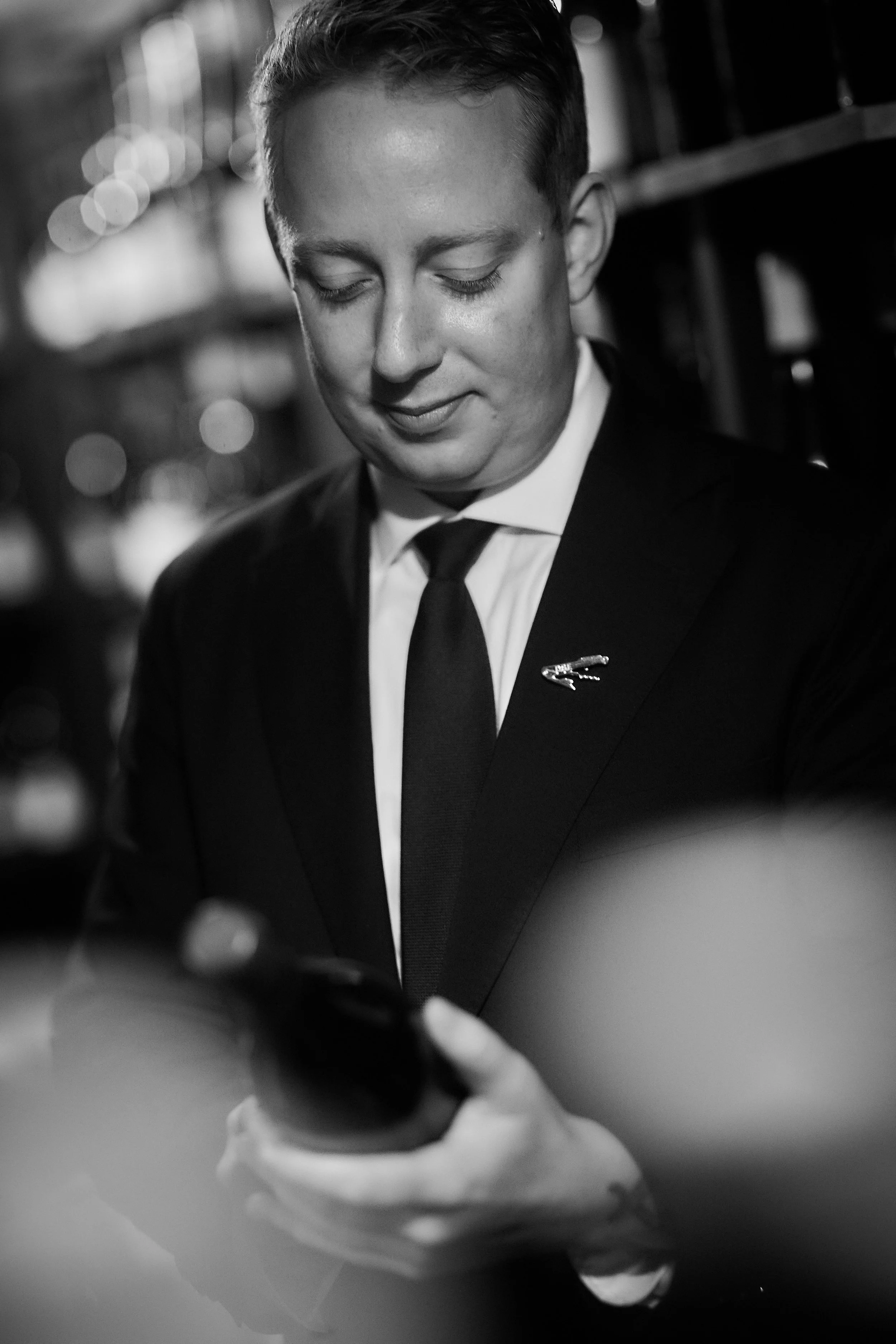
Philip Persson at Søllerød Kro. Image: Jesper Bøjlund
It would be easy to write this as a story about wine regions and tasting notes. It isn't. It's a story about a mentor, arguably the greatest Denmark has ever had when it comes to service and wine, who saw something in a young sommelier from Amager and decided to spend his Sundays on it.
Jan Restorff didn't just train Philip, he opened his own life to him. Lunches together, where Jan walked him through how to choose a bottle for a table he'd never met. Deliberately stressful service moments, engineered to test him and teach him in the same breath: the kind of pressure that, in the wrong hands, breaks people, but in Jan's became a way of building confidence one difficult table at a time. Family dinners, where the lessons weren't about pairing but about hospitality itself, about curiosity as a discipline, not a personality trait.
When Jan eventually asked Philip to leave Alchemist and join him again, it wasn't a simple decision. Alchemist had given him an entire universe of wine and beverage knowledge, and walking away from it, from the team, from the pace, from everything it had taught him, carried real weight. But the pull to work alongside Jan again, in a smaller, more family-like setting, won out. Jan brought his own son, Thor, into that same world, and Philip watched a master do quietly, patiently, what he now tries to do for the next generation of sommeliers coming up behind him: stay close to them, invest personal time in them, and show them the beauty of the industry rather than just its demands. It's a way of making people feel invited into an industry, not tested by it.
"Everyone should feel special," Philip says, and it's not a slogan. It's the operating principle Jan handed him, on a Sunday, during service or at a family dinner.
The Needle
When asked what the needle means, Philip tells me, that earning his sommelier pin changed something tangible in how people treat him. People trust him differently now. Sometimes the needle is even like a magnet for guests who want to talk wine seriously, who want the conversation, not just the pour. There's something quietly satisfying, he admits, in being the kid from Amager who now gets to open the biggest bottles in the room. But, the most important part is to pick the right bottle or pairing no matter the price. Perhaps a curious 18 year old enters the restaurant one day, in that case Philip is ready to guide him.
Sponsored banner from Ribera del Duero Wine
He stays sharp the way most good sommeliers do: by eating out, once a week, watching how other people in the industry do the thing he's trying to get better at.
What's Next: Etna
Right now, his curiosity is pointed at Etna. He's drawn to the tension in the region's wines: mineral, saline whites against reds with real tannic structure. He sees real potential there for pairing with modern Nordic-French cuisine, the kind of food he's spent his career standing beside.
It's a fitting place for his attention to land. Etna is a region defined by contrast: volcanic soil, cool altitude, old vines doing something nobody else's terroir can quite replicate. Philip has built his career on a similar kind of contrast: a boy who once stood outside the industry, taking pictures of a bottle he didn't yet understand, now standing inside it, making sure the next guest, and the next apprentice, gets to feel what he felt at twelve years old at Sletten Kro. Seen.