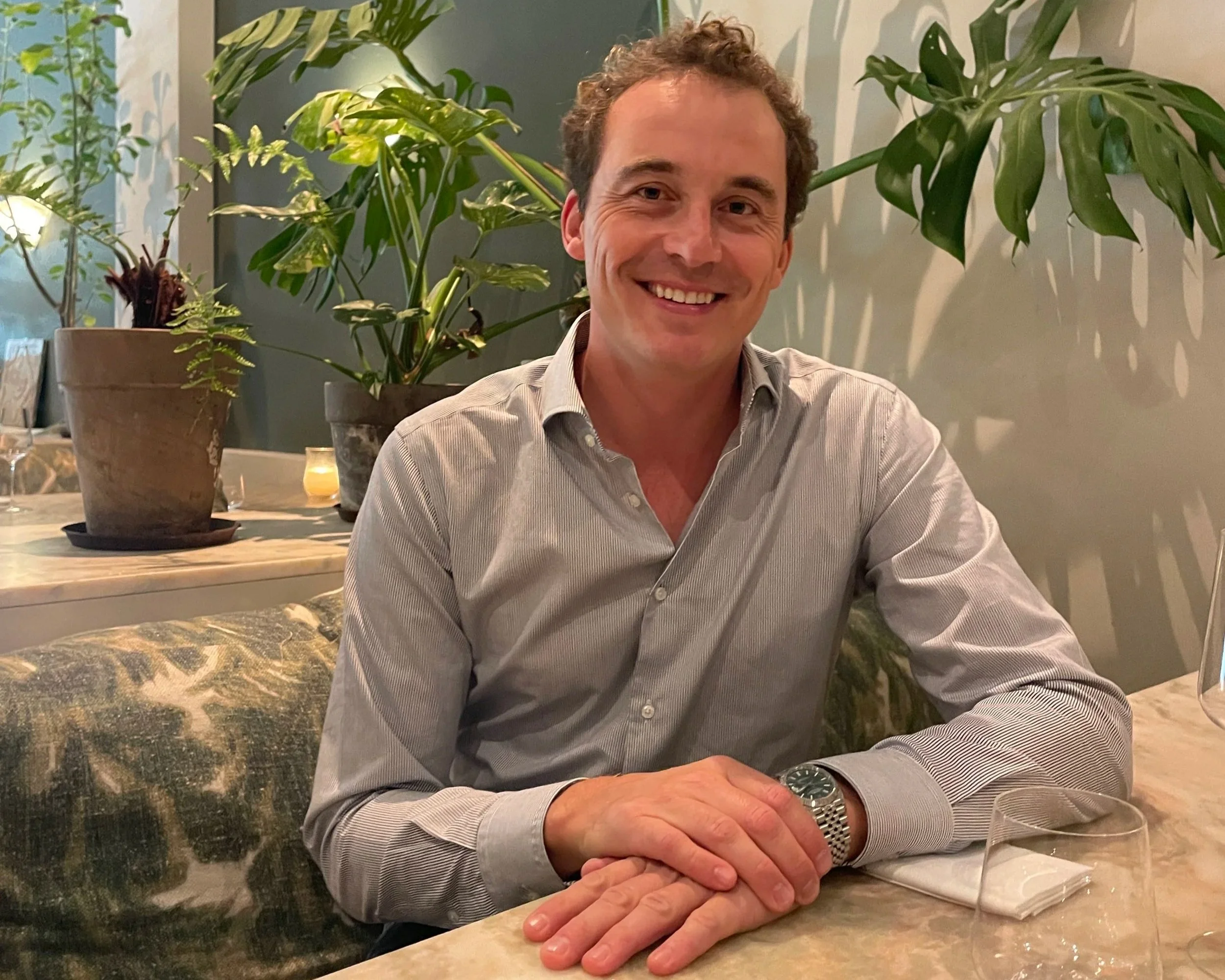
Charles Lachaux. Image: Anne Køster
In fifteen years, Charles Lachaux has changed nearly everything at Domaine Arnoux-Lachaux in Vosne-Romanée, from the vineyards to the cellar, and along the way even inspired his own mentor, Lalou Bize-Leroy. The first vintage aged entirely in ceramic is now reaching the market, and he would rather hear what you taste than tell you what to think.
Ask Charles Lachaux why he does something and there's a good chance he'll answer with a question. Why the whole clusters? Why not. Why vines trained almost two metres into the air, when everyone else in Burgundy keeps them at tractor height? Why not.
It's a running joke with him, he admits, but it's also the most accurate summary of how he works. At 37, he has changed nearly everything at Domaine Arnoux-Lachaux, the family estate in Vosne-Romanée that has been in his mother's family since 1858. He did it one step at a time, and almost never by asking what the market wanted.
"When you produce wine, you can try first to satisfy what you are looking for, not what your customers are looking for," he says. "Maybe I shouldn't say that, but I don't really care."
Fifteen Years, One Change at a Time
Lachaux joined the domaine full time in October 2011. His first complete cycle in the vineyard was 2012, and the changes started with that vintage. Until then everything at the estate had been destemmed. In 2012 he began using whole clusters.
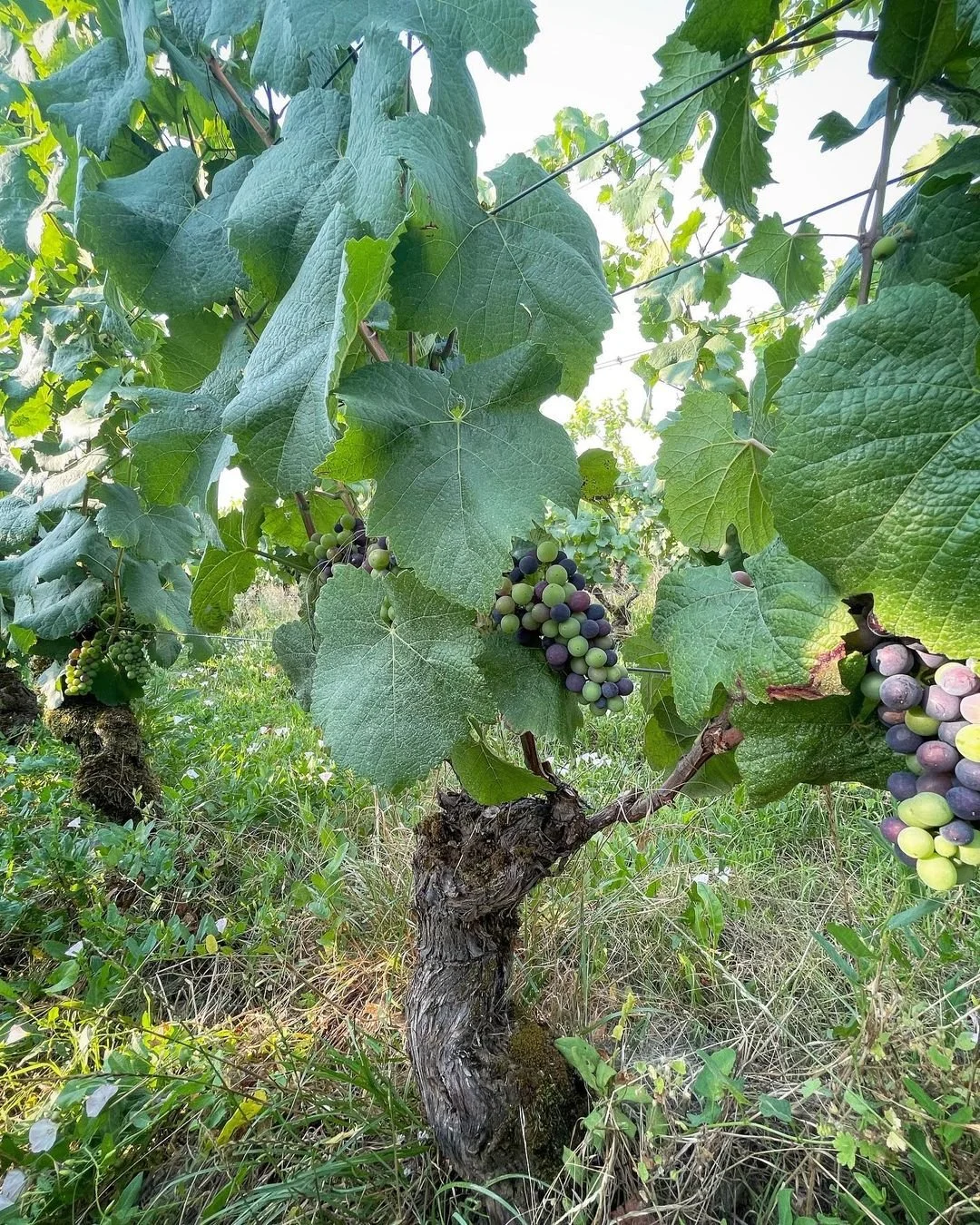
In 2013 he increased the proportion of whole clusters, started cutting back on the new oak his father had favoured, and switched the pruning to Guyot-Poussard. Between 2013 and 2014 the estate began organic conversion and biodynamic practices. In 2014 he stopped trimming the vines in one vineyard, the premier cru Aux Reignots. In 2016 he began raising the trellising.
Today the estate is 100% whole cluster, with no oak at all in the cellar. Since 2019 the soil hasn't been worked either. Lachaux calls it no-till, and says hardly anyone was doing it in Burgundy when he started. "Now it's called regenerative farming. When I started in 2019, it wasn't carrying a name."
His parents let him get on with it. "They saw that whatever I was changing was motivated by the soil, the vines, the grapes, the wine," he says. "So they said, okay, if you think it's the right direction, we'll let you do it."
Don't Take Impossible for Granted
The tall vines started as a weekend project. Aux Reignots is small and walled at the ends of the rows, so it has never been worked by tractor. With no machines to accommodate, there was no reason to keep the vines low. The team at the time wasn't keen on the extra work, so Lachaux did it himself, after hours and on weekends.
"With ceramic, the wines are very raw, very pure. No oak taste, no structure from oak, no vanilla. Just the fruit."
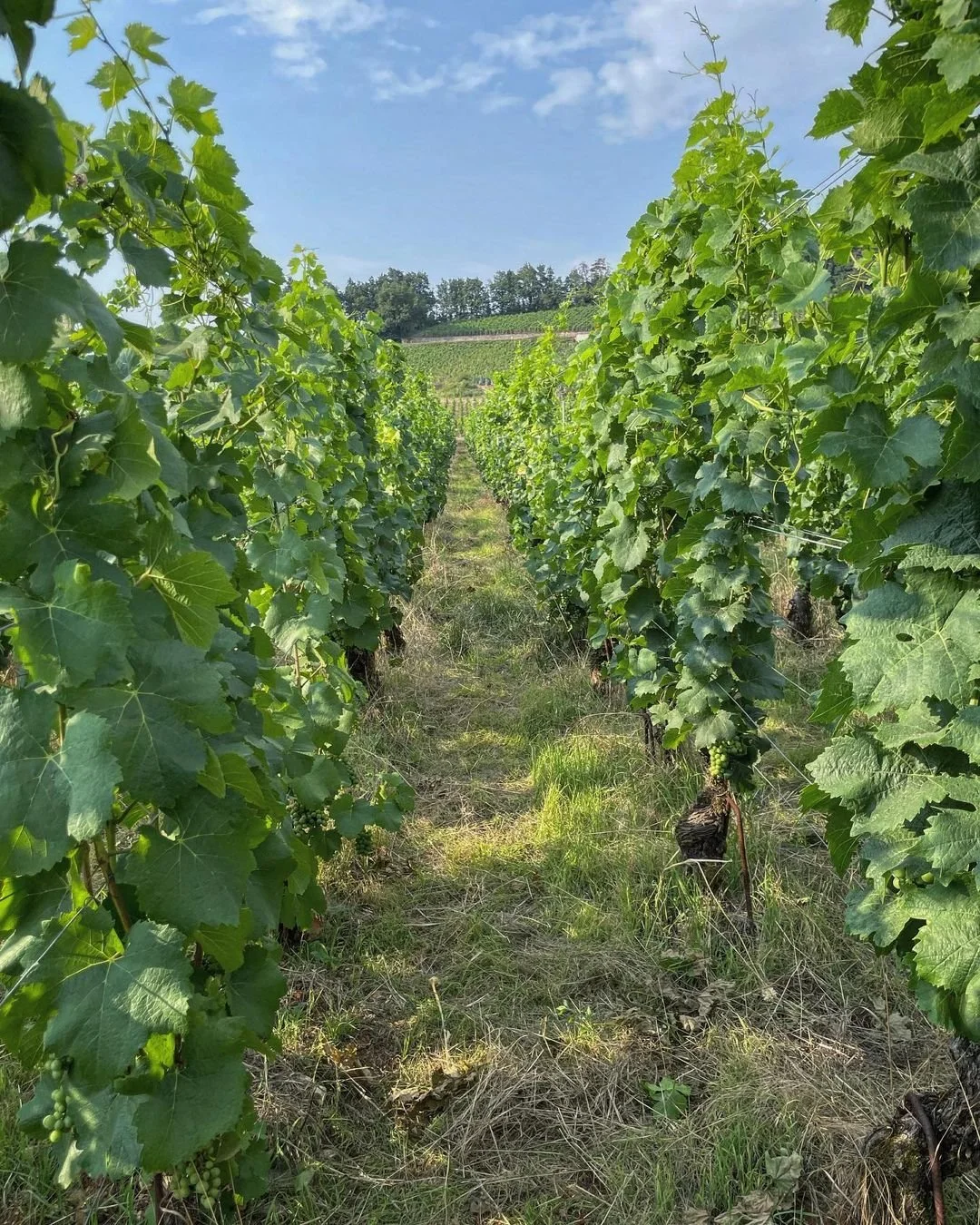
Untrimmed vines on tall posts need attention every other week during the growing season. Nobody in the region sold posts that tall, so he had to source them from outside Burgundy. According to Lachaux, he was the first in Burgundy to do it, in 2016. The posts at the domaine now stand around 1.70 metres, and in one vineyard belonging to his own label, Charles Lachaux, they reach 2.10 metres.
When he wanted to convert the rest of the estate, the tractors wouldn't fit. "So I started to look for tractors, instead of saying it's too complicated, so we won't change," he says. "Don't take impossible for granted. At least we should give it a try."
The Student and the Teacher
Any story about Lachaux sooner or later mentions Lalou Bize-Leroy, his mentor, and he's the first to say that she inspired him. When she began working differently in the early 1990s, he says, she didn't care what people thought. "She did things for the sake of the soil, the vines and the fruit. That's why the wines are so celebrated. She took risks in order to produce better wines, and that's what inspired me."
The influence has also run the other way. After a tasting, Bize-Leroy visited the vineyard where he had raised the posts. "She said it was really interesting, and she changed hers," he says. "She inspired me, and then she took something from me. That feels nice as well."
Still, he is tired of being seen as a copy. They share untrimmed vines, tall trellising and biodynamics. Beyond that, he says, their methods have almost nothing in common. She destems, and he uses whole clusters. She works her soils, and he doesn't touch his. She uses new oak and bottles after about a year. He uses ceramic and bottles after three.
Fewer Bottles, More People
The changes come at a price. When Lachaux joined in 2011, the domaine had three full-time employees and hired four or five extra hands for six weeks in summer. His parents made 80,000 to 90,000 bottles a year. Today there are seven full-time staff, 16 seasonal workers for three months, and a target of around 25,000 bottles, from the same 14.5 hectares.
"I want the vines to naturally produce a smaller quantity of grapes, so the grapes are naturally more concentrated," he says.
He's candid about what that means for prices, and about how prices have risen elsewhere. When one grower's bottle sells for 100 euros, he says, the neighbour charging 50 raises his price to match, whatever his costs. In his view, only a handful of producers have actually invested enough to justify recent price increases.
"I don’t produce wine for it to sit in a cellar like a vault and become an asset. It’s meant to be drunk."
He also buys a lot of wine himself, which he says is unusual among growers. Most swap bottles and never pay for them. "So they don't know what it's like to pay 200, 300 or 1,000 euros and be disappointed," he says. "We need to match the expectations people have when they buy this kind of wine."
Three Years in Ceramic
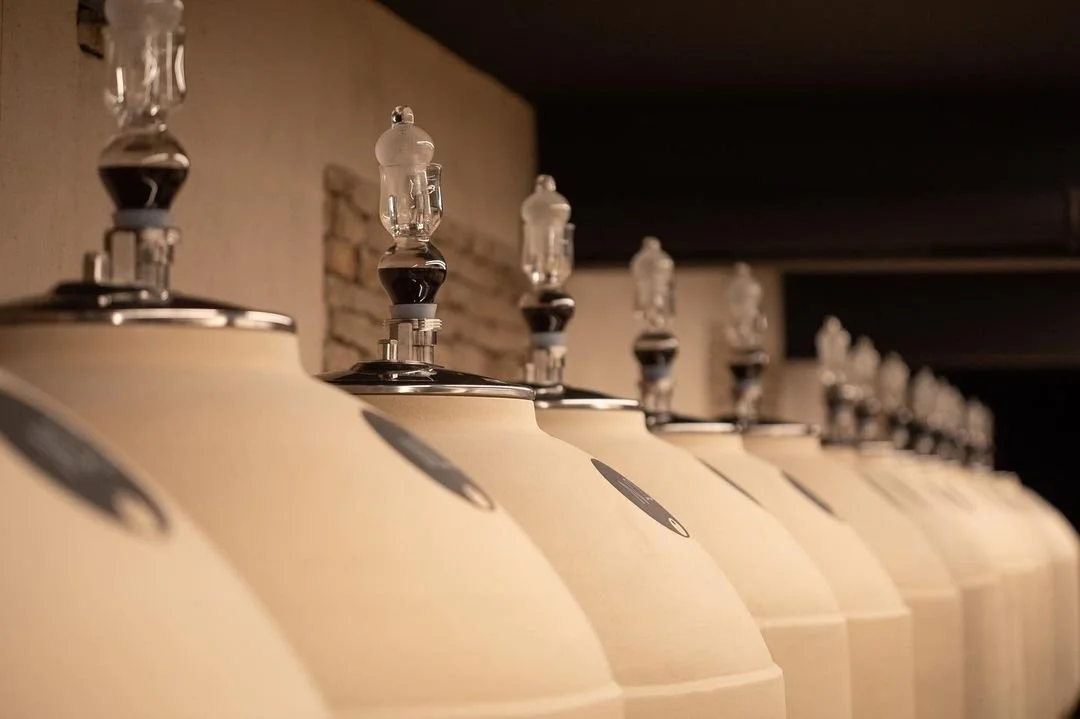
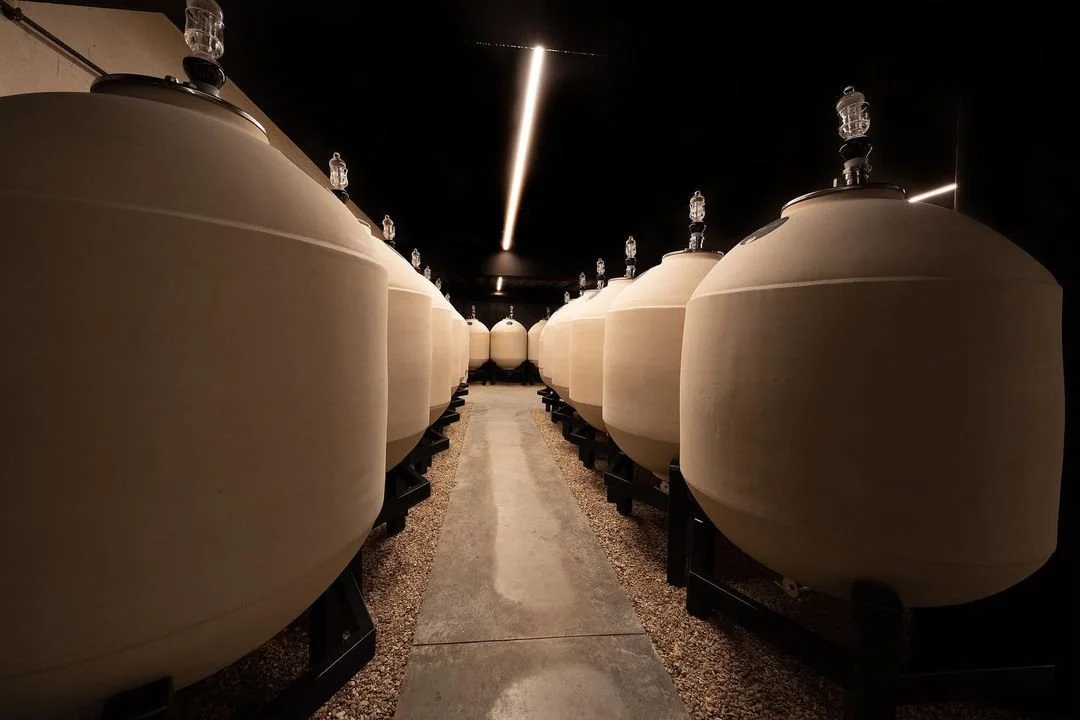
2022 is the first vintage aged entirely in ceramic, and it's only now being shipped. The wines spend three years in sandstone vessels and another year in bottle before release. From the next vintage, he plans to add another year.
"With ceramic, the wines are very raw, very pure," he says. "No oak taste, no structure from oak, no vanilla. Just the fruit."
He is honest that nobody yet knows how the wines will be received, or how they will age. As far as he knows, no one else combines Burgundy vine density, tall trellising, organic and regenerative farming, no trimming, 100% whole cluster and three years in ceramic. "It's the first of something new," he says. Others in Burgundy have experimented with clay, among them natural-wine pioneer Frédéric Cossard and Volnay's Pousse d'Or, but Lachaux is the first to move an entire estate, grand crus included, out of oak.
What his neighbours think interests him only up to a point. "What growers say only matters if they drink or buy the bottles. It's not how the vineyard looks that matters. It's what is in the bottle."
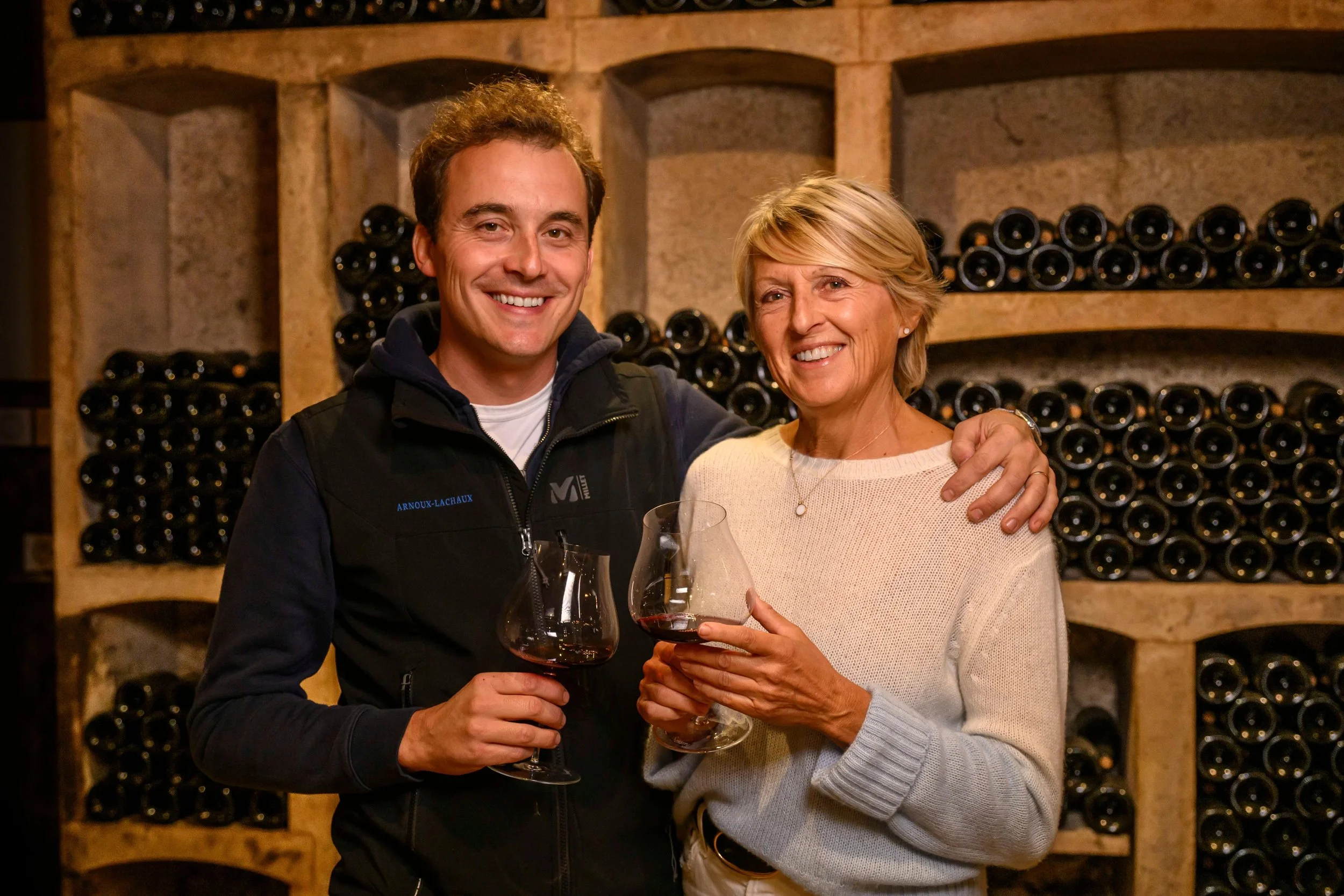
Charles Lachaux. Image: private archive
The market seems to agree. While many large estates are struggling to sell, every importer took its full 2022 allocation. Around 40% of the domaine's markets asked for more, including Philipson Wine in Denmark. In recent years he has cut exports outside Europe to supply more French and European restaurants, and China and the US now take only a few hundred bottles each.
Lachaux cares that the bottles get opened. "I don't produce wine for it to sit in a cellar like a vault and become an asset. It's meant to be drunk."
No Regrets
Lachaux traces his attitude back to a dinner several years ago. One of Burgundy's most celebrated growers, close to retirement, told him how brave his approach was, and said he regretted never trying anything similar himself.
"Since that night, I've thought that when my career comes to an end, I don't want to think, I should have and I didn't," he says. "I'd rather say we tried, maybe we almost screwed it up, but at least we tried and we had fun."
The big changes, he says, are now done. What remains is detail: pruning, trellising, canopy work, how the ceramic vessels are handled. He compares it to sport. The early progress comes quickly, and after that every small improvement takes enormous effort. "The big changes were risky, but they were easy to do," he says. "Now it's hard work on very small details. That's why it's so interesting."
Sponsored banner from Philipson Wine
He had been to Noma the weekend before the interview, and he draws a parallel with what Noma and El Bulli did for gastronomy. Maybe ceramic will do something similar for Burgundy, he says, though that isn't the reason for doing it. "If you want wines to remain great, maybe you have to change everything so that nothing changes."
Advice for Sommeliers? None
So what should Danish sommeliers keep in mind when they pour his wines? He won't say.
"I hate telling people what to do," he says. "I describe what we try to do with the team, but never the wines. Everyone has their own history, their own library of aromas and tastes. I want people to approach the wines through that."
Harvest works the same way. The team picks when the grapes taste ripe, not according to pH or analysis numbers. It's an approach he says goes down particularly well in Denmark and Japan, where people care about closeness to nature and letting the product speak for itself.
The Verdict is Yours
Anyone looking for a critic's verdict on the 2022s will come up short. Lachaux stopped holding tastings for journalists after the 2020 vintage. The early reactions come from merchants, who are understandably enthusiastic, and from collectors on international wine forums, who are divided. Some describe aromatics that practically leap from the glass, while others miss the texture that oak gave. For a winemaker who refuses to describe his own wines, that is perhaps exactly as it should be.
The verdict belongs to whoever pulls the cork.