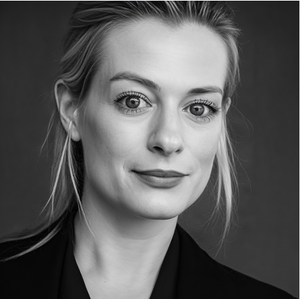
Marlene Lund Larsen: A Sommelier Without Shortcuts
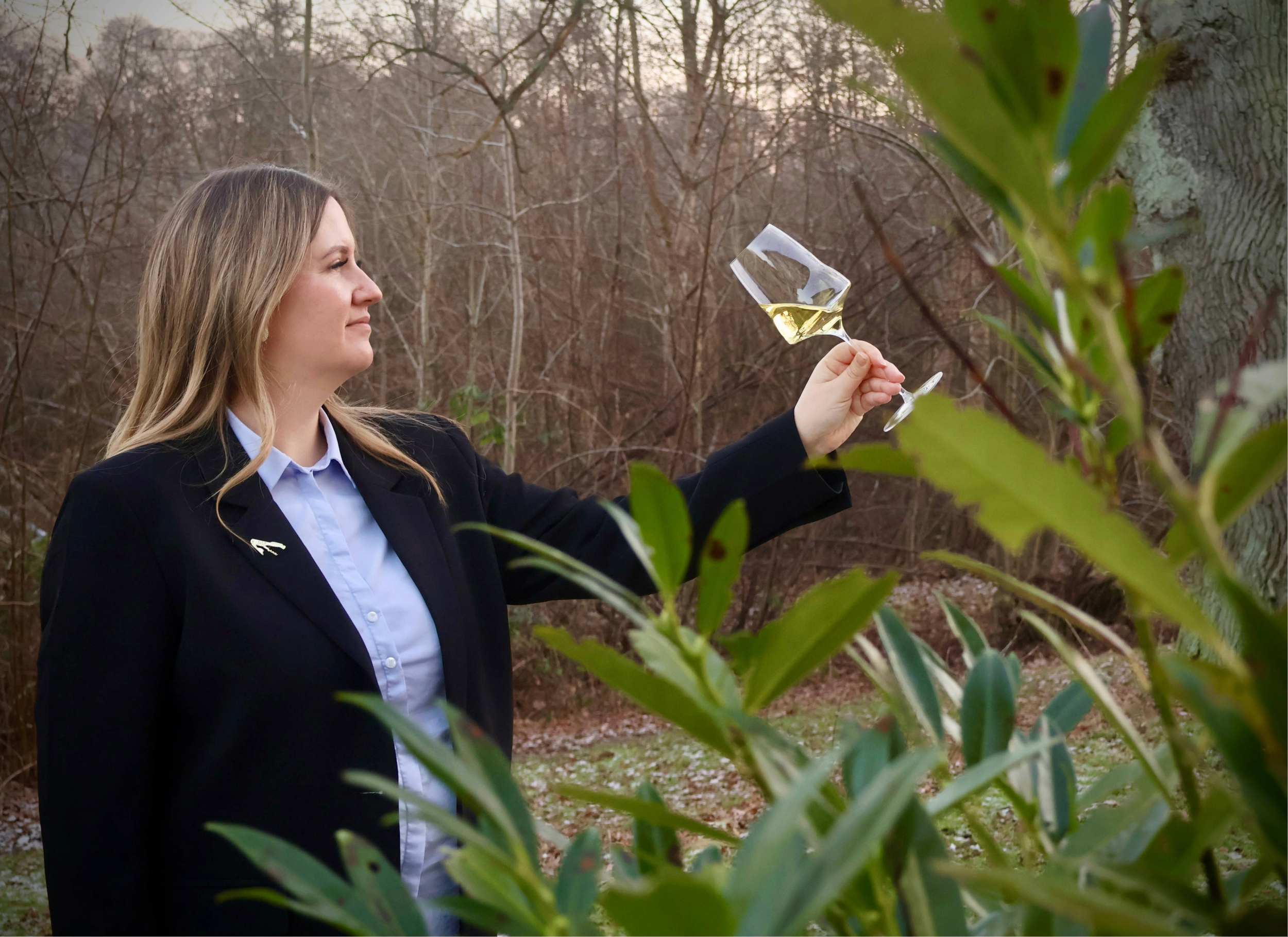
Marlene Lund Larsen. Photo Ronja Bo Gustavsson DSF
Marlene and I had been talking back and forth for a while about doing a Member Spotlight.
Like so many things in this industry, it took time to line up calendars. I had forgotten to remind her to bring her DSF pin. It turned out not to matter. She arrived prepared anyway, as if it was never really a question.
Before the interview, I did some research. It quickly became clear that Marlene has a very classic approach to wine. Burgundy appears again and again, and Chardonnay and Pinot Noir are recurring references on her Instagram.
Marlene Lund Larsen has worked in the restaurant industry for more than sixteen years and is trained through a traditional waiter apprenticeship. Her career includes positions at several highly regarded Danish restaurants, including Ti Trin Ned, where she worked as Assistant Restaurant Manager and Head Sommelier, and Falsled Kro, where she further developed her experience in fine dining service and wine programs. She has completed her sommelier education at the Scandinavian Wine Academy and is an active member of the Danish Sommelier Association. In 2025, she participated in Best Sommelier in Denmark. Marlene is currently in a transition phase and speaks with clear enthusiasm about new professional plans and projects ahead, although it is still too early for her to share details publicly.
Where it begins, without trying to begin
We sat down with a coffee and I asked her when wine moved from being part of service to something she wanted to work with seriously. She did not answer right away.
“Wow,” she says, and then she smiled. “That is actually a hard question.”
She tells me she has been in the business for about sixteen years. She started as a waitress, as a student apprentice. Back then, wine was not something she cared about.
“I did not like wine at all,” she says. “Not even a little. I think something happened toward the end of my apprenticeship. You do three years, sometimes three and a half. And at some point, I remember thinking: okay, this is actually exciting. I can follow what is going on, I can understand it. And when that happened, I started thinking that I wanted to know more. I think that was around thirteen years ago.”
“It was not one glass,” she says. “It was many glasses, over many years and very gradually.”
She tells me about a colleague she worked with at the time, someone who noticed her curiosity before she really named it herself. He gave her The Oxford Companion to Wine.
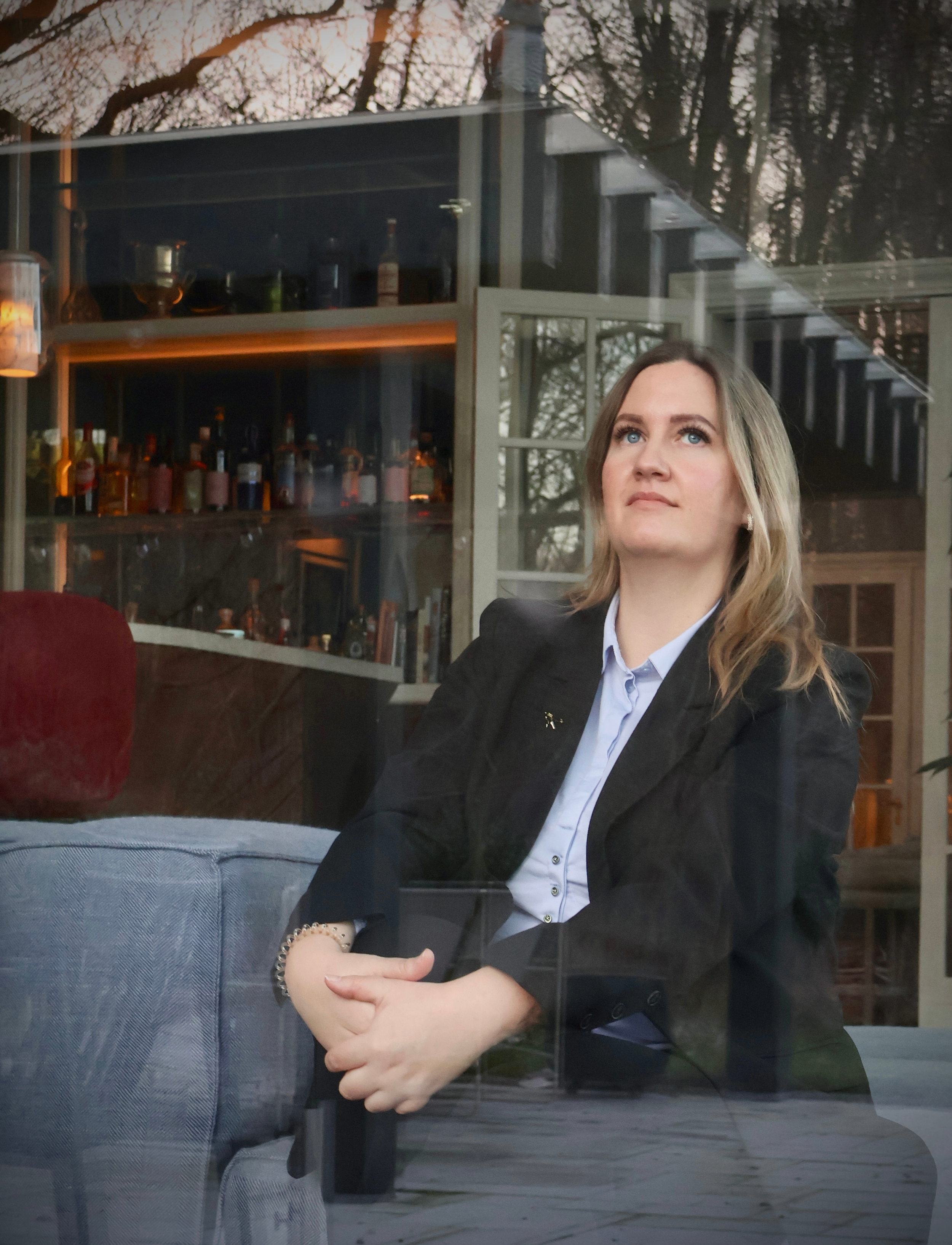
Marlene Lund Larsen. Photo Ronja Bo Gustavsson DSF
“He could sense that I had a good understanding,” she says. “Even though I was still very early. And I remember that every time I saw a word I did not understand, I looked it up. Sometimes it was very basic things but every time I understood a little bit more, it made me curious.”
When it turns serious
The point where curiosity turns into something more committed does not arrive with a decision, or even with a clear plan. It arrives later, when Marlene starts working at her Michelin-starred restaurant, MeMu. When she talks about that period, she does not frame it as a breakthrough. She describes it more as a gradual shift in how she paid attention.
“That was where I really discovered how interesting wine was for me,” she says. “Not only the wines themselves, but the way wine could be part of something larger.”
She tells me it was during service that things started to change. Standing in front of guests, presenting wines as part of a pairing, explaining what was in the glass and why it was there.
“When you talk to guests and they respond by saying that they understand what you are saying, that you explain it in a way that makes sense to them, it stays with you,” she says. “I heard that several times, and it made me think: okay, if I am already good at this, then I want to get better. I want to know more.”
She does not talk about impressing guests. It is not about showing knowledge, it is about communication.
“I wanted to be able to explain why,” she says. “Why does this wine work with this dish? Why does this flavour show up here and not somewhere else? And I wanted to be able to do that both in Danish and in English, depending on who was sitting at the table.”
“It just built slowly,” she says. “Every time I understood something new, it made me want to understand the next thing.”
Listening to guests
When Marlene talks about wine, she almost always circles back to service. Not as a concept, but as a place where things actually happen. It is where she learned most of what she knows, and where she still tests her understanding every day.
“It all happens in service,” she says. “That is where you really learn how people think.”
She starts describing situations that feel familiar the moment she mentions them. Guests sit down, looking at the menu, saying they want a wine pairing, and then, almost without noticing the contradiction, adding something else a few minutes later.
“They say they want a wine pairing,” she says, “and then they say they do not like red wine. Or they do not like sweet wine. And then you already know that a pairing might not be the right solution for them.”
She does not say this critically, more like an observation, something you only notice after many years on the floor.
"When they taste the wine and say: this is exactly what we wanted, that is when you know you listened properly. "
“So instead of insisting on a pairing, I start asking questions,” she continues. “What do you usually drink? Do you mostly drink white wine or red wine? And then, what kind of white wine?”
Very often, she says, the answers are vague.
Sponsored banner from H.J. Hansen Vin
“People say things like: it has to be dry,” she says, and then she smiles slightly. “And then I have to ask: what is dry to you.”
She explains that the same word can mean very different things depending on who is using it.
“Some guests think Chardonnay is sweet because it is rich,” she says. “Others think sweet means low acidity. So when they say dry, they might be talking about structure, or freshness, or just that they do not want something fruity.”
“My job becomes translating their words into wine language,” she says. “Not to correct them, but to understand them.”
She talks about how this understanding shapes her recommendations.
“If someone says they want a wine pairing but clearly has strong preferences, then I would rather suggest a bottle that fits them properly,” she says. “A pairing includes many styles, and if you already know that half of those styles will not work for them, then it does not make sense.”
“When they taste the wine and say: this is exactly what we wanted,” she says, “that is when you know you listened properly. Sometimes they taste something they have never had before, and they say: wow, we did not even know this existed. That is also a very good feeling.”
Thinking beyond wine
When we move from wine into a broader conversation about beverage programs, Marlene does not change the way she speaks. She does not separate wine from everything else.
“For me, it always comes back to balance,” she says. “If you take a Chardonnay from the southern part of Burgundy, for example, you often have this combination of high acidity and a certain richness at the same time. That balance is what makes it work with food.”
“So when you think about something else, like a juice or a non-alcoholic pairing, the question is not really what it is made from. The question is whether you can recreate that same feeling in the glass. Does it have acidity? Does it have structure? Does it have some weight to it?”
“In that way, it does not really matter if it is wine or not,” she says. “The principles are the same. You are still looking for balance between what is on the plate and what is in the glass.”
When I ask her if she feels this way of thinking has become more relevant in recent years, she nods.
“You notice it in service,” she says. “More and more guests ask for non-alcoholic pairings. And when you talk to them, it is often not because they do not care about what they drink.”
“They want the same experience. They just do not want alcohol. So you still have to be just as precise.”
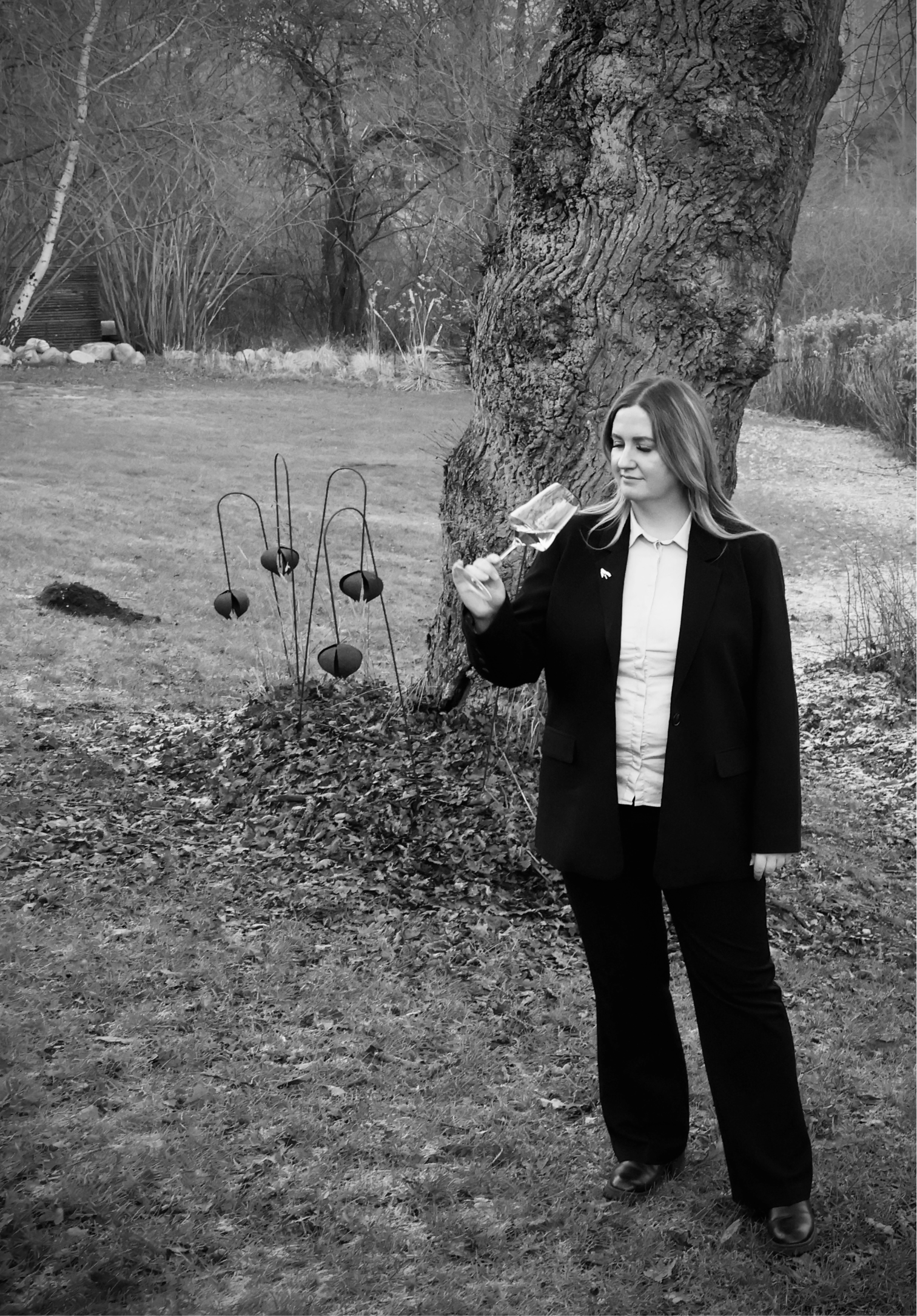
Marlene Lund Larsen. Photo Ronja Bo Gustavsson DSF
She describes this not as a challenge, but as something that keeps the work interesting.
“You cannot just remove wine and think the job is done,” she says. “You still have to build something that makes sense alongside the food.”
Learning over time
When the conversation turns to education, Marlene does not speak about it as something that sits apart from the rest of her work.
“When I got my pin from the Scandinavian Wine Academy, I remember thinking: okay, maybe that is it,” she says, and then she laughs. “And of course, it is not.”
She tells me that she actually attempted the sommelier education more than once. The first time was not long after she finished her waiter education, and she can see clearly now why it did not work then.
“I was not ready,” she says simply. “I did not have enough experience yet. I did not have enough reference points and timing matters much more than you think.”
She talks about how different it felt the time she eventually finished.
“When I completed it a few years ago, I understood something very clearly,” she says. “That this never stops. You do not arrive somewhere and then stay there. You just keep moving.”
She does not say this with any sense of stress, more like acceptance.
“There is always something new,” she continues. “New appellations, new regulations, climate change. Even the classic regions change. You cannot rely on what you learned ten years ago and expect it to still be enough. You need to stay curious. And you need to stay updated. Otherwise, you slowly fall behind without really noticing it.”
When I ask how she keeps learning while working full time, she does not talk about big systems or strict routines.
“A lot of it happens at work,” she says. “When you work with other wine people, you learn from each other. And when guests ask questions you cannot answer immediately, you go home and look it up.”
She tells me that she still prefers books over online sources.
Sponsored banner from Copenhagen Sparkling Tea
“I trust books much more,” she says. “The Oxford Companion, The Wine Atlas and the material from the Scandinavian Wine Academy. If I read something online, I usually go back to a book to confirm it. You can Google one question and get many different answers. That makes it hard to know what is correct. With books, you know who wrote it, and why.”
“I do not feel like I need to know everything at once,” she says. “I just need to understand a little bit more than I did before.
“And then, when I understand something new, it often changes how I taste things I thought I already knew. That is what keeps it interesting.”
"I realised that even when I do not feel ready, I can still do something and learn from it. That was important for me to experience."
DM 2025, nerves, and what stayed afterward
When we talk about the Danish Sommelier Championship in 2025, Marlene does not introduce it as a milestone.
“I did not really think about it in a big way beforehand,” she says. “I signed up because people around me kept encouraging me. And at some point, I thought: okay, I will just do it and see what it is actually like.”
She tells me she did not feel ready. In fact, that was the part that stayed with her the most leading up to the competition.
“I hate making mistakes,” she says. “I really like being prepared and this time, I did not feel prepared at all.”
The days before were filled with nerves.
“I almost felt naked,” she says. “Because suddenly you are standing there with what you know, and what you do not know becomes very visible to yourself.”
During the competition, she focused on something very simple. “I told myself: just do what you can with what you know right now,” she says. “And take notes on what you need to learn for next time.”
She talks about sitting among very strong competitors, many of them people she respects deeply.
“There were moments where I thought: okay, I do not know this,” she says. “And instead of panicking, I tried to tell myself that it was okay. That I would know it next time.”
What surprised her most came afterward. “I was so proud of myself.” She explains that the feeling stayed with her longer than she expected.
“I realised that even when I do not feel ready, I can still do something and learn from it,” she says. “That was important for me to experience.”
When I ask her if she plans to participate again, she answers directly. Yes,” she says. “This year.”
I ask how she plans to prepare. “I haven’t started yet,” she says. “But before the competition, I want to start another education.”
Further Education Ahead
She tells me that a friend has been encouraging her to take the Court of Master Sommeliers route, although she has not yet decided at which level to begin.
“He keeps saying, ‘Of course you can do it,’” she says, smiling slightly. “He has already done tastings with me and given me material.”
At the same time, she has been considering another path.
“My original plan was to start with the French Wine Scholar,” she says. “I don’t know which route I’ll choose yet, but I will definitely start something.”
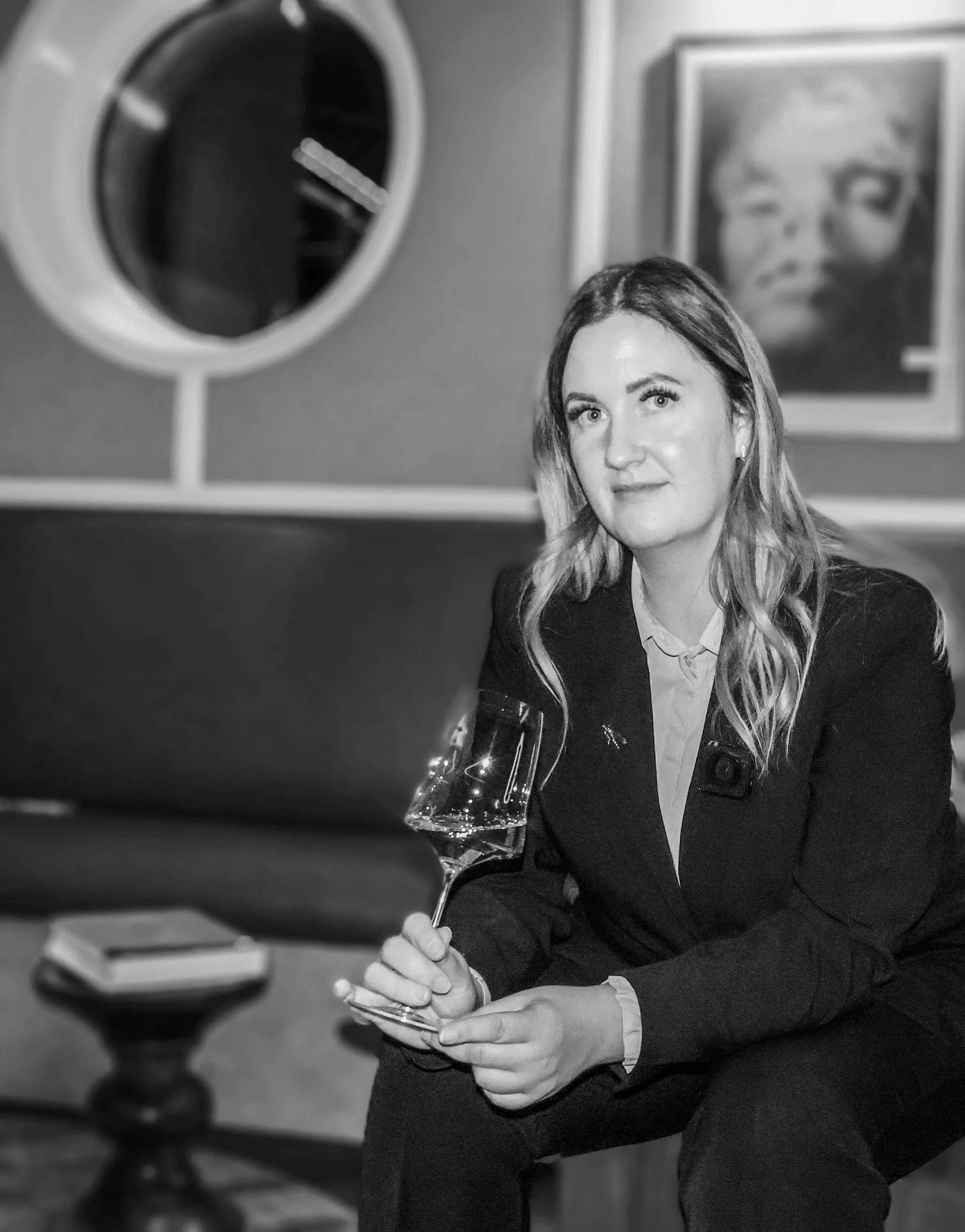
Marlene Lund Larsen. Photo Ronja Bo Gustavsson DSF
What matters most to her is not the specific programme, but the process itself.
“I need to learn more,” she says. “I need to brush up what I already know and keep adding on. I really enjoy learning from the world’s leading wine experts through structured, recognised wine educations with a lot of extra nerdy depth.”
Leadership, pressure, and how she learned to listen
When the conversation turns toward leadership, Marlene does not talk about it as a role she decided to take on. She talks about it as something that grew slowly, shaped by the places she worked and the people she worked with, and by noticing what stayed with her after long shifts.
“I think my way of leading has changed a lot over time,” she says. “Mostly because I have seen very different kinds of leadership, and you feel very clearly what it does to a team.”
She does not separate the good from the bad in any structured way. She moves between memories instead, describing how certain shifts felt when she arrived, and how the atmosphere changed depending on who was present.
“There were places where you could feel it immediately,” she says. “You came in, and the room was already tense. And I remember thinking very clearly that I never wanted to be the reason a room felt like that. And then there were other places where things could be just as busy, just as demanding, but it felt calmer. You felt supported and that made a huge difference to how people worked together.”
"I need to be on the floor,” she says. “I need wine service and guest interaction to be part of my day. If I am only leading, even if I do it well, something is missing for me."
She talks about paying attention during service, especially when things are intense.
“You see people very clearly when there is pressure,” she says. “You see who gets sharp, who gets quiet, who starts rushing, and who notices what is happening around them.”
“Sometimes it is someone stepping in without being asked. Sometimes it is someone noticing that another person is tired and quietly taking over for a moment. Those things matter a lot more than people realise.”
When she talks about her own role, she does not frame it as responsibility in an abstract sense. She talks about presence.
“My focus is always on how the people around me feel when they are at work,” she says. “Because the worst thing I can imagine is someone going home after a shift feeling bad because of something I said or did.”
At the same time, she is clear about what gives her energy.
"I hope they remember me as a good colleague"
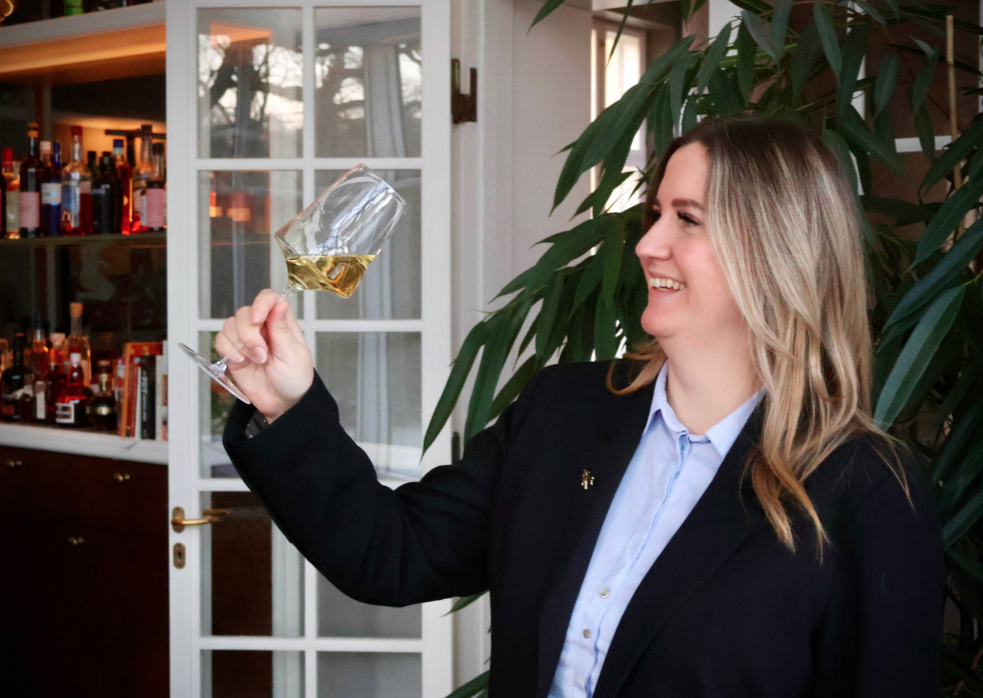
Marlene Lund Larsen. Photo Ronja Bo Gustavsson DSF
“I need to be on the floor,” she says. “I need wine service and guest interaction to be part of my day. If I am only leading, even if I do it well, something is missing for me.”
She has learned to notice what she needs outside of work as well.
“After long weeks, I need to slow things down,” she says. “I usually sleep until I wake up, and I do not plan very much. I let the days be open. Sometimes I do something practical at home, sometimes I do nothing at all. What matters is that there is space, and that I am not switched on.”
“If I do not give myself that time, I feel it very quickly,” she says. “That is something you learn if you stay in this industry long enough.”
Being part of something
When I ask Marlene what her membership of the Danish Sommelier Association means to her, she answers without hesitation.
“It helps me keep a finger on what is happening,” she says. “Events, tastings, competitions. Things I would not necessarily know about otherwise.”
She mentions how often the value lies in the conversations around those events, rather than the events themselves.
“You meet people from other restaurants, other parts of the wine world,” she says. “And you talk. Sometimes about wine, sometimes about work, sometimes about completely different things. But you come away with something.”
Before we finish, I ask her what she hopes people remember when they think of her. Her answer comes quickly.
“I hope they remember me as a good colleague,” she says.