
Get to Know the Jury of Honor of DM 2026: Alba Hough and Piotr Kamecki
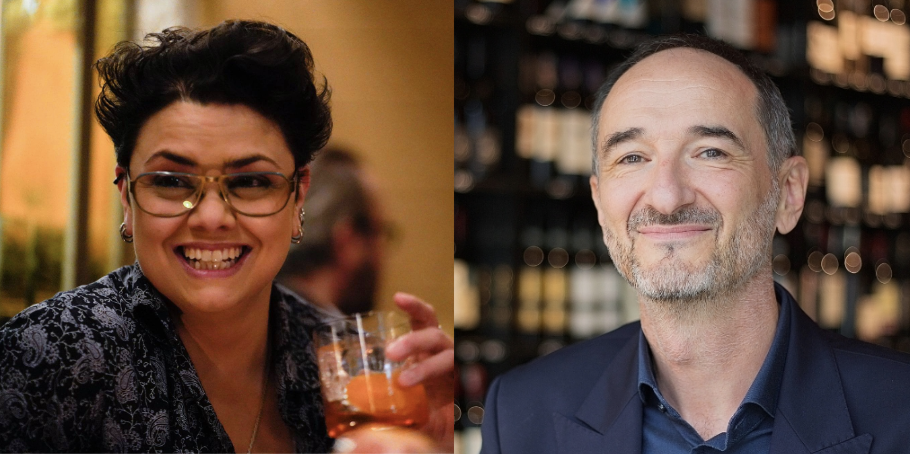
Alba Hough and Piotr Kamecki. Images: Private archive
The date is saved - Monday, 31st of August. The day when best sommeliers of Denmark will compete to find a winner of DM 2026. It is a significant day for the wine industry and sommeliers across the country, and it has to be celebrated properly. This year, we are glad to announce that two very special individuals will join us. Ladies and gentlemen - meet Alba Hough, President of the Icelandic Sommelier Association, and Piotr Kamecki, Vice-president for Europe ASI. They were keen on answering a couple of questions, so you, our member, can get to know what they stand for.
What qualities separate a good sommelier from an exceptional one in a championship setting?
Alba: There are a few differences that can be easily spotted. The first and most obvious being whether the sommelier works full time in a restaurant. Generally, those who are consistently in a guest environment are often quicker on their feet when it comes to live interactions.
Another is depth of theoretical knowledge. Competition examinations, unlike educational exams, are not designed for “passing grades” calculations but to filter out the very best from everyone else. The result is theory exams which are extremely rigorous. Studying for competitions does not always go hand in hand with studying for degree exams.
The third essential element is muscle memory. Intense training for various service tasks allows the sommelier to effectively split their focus between what their hands are doing and focusing their attention on what the judges are requesting and frequent interruptions while they work.
Piotr: In a competition, knowledge is the starting point. A good sommelier can recognise a wine, describe it correctly and perform service according to the rules. An exceptional sommelier remains calm under pressure, thinks clearly, speaks in a way that is easy to understand and manages the situation with sensitivity.
At the highest level, I look for balance between technical precision, humility, emotional intelligence and the ability to translate complex knowledge into clear, accessible language. The best competitors show class not through an excess of information, but through the way they take care of the guest at the table.
When judging competitors, what are the most common strengths and weaknesses you tend to observe?
Alba: The strengths are overall pretty much the same. Practical aspects usually the strongest part.
The theory exams are quite demanding though as well as keeping a graceful demeanour under pressure. Non wine related elements such as spirits/beers/cocktails seem to take a back seat as well overall.
Piotr: The strongest candidates usually have very good technical skills. They taste methodically, understand classic regions, know service procedures and react quickly, while keeping the guest’s experience at the table in mind.
Weaker moments appear most often under time pressure. Some competitors start speaking too much, as if they wanted to prove all their knowledge at once. Others lose their natural ease in service or perform the tasks correctly, but too mechanically.
In competition, details matter, but so does presence with the guest: attentiveness, calmness, elegance and the ability to listen.
How do you think the role of the sommelier is evolving in Europe and the Nordic countries today?
Alba: I believe over the last decade a positive evolution of the sommelier’s identity has emerged. In the Nordic countries in particular, there is far less of the stuffy, “black tie” element of the past and more of laid-back aesthetic to our industry. Mind you, that is not to imply that sommeliers today take craft any less seriously or apply less ambition. It’s just an observation that with changing behavioural and consumption patterns of our guests, so too do we adapt.
Piotr: The role of the sommelier has expanded significantly. Today’s sommelier is responsible for service, wine selection, guest education, relationships with producers and often an important part of the restaurant’s strategy.
In Europe, especially in the Nordic countries, I see great openness to less obvious regions, a sustainable approach, precise wine and food pairing, and simpler language in conversations with guests. The public is becoming more aware. Guests ask better questions, expect authenticity and want to understand the reasoning behind a recommendation.
A modern sommelier must know the great regions and the classics, while also being able to listen. A good recommendation begins with understanding the situation at the table: who is sitting in front of us, what the occasion is, what the mood is and what the guest is really looking for.
For young sommeliers aspiring to compete internationally, what advice would you give them?
Alba: Many of the best sommeliers in the world have failed and lost competitions repeatedly. Choosing to compete can easily become a lifestyle. Understand which personal sacrifices you are willing to make, because there are always sacrifices, and make a choice. Everything after that is remembering to stay hydrated through your failures.
The benefits however are the sincerely the gift that keeps on giving. International competition can be life changing. Experience, exposure to vastly different cultures, an international community and life-long friendships. In my personal experience, the sacrifices were absolutely worth it.
Piotr: First, build strong foundations. Taste systematically, study the classic regions, practise service and work on languages. An international competition requires knowledge, discipline and confident communication with people from different cultures.
I would also advise treating a competition as a path of development, rather than only a fight for a title. Preparation can be difficult, sometimes uncomfortable, but it teaches humility, mental resilience, organisation and precision.
It is worth observing more experienced sommeliers, asking questions, accepting criticism and repeating the basics until they become natural. The best sommeliers I know remain curious and keep learning.
As President of the Icelandic Sommelier Association, how do you see smaller wine markets contributing uniquely to sommelier education and excellence?
Alba: Smaller wine markets are in many cases are ones with little to no winemaking history themselves, or ones who do not share the same commercial advantages as the larger markets. That atmosphere breeds a type of sommelier who rarely focuses on one particular country/style of wine or beverage but must become equally competent in all categories. Therefore, they are likewise often those who are the first to embrace change and innovation as well as being more open to niche products. With the fluctuating geopolitical landscape the world of agriculture faces today, the inclusivity of wine/beverage genres will can only help us adapt.
From your perspective as Vice-President for Europe, are there notable differences in sommelier culture and standards across European countries?
Piotr: Yes, the differences are visible, and I see them as one of the greatest strengths of European sommellerie. Some countries are strongly rooted in tradition, service discipline and historic wine regions. Other environments are more open to new categories, less obvious pairings and a more relaxed style of communication.
Standards are gradually becoming more unified thanks to the work of ASI and national sommelier associations. Local identity, however, remains very important. A sommelier from France, Poland, Denmark, Italy or Finland may have different experiences, a different restaurant culture and a different starting point.
The best share the same values: professionalism, respect for the guest, respect for the producer, precision and readiness to keep working on themselves. This diversity is what makes European sommellerie so interesting.
Once again, thank you Alba and Piotr for your time on answering my questions. See you on the 31st of August at Moltkes Palæ. Cheers!
