Christian ‘Cuba’ Gustafsson Cazón: The Wine List Is Ours, Not Mine
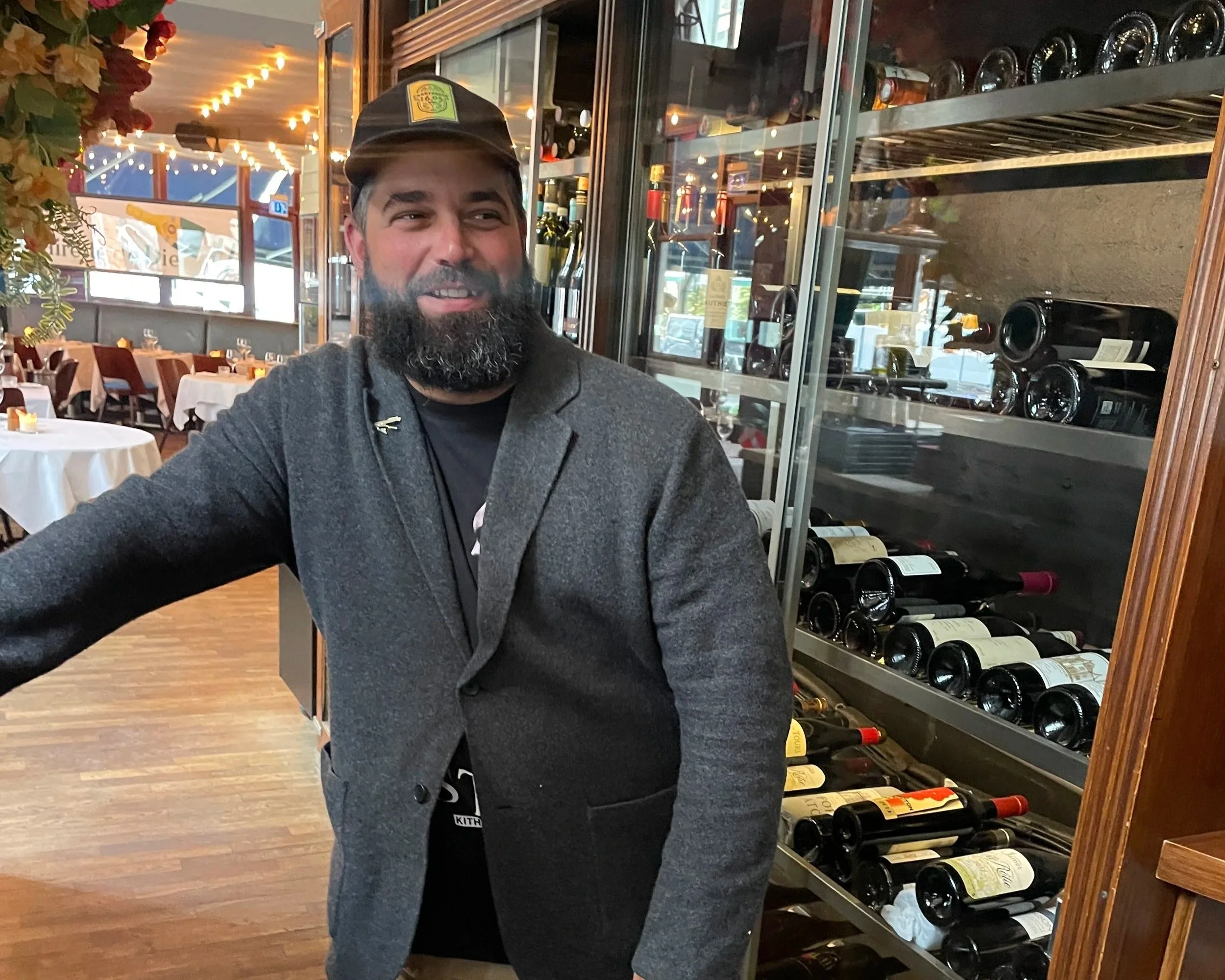
Cuba. Image: Anne Køster
After 17 years at Bistro Boheme, Christian ‘Cuba’ Gustafsson Cazón has built one of Denmark’s most decorated wine lists — and a team that finishes his stories for him. Ask him about any of it, and he would rather talk about the guest, the next generation, and his four children.
Christian Gustafsson Cazón has answered to a lot of names. Christian. Cuba. For a while, thanks to a colleague who never quite landed the pronunciation, even Cooper. He does not mind which one you use.
“I don’t have a preference. Whatever people call me — it can be other things as well.”
The nickname Cuba came from a colleague many years ago and stuck, helped along by his roots: a Cuban mother, a Danish father, and a dash of Swedish somewhere in the Gustafsson. It is a fittingly international backstory for a man who has spent the last 17 years at one of Copenhagen’s most classic French bistros.
We met at Bistro Boheme one morning before opening — Cuba is a month into parental leave with his youngest child, returning to the floor in August — with two of his children playing somewhere just out of frame. For the occasion he had gone to the storage room, dug out his Dansk Sommelier Forening pin, dusted it off and pinned it on, joking that he does not normally wear it when he is off duty. Least of all, he pointed out, with shorts.
That small pin turns out to matter more than you might think.
“More than you’d expect, actually. When a guest sees it, it gives them a little extra confidence in the conversation, and in the wine choice — and it’s a beautiful pin in itself.”
It is a telling place to start: a man who would rather not make a fuss about his own credentials, quietly acknowledging that the right small signal can put a guest at ease.
Behind the Bar, Something Clicked
Cuba did not set out to become a sommelier. He set out, at 18, to get a job in a café — which, at the time, was nearly impossible without experience. So he improvised. His father had put a little money into a small café with friends, and Cuba listed it as a reference. None of the restaurants called back. The café did.
And there, behind the bar, something clicked. It was not really about the coffee, or later the wine. It was about the people.
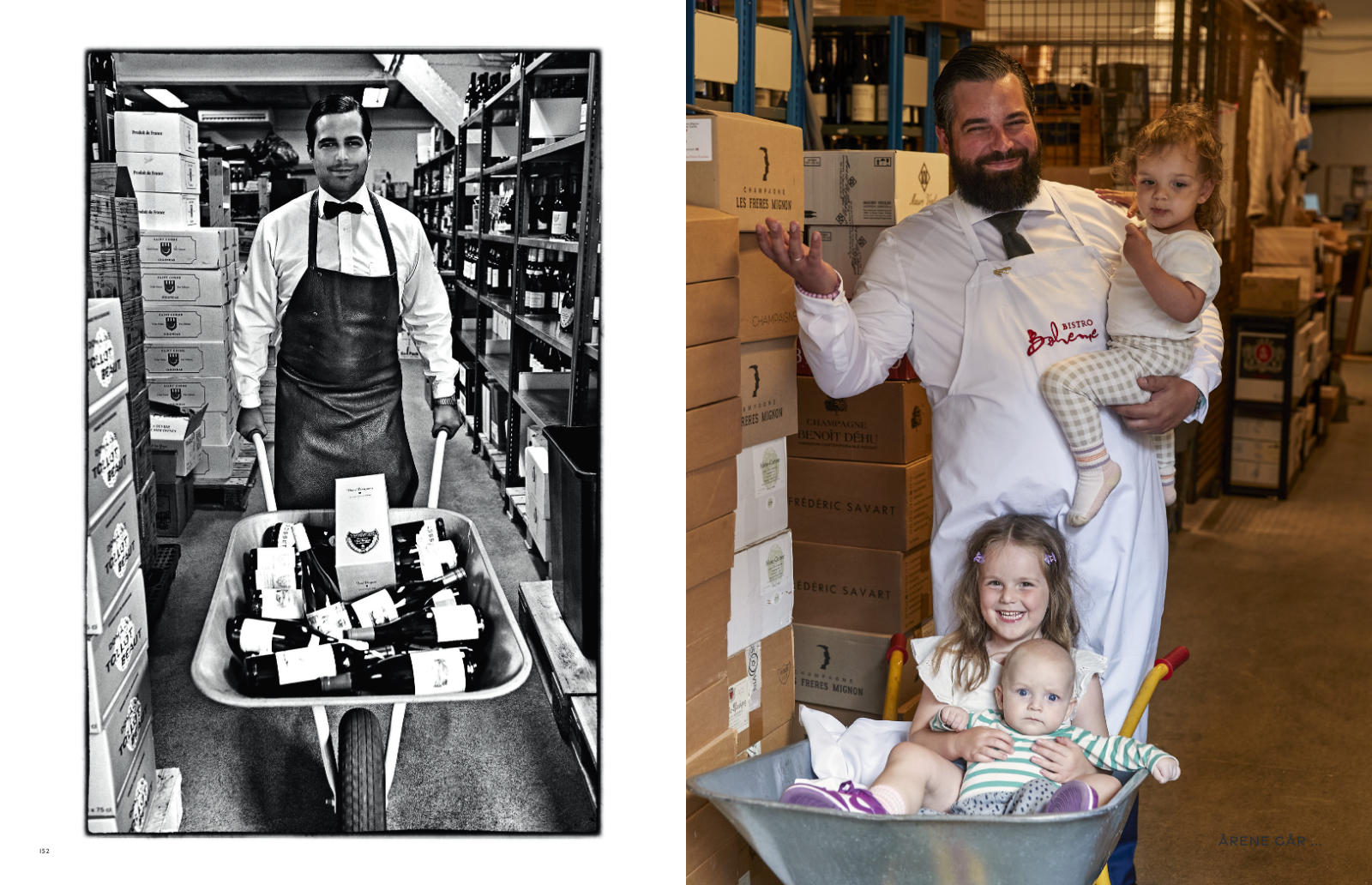
Cuba at Bistro Boheme with his kids. Images: Cuba
“I was always fascinated, from when I was a kid, watching someone behind a bar. At weddings, someone would just stand there and talk to people. Behind the bar, you make it yours — but you also make it theirs.”
He completed his sommelier education in 2011 and became head sommelier at Bistro Boheme around 2012. He has held the role ever since. He added the WSET 3 and has long intended to take the Diploma — though, he admits with a laugh, it has been so long since he sat down to study that he will have to relearn how to do it first.
A Work Family That Finishes Your Stories
At Bistro Boheme, you cannot interview Cuba alone for long. Over the course of the morning, colleagues drift past and lean in — to correct a date, to add a detail, to land a joke at his expense. There are stories about the young Cuba who turned up all those years ago, including one involving a blue Louis Vuitton bag that the team has clearly not let him forget. He takes it all with a grin.
"I would never correct a guest. The host role is number one. Then you have the wine to support it."
It is the unmistakable texture of a workplace where people have been together a long time: the easy, teasing, deeply familiar tone of a team that functions like a family. After 17 years, Cuba is not just the head sommelier here — he is part of the furniture, in the warmest possible sense, and the teasing is a form of affection.
Making the Guest Feel Comfortable
Ask Cuba about the craft, and he does not start with terroir or vintages. He starts with the guest — and specifically, with the guest who is a little unsure of themselves.
“The most important thing is not to sell expensive wine to people who might or might not want it. It’s to make the guest feel comfortable — whether they have 400 kroner or 40,000.”
Over the years he has developed a set of gentle, practised questions for finding a guest’s budget without ever putting them on the spot. He nods approvingly at the old trick of discreetly presenting three price points on a slip of paper held in the hand — something the legendary Jan Restorff used to do. That quiet, elegant way of handling the moment still inspires Cuba today.
“I would never correct a guest. The host role is number one. Then you have the wine to support it.”
If a guest wants a sweet Riesling with their steak, he says, they get a sweet Riesling — with a smile, and the observation that good food and good wine always go well together. If a guest believes a wine is corked when he is not sure it is, he opens another. The guest, in his telling, is never wrong, because being right was never the point.
"I give a lot of freedom. I always say the wine list is ours, not mine. I don’t want it to feel like someone handing out a recipe."
Charming the Allocation Out of the Cellar
The wine list at Bistro Boheme is one of the most decorated in Denmark, with its honours concentrated in the fine wine category — the rare Burgundies and prized bottles that take years of relationship-building to secure.
“We’ve charmed our asses off to get an allocation — and built real relationships with the importers.”
But Cuba is just as interested in the other end of the list. When he took over, he found five Zinfandels in the same price range, none distinct from the others — to him, a waste of space. He trimmed the duplicates, sharpened the selection, and kept the list alive with bottles that surprise. Nearly everything is available by the glass, within reason.
For Cuba, building a list is as much about restraint as appetite. The hardest part of the craft, he says, is not the charming or the collecting — it is the discipline of refusal.
“The most difficult part isn’t saying yes to a new allocation. We do that with a big smile. It’s saying no.”
After so many years of cultivating importers, the allocations now come readily — which is precisely the problem. A great list, in his telling, is defined by what you leave off it. And underneath the romance of rare Burgundy runs a current of plain commercial sense: knowing what genuinely sells, holding back when the cellar account needs it, and finding the wines you actually make money on. Running a good business, for Cuba, is not separate from the craft. It is the craft.
“If you have all the money in the world, it’s easy. Part of the job is making it go around.”
He is candid about the privilege of his position: a restaurant that is always busy, with a steady base of Burgundy lovers and fine wine guests that keeps the cellar turning. There are no “house wines” as such — but the regulars, he jokes, are house wines in their own way.
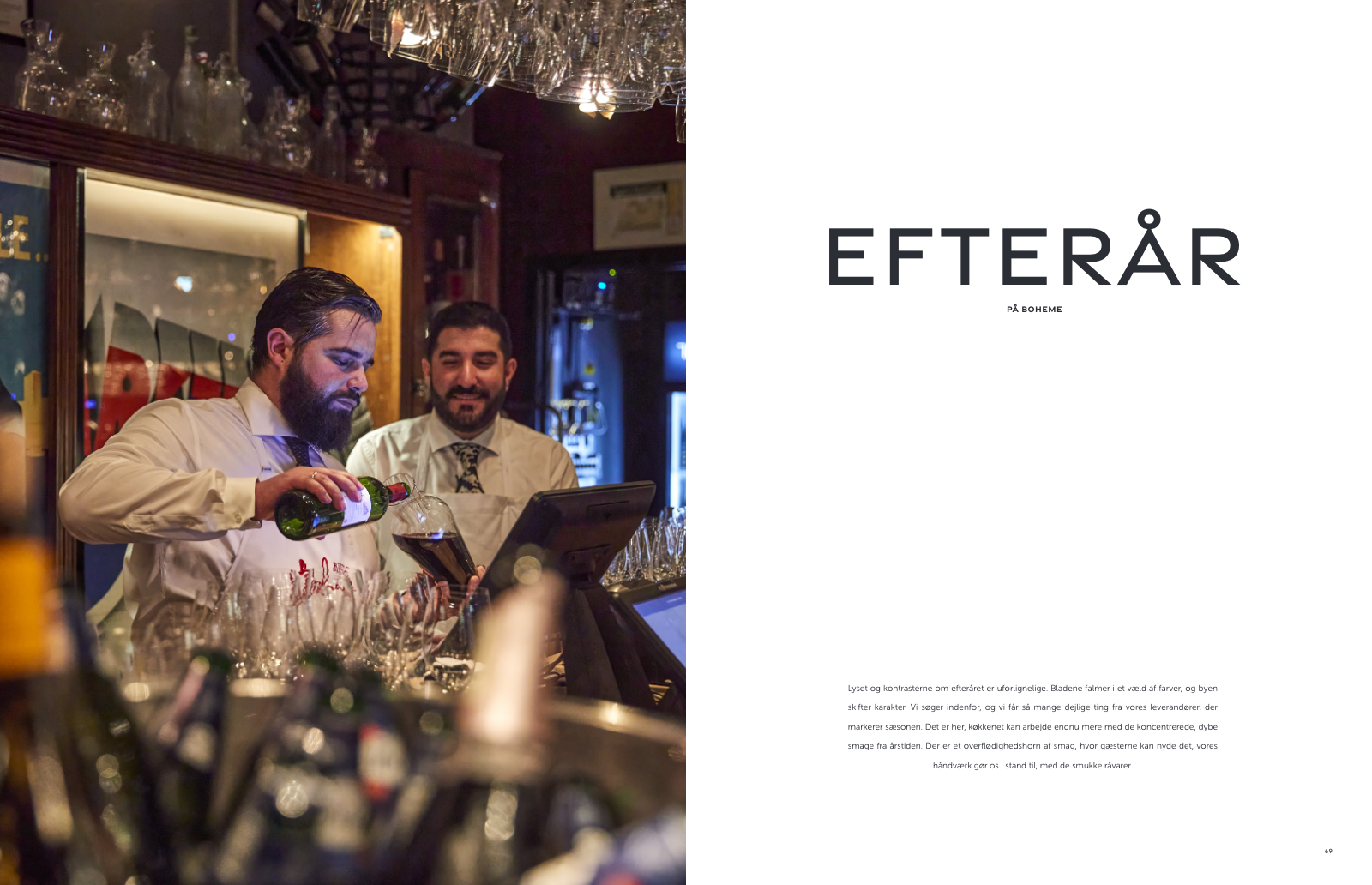
Cuba at Bistro Boheme. Images: Cuba
Be Their Friend First
If there is a theme running through Cuba’s 17 years, it is what he passes on. He has mentored a string of young sommeliers — among them a young Teigh Crowley, whose own spotlight ran in these pages. His approach is hands-off by design.
“I give a lot of freedom. I always say the wine list is ours, not mine. I don’t want it to feel like someone handing out a recipe.”
He lets young talent put their own mark on the list, weighs in only where it helps, and resists the urge to make everything a lesson. When it came to Teigh’s exams, Cuba’s role was less teacher than coach — sitting with a stopwatch, timing practice runs, and, crucially, drinking good wine alongside him.
“Most of them are smarter than I am. They’ll be better than I am. My job is just to be there to support where it’s needed.”
Asked whether there is a fatherly streak in all this, he laughs — his children are, after all, sitting just behind him — and does not really deny it. It is hard to miss the throughline: the same instinct that makes him a father of four, a patient mentor, and a host who puts the guest at ease is, in the end, one and the same. With the young people who join the wine team, he says, you are their friend first. The rest follows.
"The one thing is — I’m not bored."
Four Kids, and a Restaurant That Lets Him Have Them
Cuba is a father of four, currently on his longest stretch of parental leave yet. He is refreshingly direct about what makes it possible: a flexible wife who carries much of the load, and a restaurant that pays him properly while he is away — something he says would be financially impossible otherwise on what the state provides alone.
He is not sure how common parental leave is among sommeliers; he does not know many who have done it. But over the years he has shaped his own schedule deliberately — three or four days a week, every other weekend off — because the alternative was not sustainable.
“If I had to work five days a week, every weekend, I wouldn’t be here. I’d have to do something else. But I don’t want to do anything else.”
When colleagues joke “more kids, more kids,” Cuba takes it as the compliment it is: a sign that the restaurant has become a place where people feel secure enough to build a family. That, he says, is the foundation of everything — and the kind of workplace worth staying 17 years for.
Sponsored banner by Hans Just
What’s Next for Cuba
So what comes next for a man with four children, a celebrated list, and a protégé making waves? He grins.
“No more kids, for now. It’s enjoying the summer. Long term, it’s taking care of the kids. And even longer term — hopefully they take care of me.”
He goes to fewer tastings than he once did; being home matters more right now. The list is not frozen — he still tastes, still follows the times, still has people who can represent the restaurant in his absence — but the balance has shifted, and he is at peace with it going up and down.
As for the wine that still moves him, he lights up at the mention of Jura. Even in a classical bistro, the cellar hides a good deal of natural wine from playful producers like Octavin — bottles for the guests who go looking. For Cuba, though, the label matters less than the craft.
“A well-made wine is a well-made wine. You don’t have to call it natural or not.”
After 17 years, four children, and a cellar full of hard-won allocations, Cuba sums up his situation with the same understated ease he brings to everything else.
“The one thing is — I’m not bored.”
Christian ‘Cuba’ Gustafsson Cazón is head sommelier at Bistro Boheme in Copenhagen, where he has worked for 17 years. He completed his sommelier education in 2011 and holds the WSET Level 3.