
Yeast, bacteria, and the hidden craft of wine
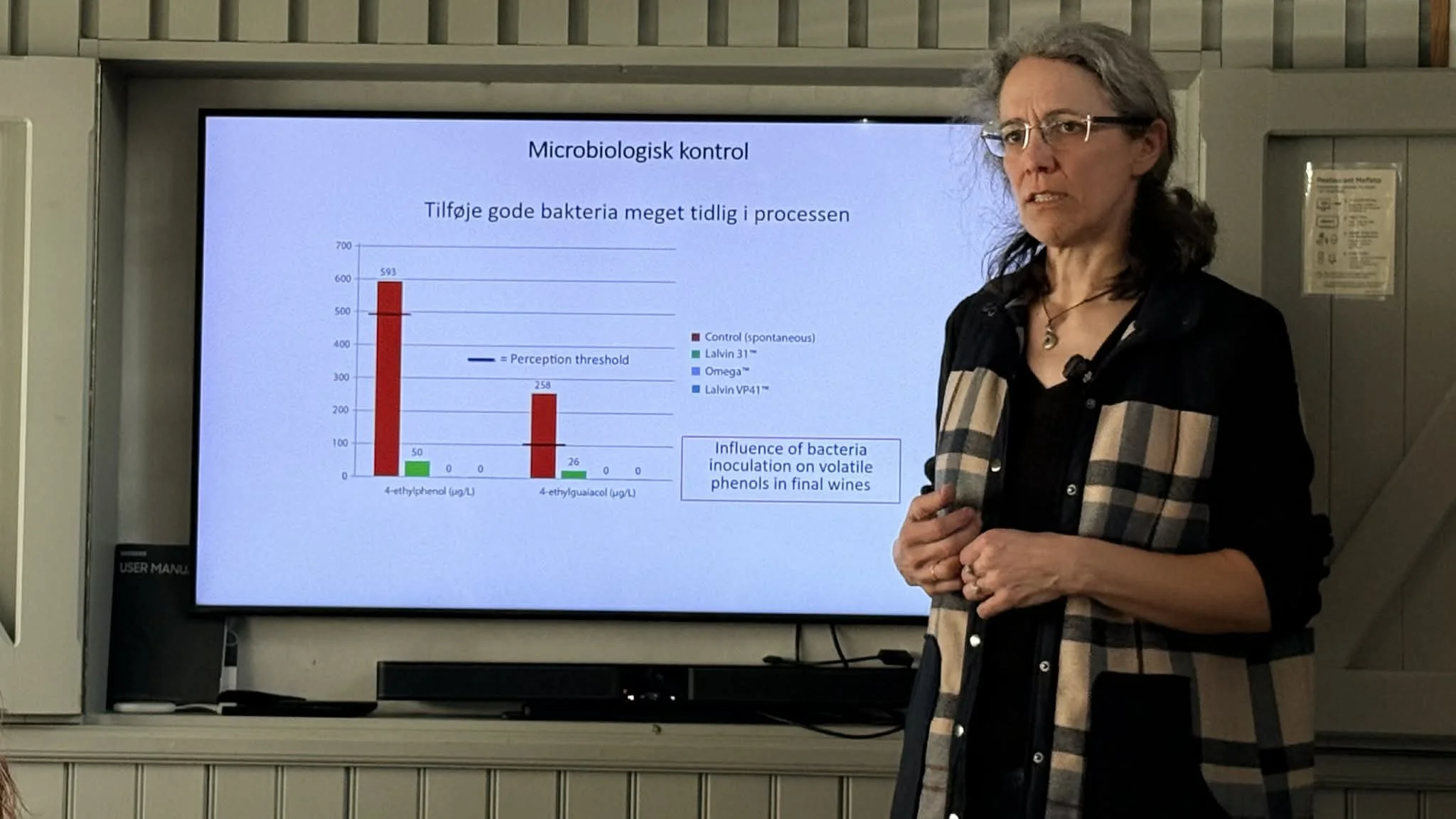
Image: Kim Thygesen
Insights from a lecture with Sigrid from Lallemand
Fermentation is one of the oldest technologies used by humans, yet at the same time one of the most complex biological processes in food production. In a lecture on yeast and winemaking, Sigrid from the fermentation company Lallemand provided insight into how microorganisms shape the taste, aroma, and stability of wine. The lecture showed that yeast and bacteria are not merely technical tools – they are active co-creators of a wine’s character.
Fermentation – a universal process
Fermentation is found in almost all cultures and foods: bread, cheese, coffee, cocoa, beer, cider, and wine. The process involves microorganisms, primarily yeast and bacteria, that convert sugar into alcohol, acids, and aromatic compounds.
In winemaking, yeast plays a central role. The most well-known species, Saccharomyces cerevisiae, is extremely efficient at converting grape sugar into alcohol and carbon dioxide. In fact, around 92% of the yeast cell’s energy is used for this process, which explains why it is so difficult to produce wine without alcohol through natural fermentation.
Stressed yeast produces poor wine
A large part of the winemaker’s work involves keeping the yeast healthy.
If yeast lacks nutrients or is exposed to overly harsh conditions – such as high alcohol levels, low pH, or nutrient deficiency – it can become stressed. Stressed yeast may produce undesirable aromas such as:
• sulfur or “rotten egg” smells
• harsh sulfur compounds
• reduced or muted fruit aromas
Therefore, many producers actively manage yeast nutrition and fermentation control to ensure a stable fermentation and create clean, aromatic wines.
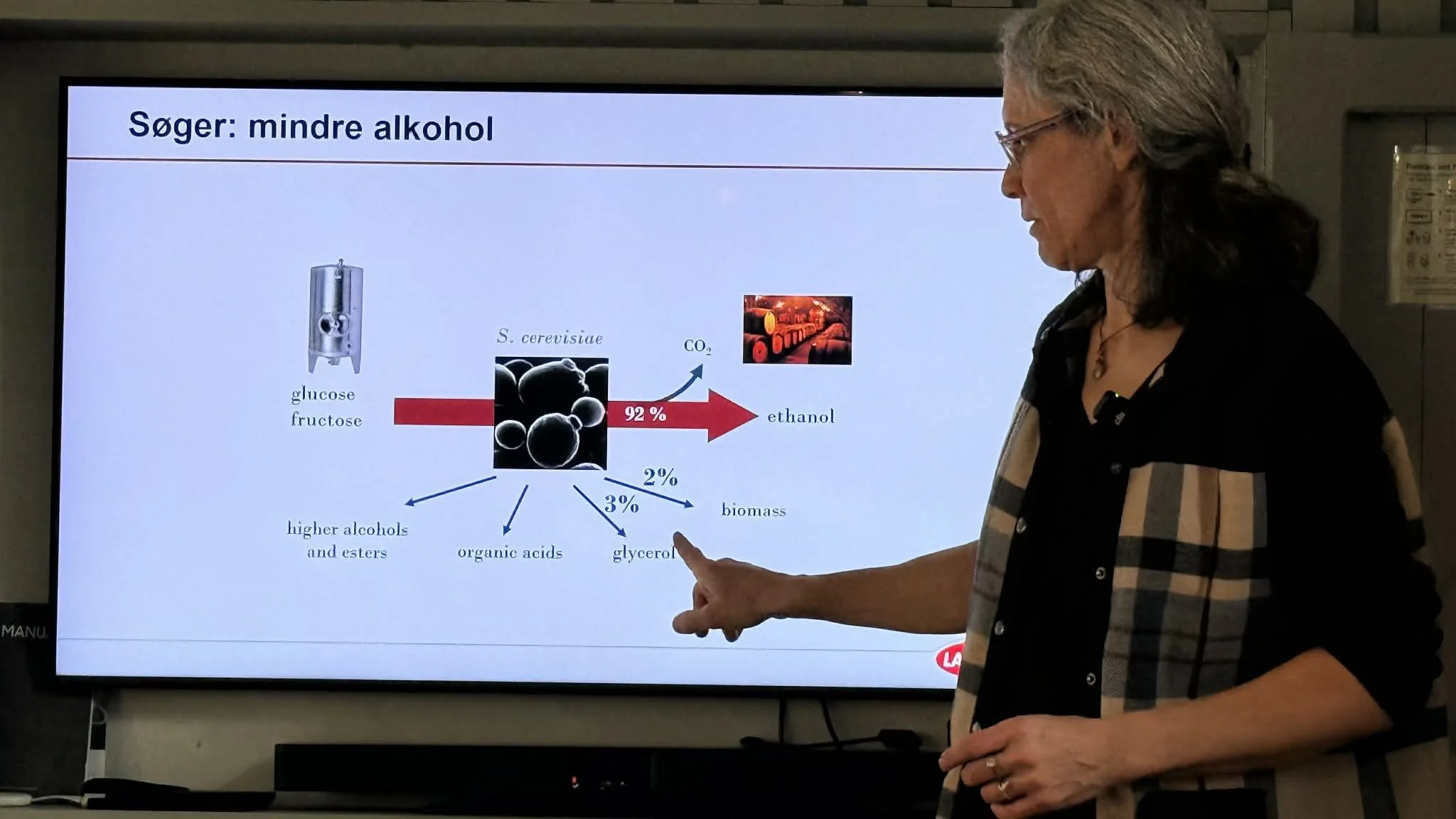
Image: Kim Thygesen
The role of bacteria: malolactic fermentation
In addition to yeast, bacteria also play an important role in winemaking. The most important process is malolactic fermentation, where bacteria convert sharp malic acid into softer lactic acid.
This process can significantly change the character of the wine:
• the acidity becomes rounder
• the structure becomes softer
• the aromas can develop further
In some cases, malolactic fermentation is associated with buttery or popcorn-like aromas, especially in Chardonnay. However, if properly managed, it can also preserve freshness without producing a heavy buttery character.
Image: Joao Vitor Marcilio, Unsplash
Natural wine and microbiological challenges
In recent years, natural wine has become more popular, but it also introduces new microbiological challenges.
When the use of sulfur (sulfites) is reduced, the risk increases of:
• unwanted bacteria
• Brettanomyces
• formation of biogenic amines

Sponsored banner from Skærsøgaard Vin
Biogenic amines, such as histamine and putrescine, can cause symptoms like flushing and headaches. Many people believe these reactions are due to sulfites, but they are often actually caused by microbial byproducts from bacteria. Women, in particular, frequently experience these symptoms.
New biological tools in winemaking
Rather than relying solely on chemical agents, many producers today work with biological solutions.
Examples include:
Inactive yeast
Can protect wine from oxidation and thereby reduce the need for sulfur.
Non-Saccharomyces yeast
Other yeast species can contribute additional aroma, structure, or protection against bacteria.
Specialized bacteria
Selected bacterial strains can carry out malolactic fermentation more controllably while also positively influencing the wine’s aroma.
These tools make it possible to create different styles from the same grapes simply by altering the microbiology of the fermentation process.
The major challenge: alcohol-free wine
One of the most challenging areas in fermentation research is the production of low- or no-alcohol wine.
The problem is biological: yeast is designed to produce alcohol. If one attempts to redirect its metabolism toward other products such as glycerol, unwanted byproducts often form.
Therefore, most alcohol-free wines today require a subsequent process in which the alcohol is removed – a technically demanding method that also affects the wine’s flavor.
Microorganisms as partners
An important point from the lecture was that yeast and bacteria are not merely technical aids, but an integrated part of a wine’s terroir and style.
Winemaking is therefore about balancing:
• natural microorganisms
• the winemaker’s choices
• technological tools
The goal is not necessarily minimal intervention, but controlled intervention, allowing the producer to create stable wines year after year without losing character.