
Where Italy and Austria Merge: Alto Adige
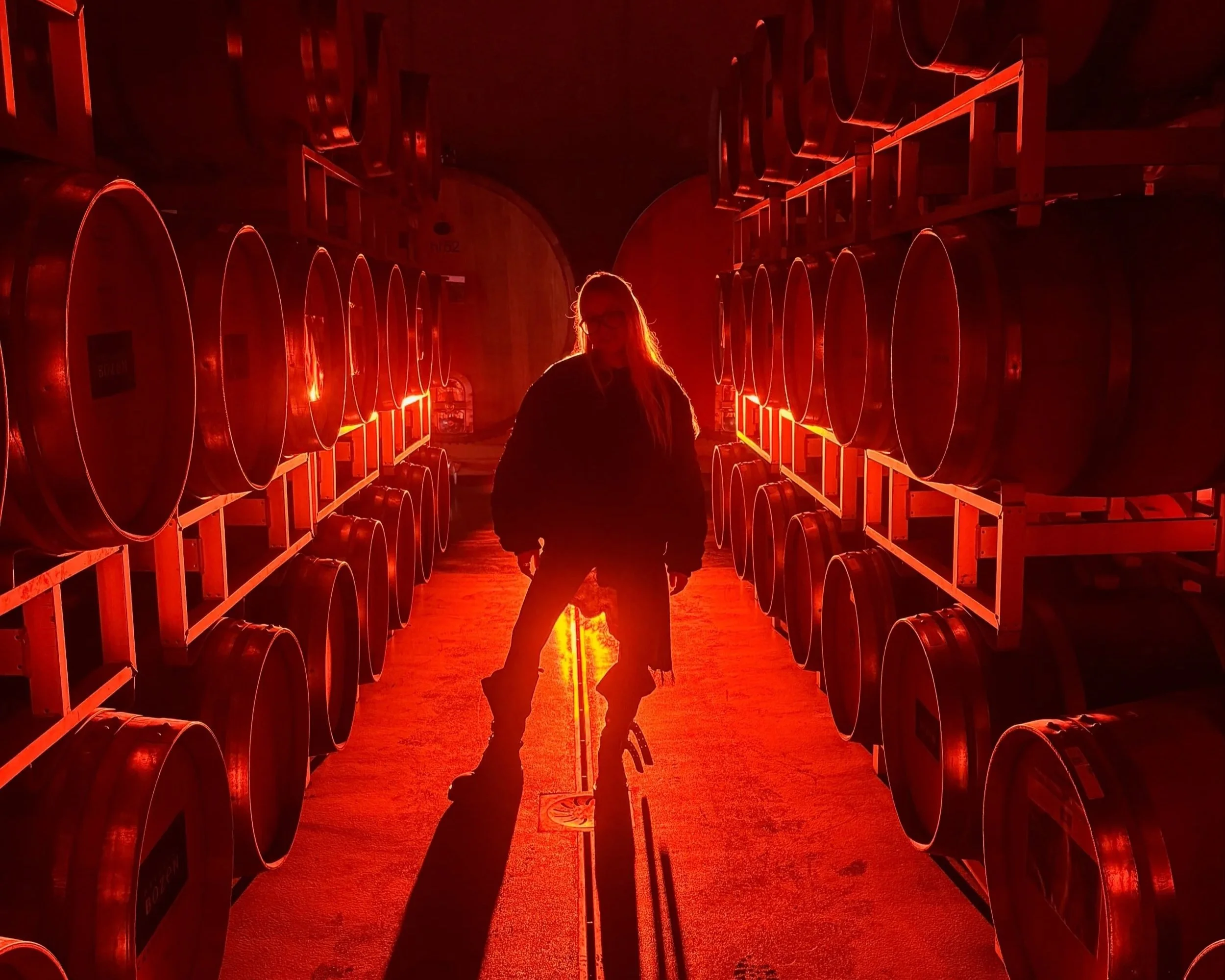
Stine Pimenova at Cantina Bozen. Image: Mads Jordansen
When I was asked if I wanted to join a three-day-trip to Alto Adige, I immediately said yes. Simply because I didn’t have enough knowledge about the region, and something was telling me that it has way more to offer than a tired Pinot Grigio (I’m sure you got the familiar watery taste in your mouth as we speak). And so one early morning five professionals from Denmark besides four from Sweden came to Bolzano. Thank you Alto Adige Wines for the invitation. Pleasure, as always.
Where the Alps Meet the Mediterranean
Tucked away in the far north of Italy, right next to Austria and Switzerland, Alto Adige is a wine region where the Alps meet the Mediterranean. It’s a place of dramatic mountain scenery, something I experienced for the first time, steep vineyards, German-sounding grape names and some seriously surprising wines.
The region has a fascinating mix of cultures. Alto Adige was part of Austria-Hungary until 1919, and today both Italian and German are official languages. Interestingly, you’ll see this reflected in the wine world too: Pinot Bianco is known as Weissburgunder, Schiava as Vernatsch, and every winemaker needs to know both Italian and German fluently in order to make sure that no necessary information gets lost in translation.
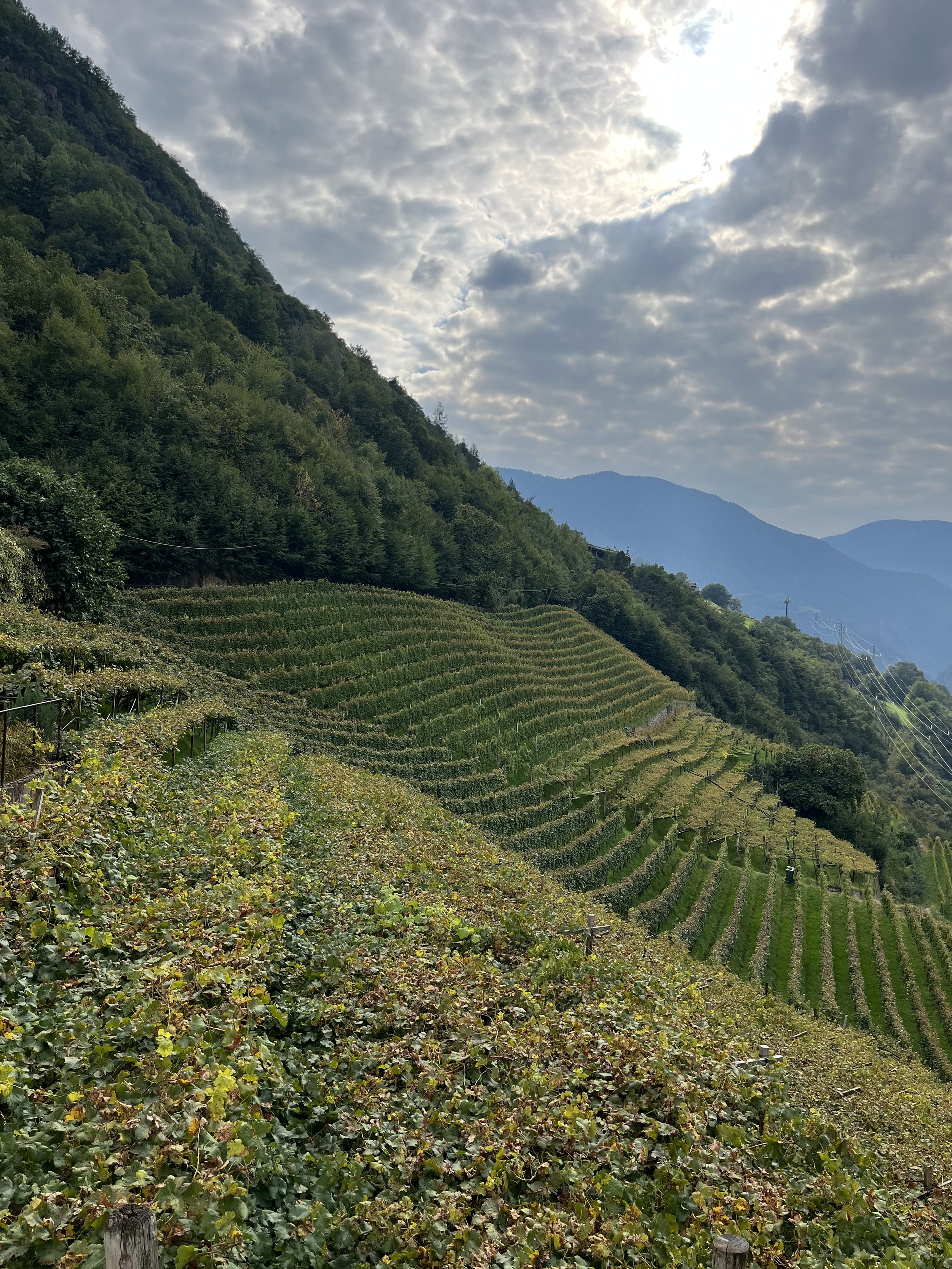
But geography is what really makes the region special. Vineyards range from around 200 to 1,000 metres above sea level, with warm, sunny days and cool Alpine nights. This big difference between day and night temperatures helps the grapes ripen slowly while keeping plenty of acidity and freshness. The soils are just as varied, from volcanic porphyry around Bolzano to limestone, slate and other Alpine rocks further north.
White Wines First
Around two-thirds of Alto Adige’s wine production is white, and the region is particularly good at producing fresh, elegant and aromatic wines.
Pinot Grigio is the most widely planted grape, but don’t expect the simple, neutral style often associated with the variety. Good Alto Adige Pinot Grigio can be fresh, textured and mineral, with plenty of character, and we got a chance to try plenty of great examples.
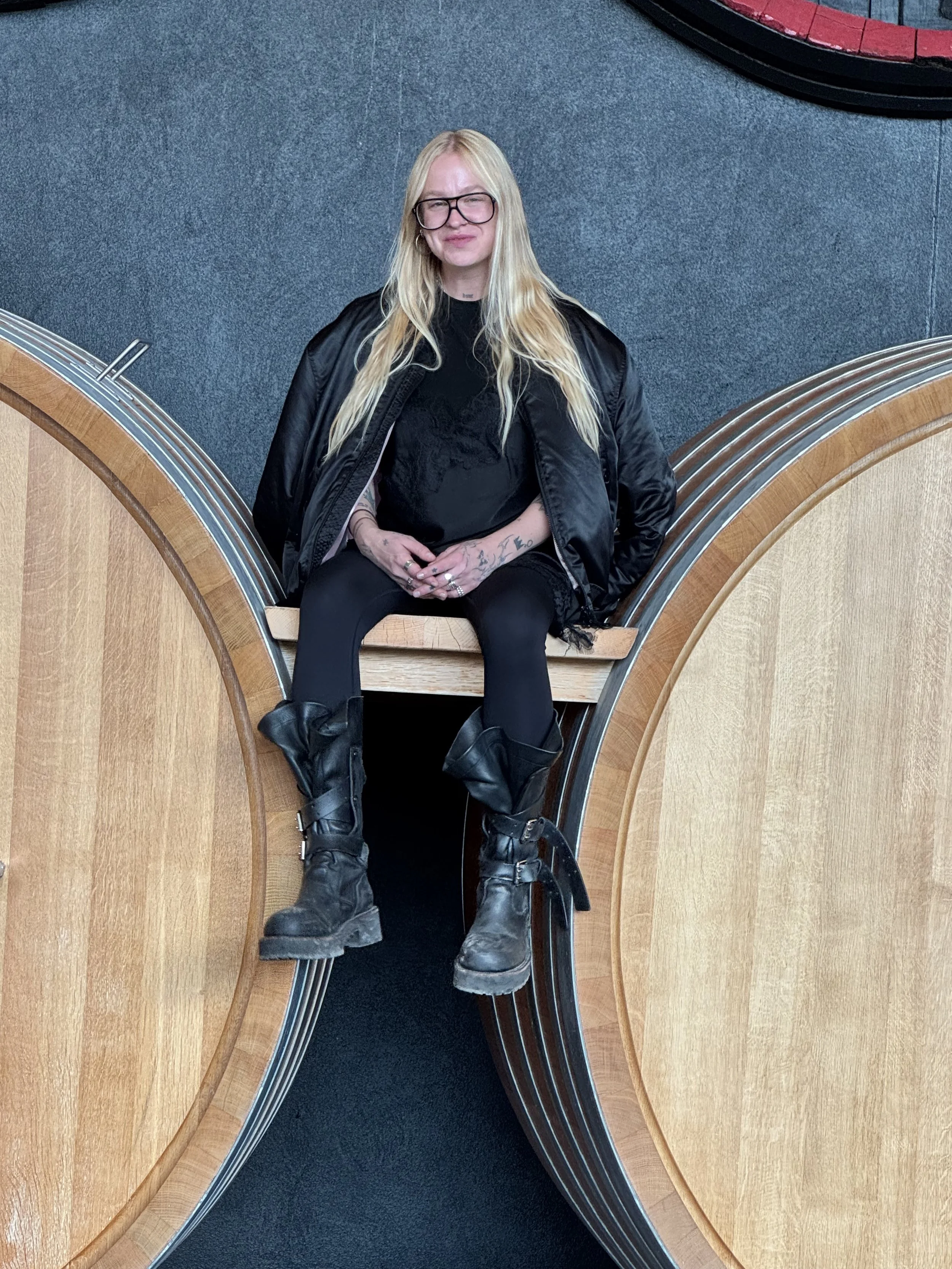
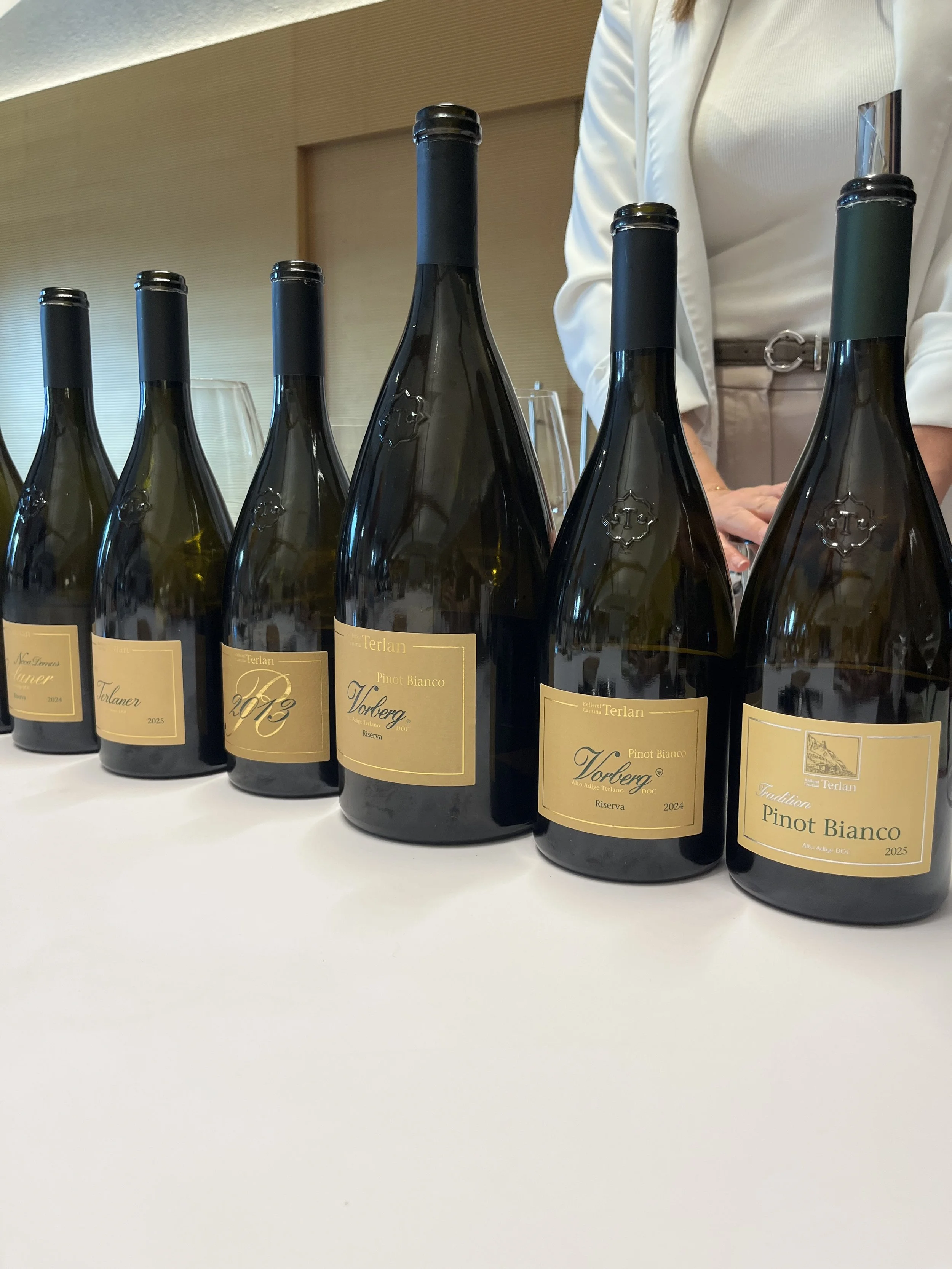
Pinot Bianco, or Weissburgunder, is another star. Around places such as Terlano and Appiano, it can produce remarkably concentrated wines with citrus and orchard fruit, plenty of freshness and an impressive ability to age. Honestly, I have to admit that these were the best Pinot Biancos I have tasted. So clean, yet complex, with some salinity to finish with.
Sauvignon Blanc also performs beautifully here, combining its characteristic herbal and citrus aromas with the cool freshness of mountain vineyards.
Don’t Hesitate the Reds
Although white wine dominates, Alto Adige has two fascinating indigenous red grapes.
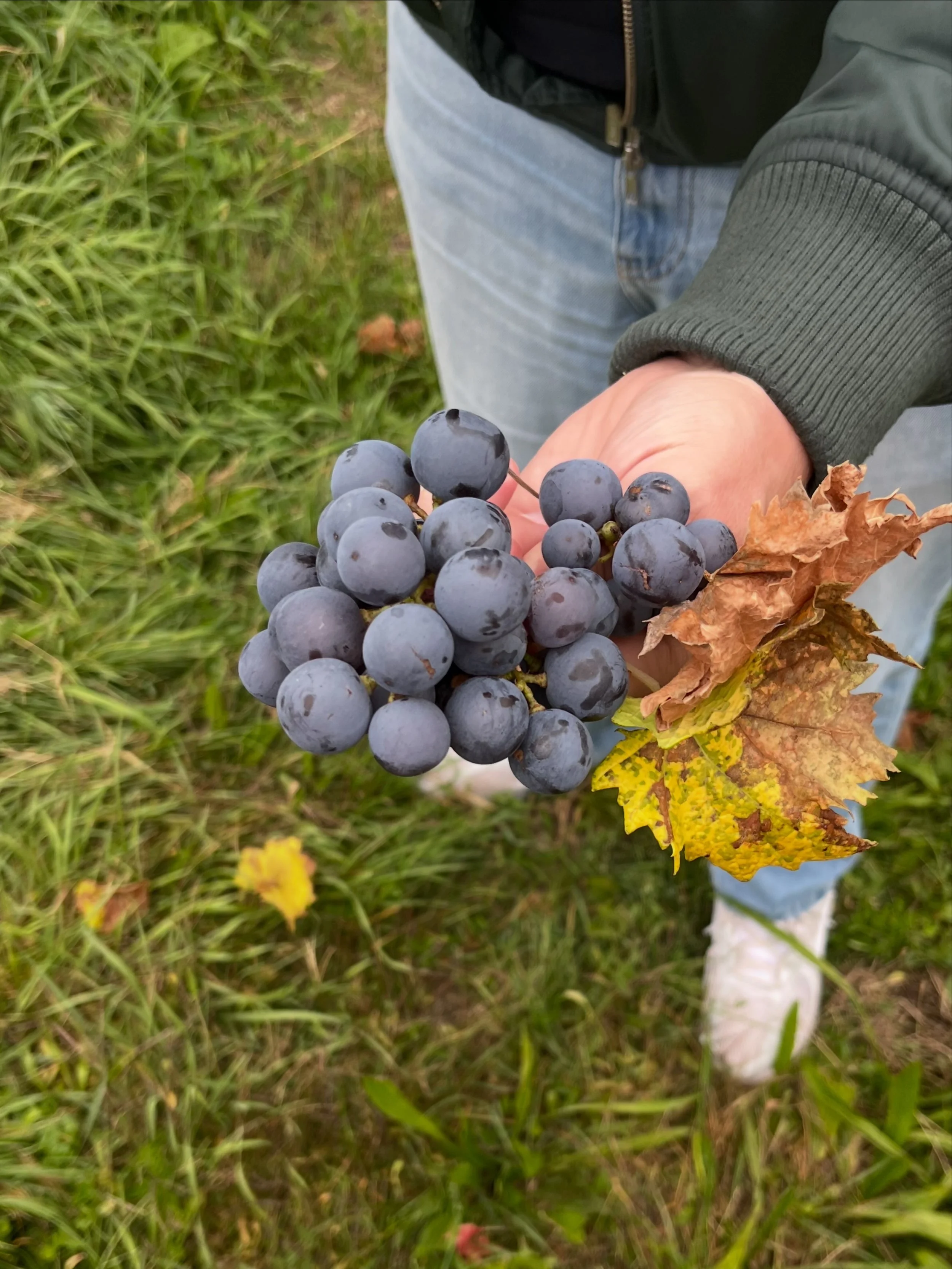
Schiava, or Vernatsch, is the traditional light red of the region. It’s pale, floral and juicy, with fresh red berries and relatively gentle tannins. Served slightly chilled, it can be incredibly refreshing — think somewhere between Pinot Noir and Gamay in spirit.
At the other end of the spectrum is Lagrein. Dark, rich and more powerful, it produces deeply coloured wines with black cherries, dark ripe berries, spice and a velvety texture. Its historic home is around Bolzano, particularly the warm vineyards at relatively low altitude.
My verdict is - we should definitely drink more Schiava and Lagrein. Please!
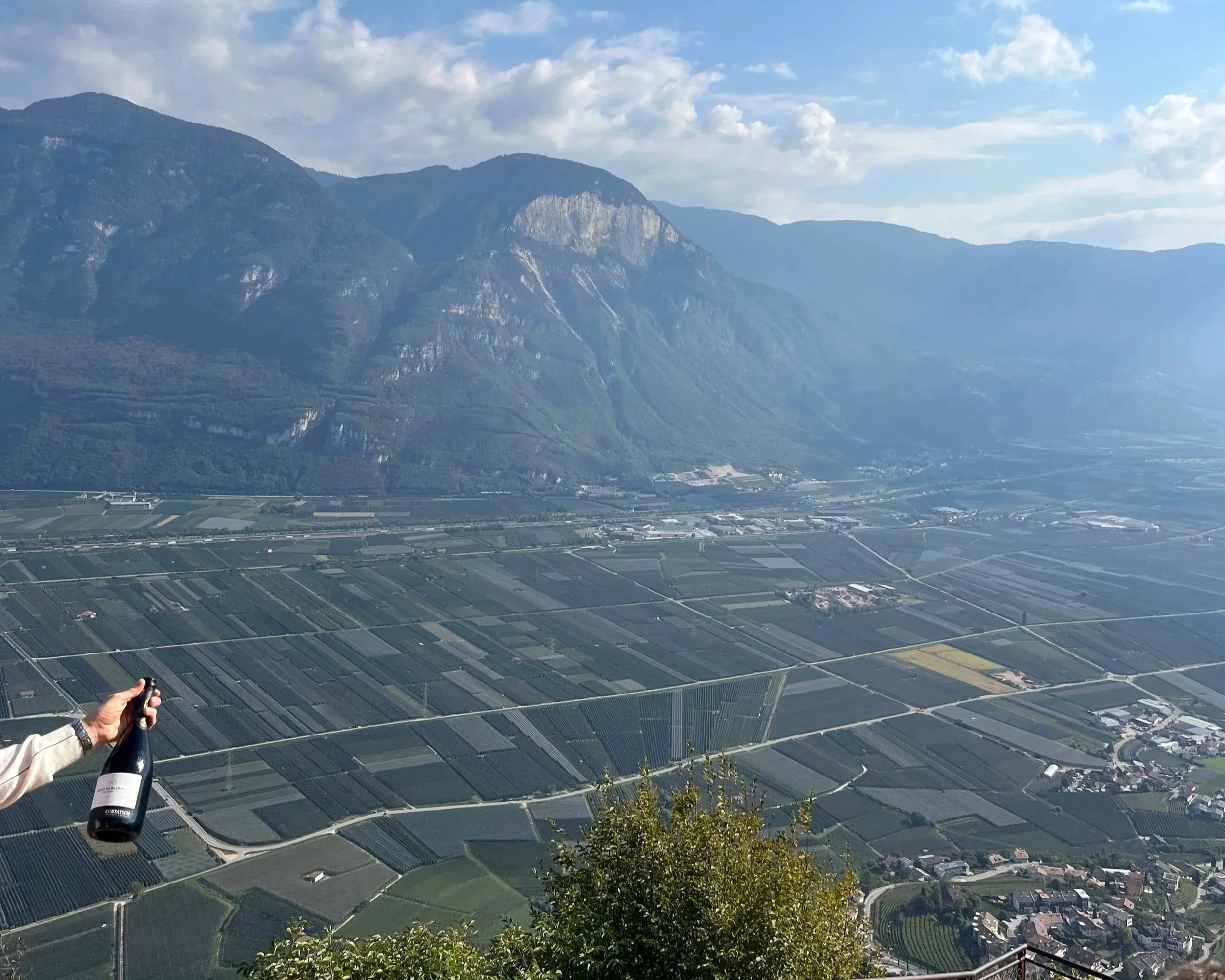
Vinyards and a bottle of Blanc de Blancs from Kurtatsch. Image: Stine Pimenova
More Than Just a Grape Varietal
One of the most exciting things about Alto Adige is how much the wines can change from one valley, village or hillside to another. We tried a lot of wines back to back, and I was genuinely surprised how different they can be in character.
The region is now putting more emphasis on these individual places through its UGA system, which identifies specific geographical areas within Alto Adige. It’s a move towards showing consumers not just which grape is in the bottle, but where it comes from.
And that really gets to the heart of Alto Adige. It’s not a region that is easy to put into one box. Italian and Austrian influences, Mediterranean sunshine and Alpine coolness, international grapes and local varieties all come together here.
The result is a wine region with plenty of personality — and one that is well worth exploring beyond the familiar names of Pinot Grigio and Gewürztraminer.
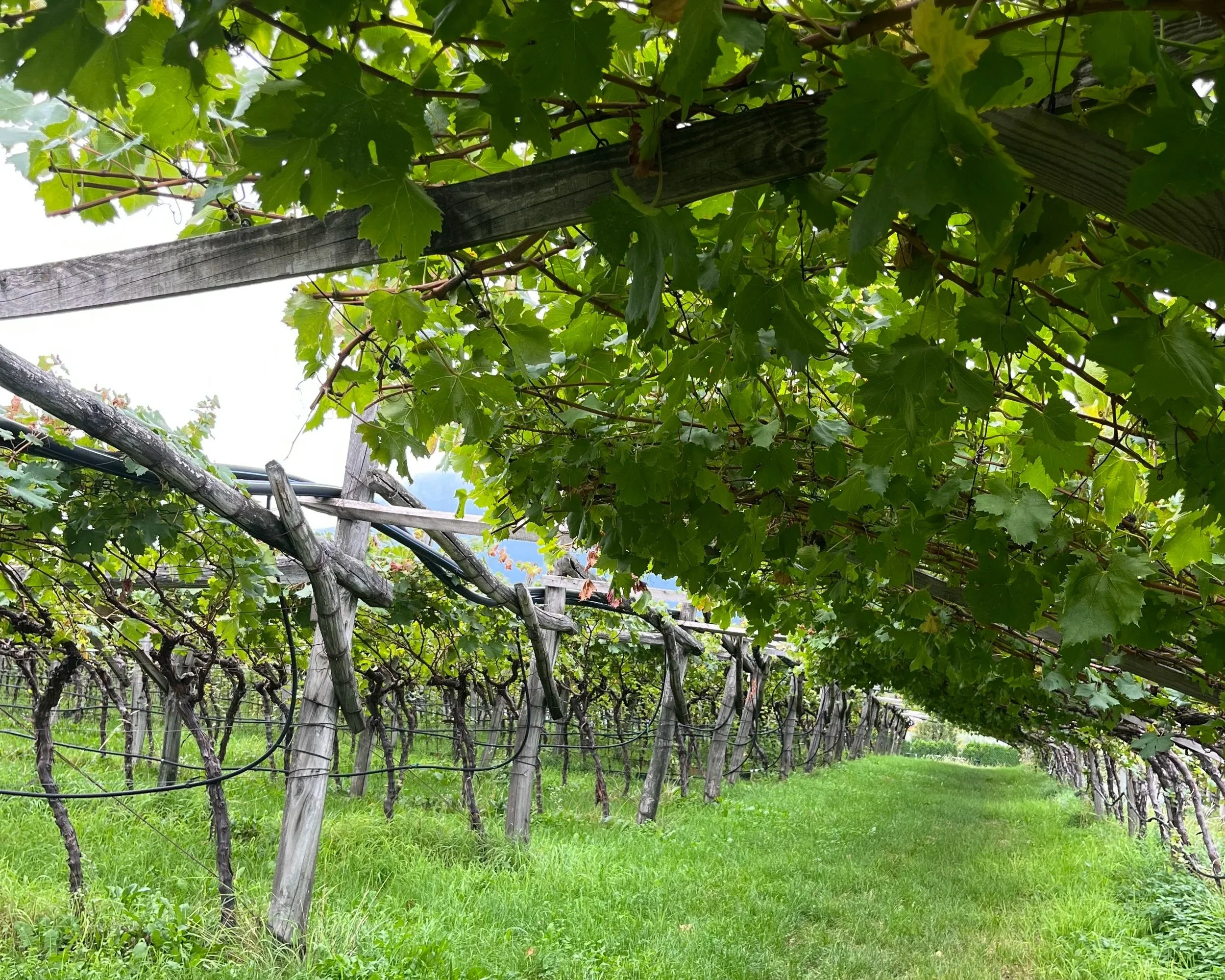
Schiava in pergola. Image: Stine Pimenova
Keep In Mind
Alto Adige is the most Northern wine region in Italy
There are around 70 wineries
70% of wine is made by 12 cooperatives
Production of 40 million bottles a year
More than 95% are DOC wines
45% of wines are sold locally in Alto Adige
They produce three times more apples than grapes
Cows and geese are often seen in the vineyards
Acidity is a challenge even here in the North
I will come back, and you should too.
Additional materials: WineLab podcast about Alto Adige
Masterclass about the region in Copenhagen: register here
