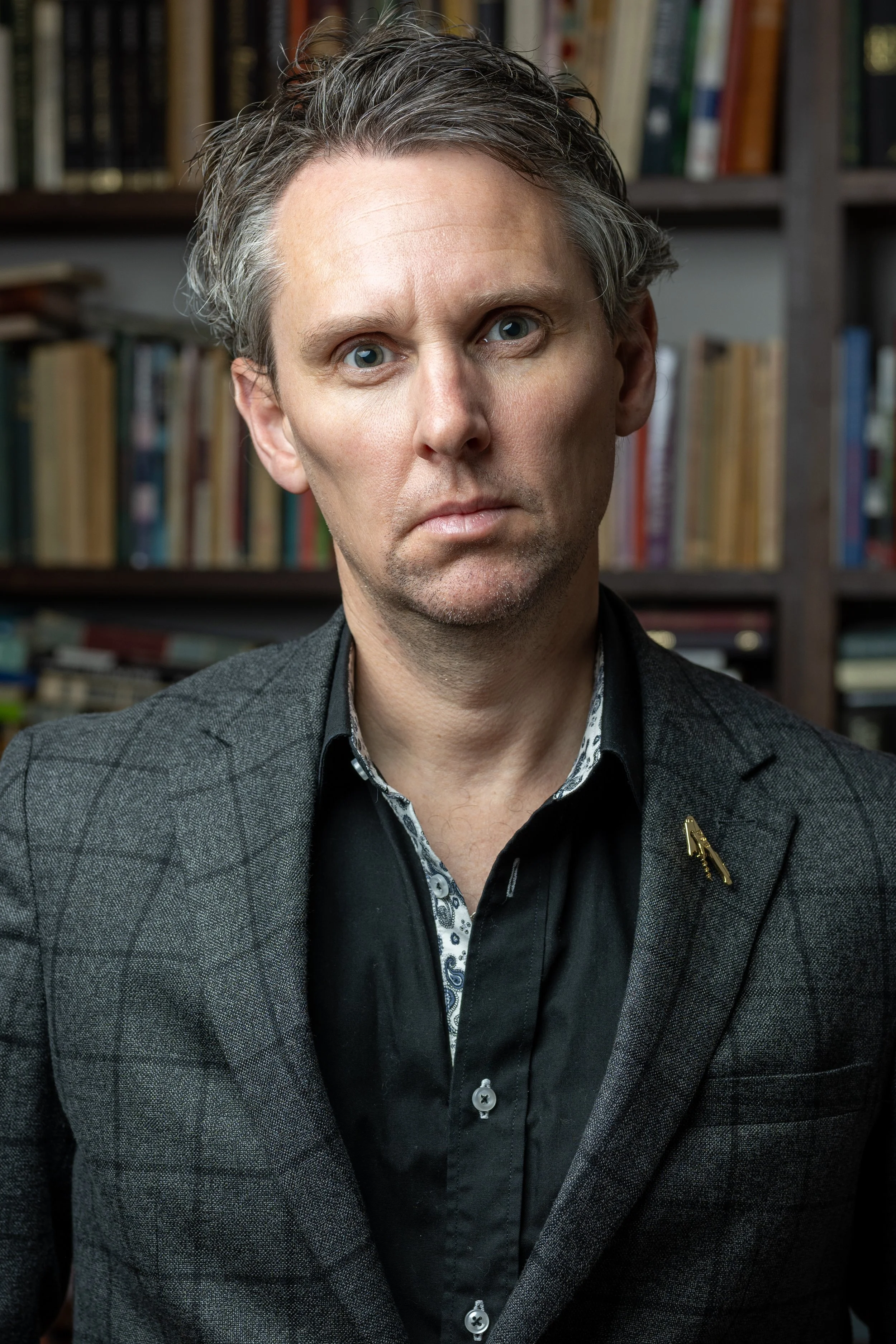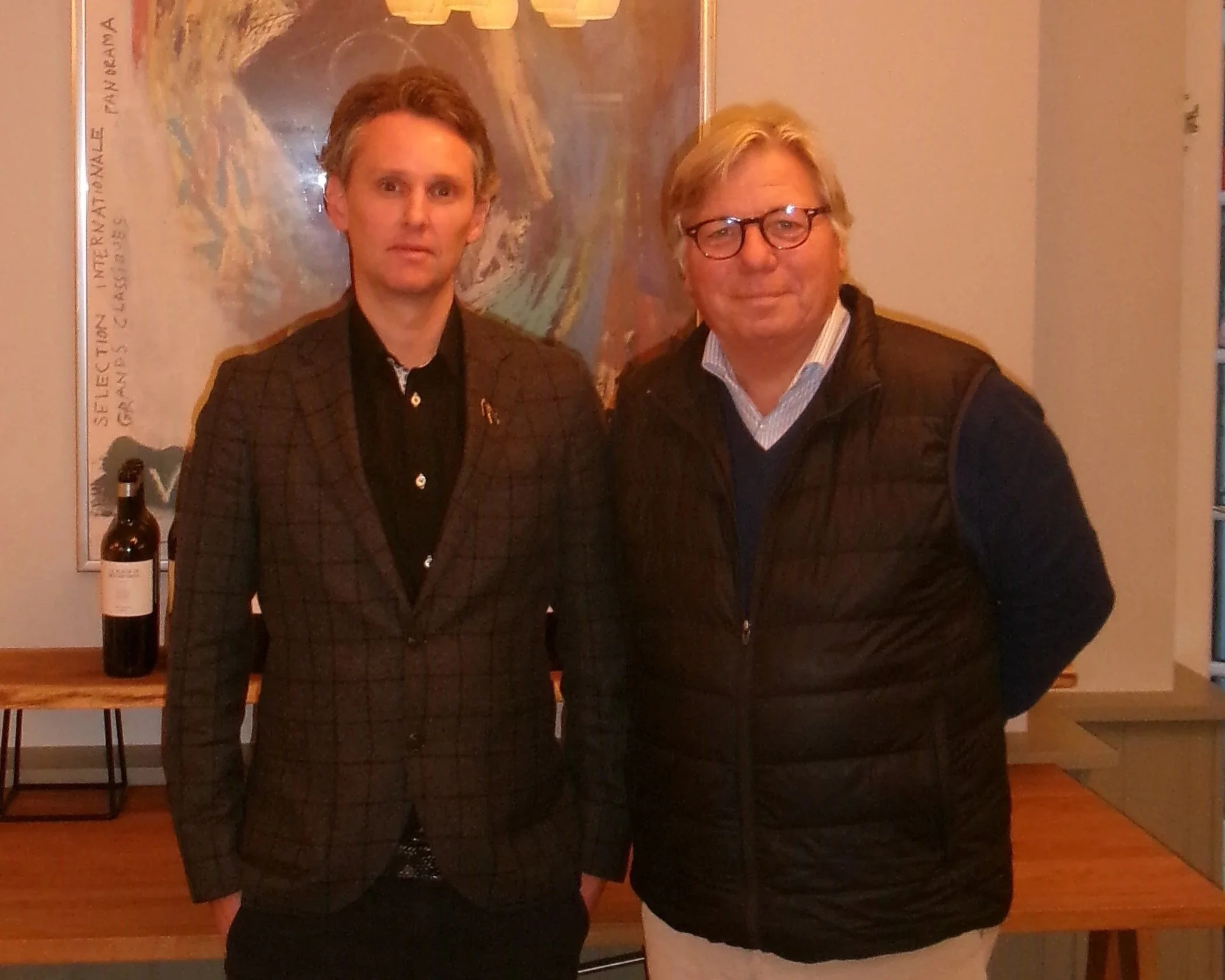
Kenny Jess Brand and Peter Sisseck. Image: DSF
As an academic wine lover and a bookworm, I have, throughout my adult life, been fascinated by great narratives and the people behind them. Whether it is the author behind a masterpiece, the philosopher who transformed our way of viewing the world, or the winemaker who opened one’s eyes to the beauty of wine, I have always found these origins compelling.
In the world of wine, there are many such examples, several of which are Danish. There is Michael Gundersen, who opened my eyes to Danish viticulture; the handful of producers today demonstrating the true potential of Danish wine; and, finally, those Danes abroad who, over the last 30 years, have played a key role in putting Denmark on the global wine map. And at the very top of this list stands Peter Sisseck.
Born in 1962 into a wine family – with Peter Vinding-Diers as his uncle, and Hans and Anders Vinding-Diers as his cousins – he apprenticed under Uncle Peter at his château in 1983, moved to California in 1985, and graduated from the Royal Veterinary and Agricultural University in Copenhagen in 1989. From there, things moved quickly. In 1990, at the age of 28, he arrived at Hacienda Monasterio in Ribera del Duero to rescue the estate. He stayed on, founded Dominio de Pingus in 1994, and released his first vintage of Pingus the following year – which Robert Parker promptly awarded 100 points. The journey continued with the creation of Quinta Sardónia in 1998, PSI in 2007, Château Rocheyron in Saint-Emilion in 2010, and finally Bodegas San Francisco Javier in Jerez in 2017.
Today, he owns 141 hectares in Ribera del Duero, 35 hectares in Jerez, and 7.8 hectares in Saint-Emilion, and he is indisputably the most well-known Dane in the world of wine. And it was he who arrived at Tangkroen here in Aarhus to present his wines to no fewer than 45 attendees. I cannot claim that getting him here was an easy task, but after three years of lobbying, it finally succeeded!
He brought with him La Fleur de Rocheyron 2019 and Château Rocheyron 2019, 2020, 2021, 2022, 2023, and 2024 from Saint-Emilion; PSI 2024, Flor de Pingus 2024, and Pingus 2024 from Ribera del Duero; and finally, Viña Corrales from Jerez. All are produced biodynamically, without the use of cultured yeasts, and with a profound respect for the vineyards from which the grapes originate.
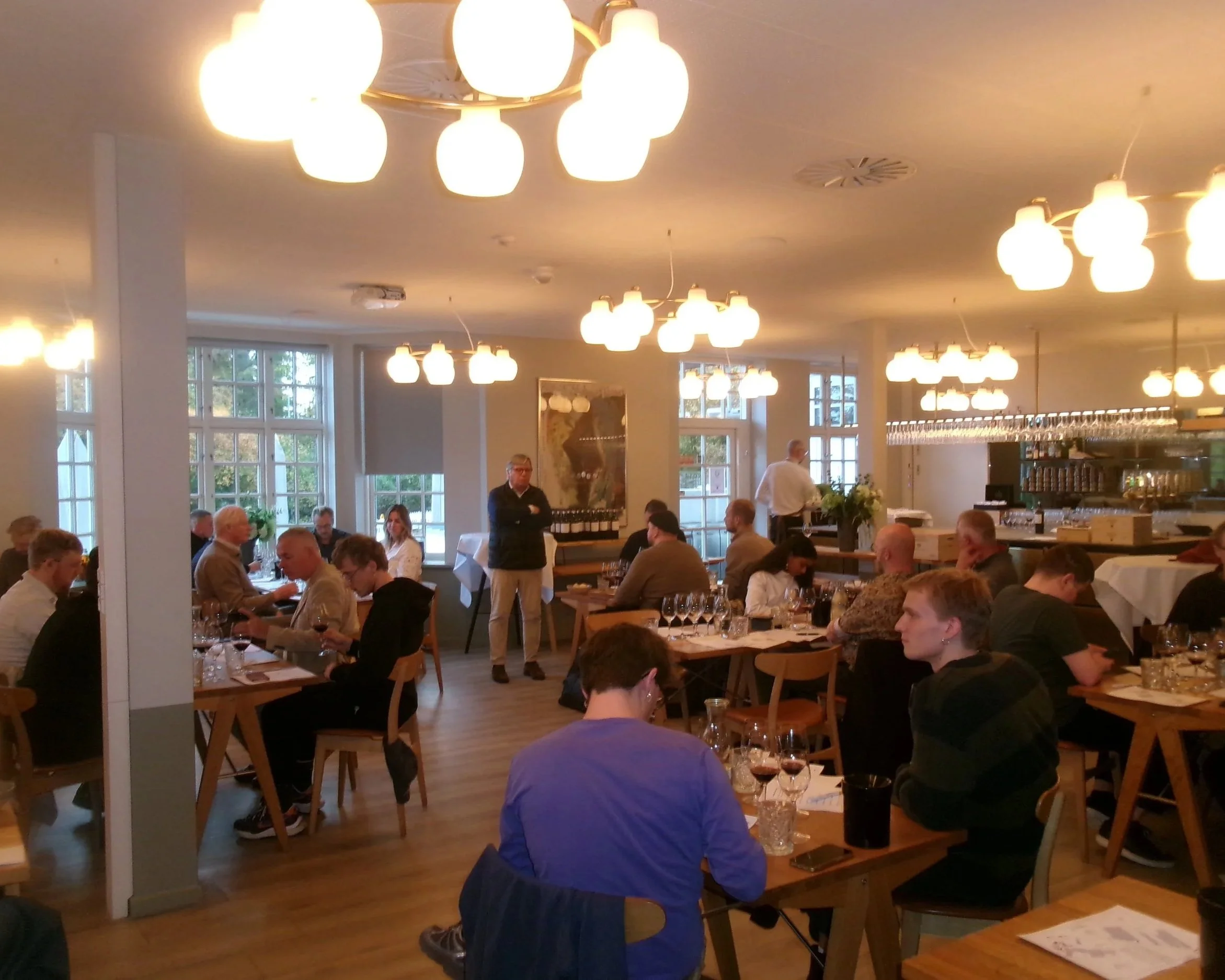
Peter Sisseck and DSF’s members. Image: DSF
Without going into detail, it can be said that a very pure and precise style was evident across all the wines, with Château Rocheyron 2022, in particular, standing out as a truly remarkable experience. During the tasting, Peter spoke not only about the wines but also about the grand adventure he has embarked upon and is still in the midst of. One thing that struck me was his calm, precise, and balanced demeanor – qualities that were, in a sense, reflected in his wines. This impression was confirmed after the tasting, when I had a moment to speak with him one-on-one. We discussed, among other things, what it is like to have a foothold in both Spain and France during a time when climate change and declining wine consumption among younger generations are reshaping the conditions for viticulture.
And although the outlook is bleak, Peter remains remarkably composed; one might even say he views it as a personal challenge. This is already evident in his production methods: he is harvesting earlier, has introduced the use of Grenache in Ribera, and is implementing significant vineyard initiatives to rescue and preserve thousands of older vines – vines that many others have simply given up on.
His PSI project, in particular – comprising 200 hectares spread across 233 plots with an annual production of 350,000 bottles – seems to be a major source of inspiration for him right now. It allows him to work in a completely different, more dynamic way; the vineyard area is highly diverse and managed by many different growers, which gives the wine a fresher, more vibrant character compared to his other wines.