Martynas Žemavičius on ACALA as a Gastronomic Tool
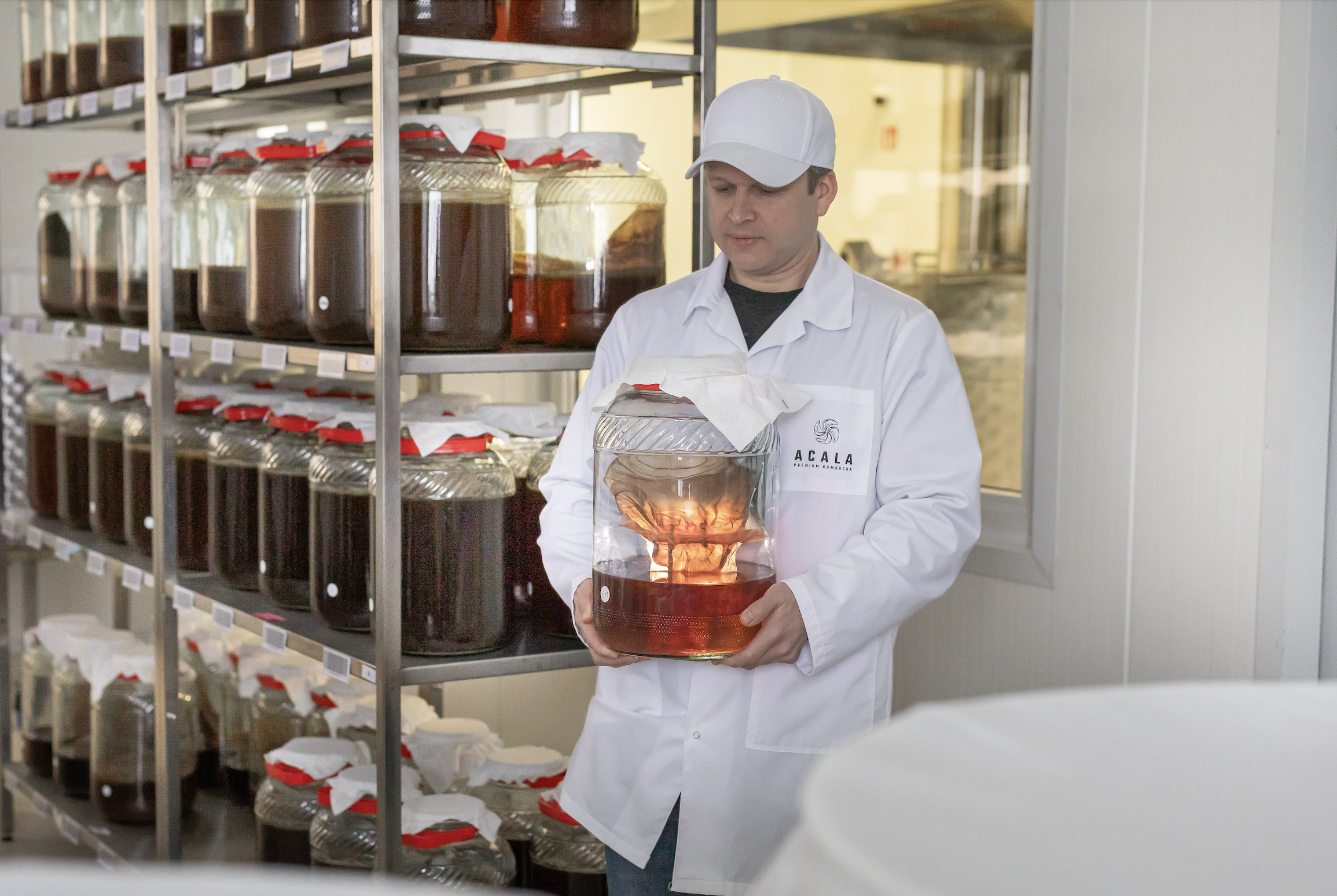
Martynas Žemavičius at Acala Sparkling Tea. Image: Acala
In many restaurants today, sommeliers are beginning to develop non-alcoholic pairings alongside traditional wine pairings. Producers are experimenting with fermentation, tea, botanicals and new blending techniques. Yet the category itself is still developing, and the language around it remains unclear.
Is it alcohol free wine? NoLow? Proxies? Something else entirely? For Martynas Žemavičius, founder of ACALA, the answer is simpler. The goal was never to replace wine. The goal was to create a drink that works at the table.
When I spoke with him, we returned again and again to one central idea. ACALA is not meant to imitate wine. It is meant to function alongside food.
"We bought every single non alcoholic wine at the time. That was twelve years ago. There were not many. Most of them were so bad we poured everything out in the sink."
A personal starting point
Before founding ACALA, Žemavičius spent two decades working with fine wine in London. He worked as a sommelier in fine dining restaurants, later selling wine to some of the city’s most prestigious restaurants and luxury hotels, and eventually working with fine wine companies. Champagne and Burgundy were central to his professional life.
“When I looked at non alcoholic wines,” he explains, “what I really wanted was the same kind of criteria from a stylistic perspective as wine.”
The idea that eventually became ACALA started in a very personal moment. His wife was pregnant, and suddenly wine was no longer an option.
“We bought every single non alcoholic wine at the time. That was twelve years ago. There were not many. Most of them were so bad we poured everything out in the sink.”
One exception was Richard Juhlin’s Blanc de Blancs, he points out.
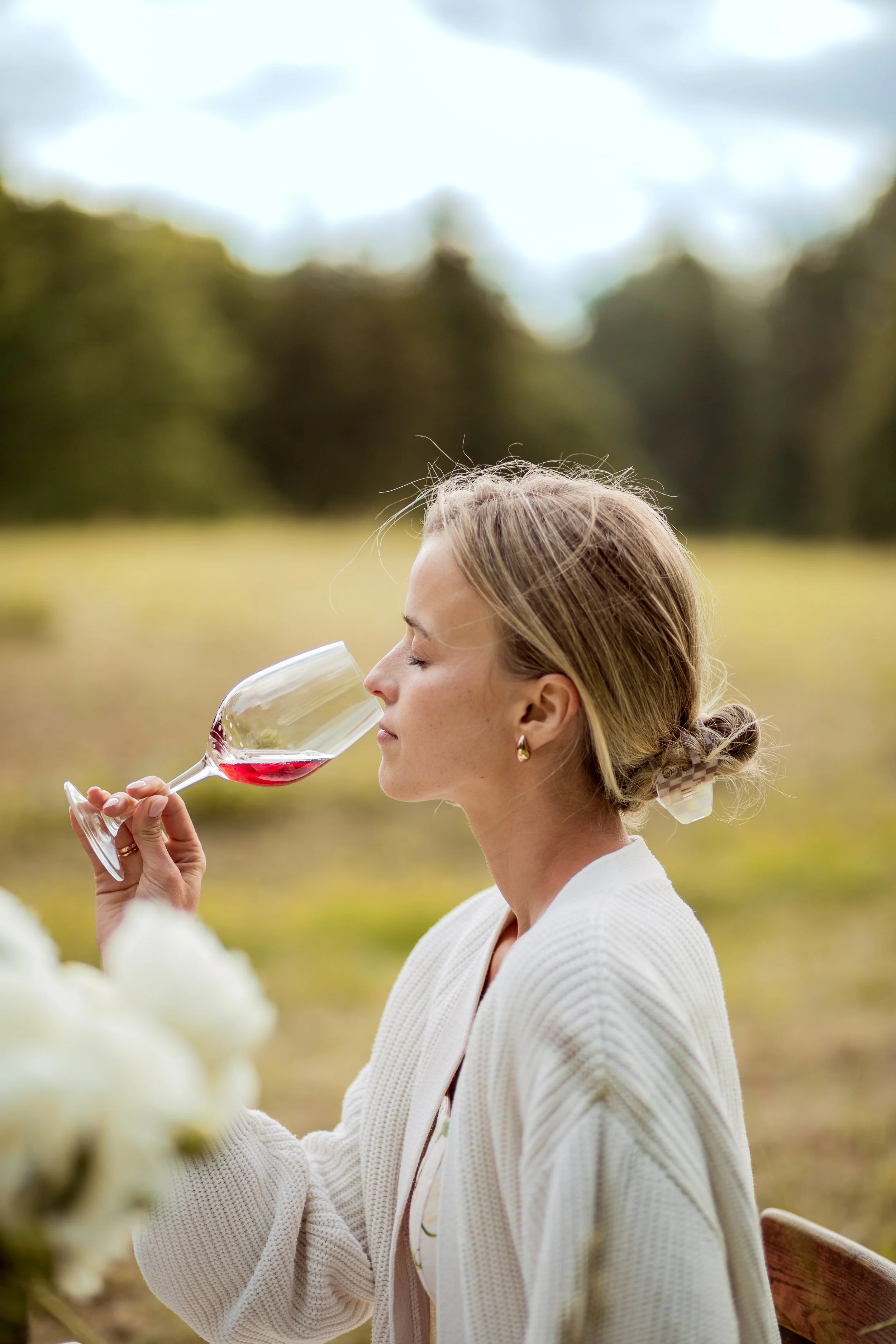
Acala Sparkling Tea. Image: Acala
“We had that problem. We could not find anything we wanted to drink at the table.”
Eventually the family moved back from London to Lithuania, where they discovered kombucha. At first it was simply interesting as a fermented drink. But fermentation sparked an idea.
“At the time I was in the wine world and I drank wine, water and coffee. Tea was something I only drank when I was sick. But when I started exploring tea I realised it was a completely different world.”
What followed was a deep dive into tea.
In China, for example, a single region such as Yunnan contains multiple historic mountains, each producing teas with distinct characteristics.
“It reminded me very much of Burgundy,” he says. “You take France, Burgundy, Côte de Nuits, and then you go into villages, vineyards and producers. Tea can be just as complex.”
This discovery opened the door to blending teas and botanicals in a way that could create layered aromatic profiles.
At the same time, Žemavičius enrolled in a professional natural perfumery course.
“That also opened my eyes. In perfumery you use natural extracts and essential oils to create aromas. When we taste wine and say we smell blackcurrant or forest floor, nobody added those things to the wine. The same principle exists in perfume.”
Fermentation, tea, botanicals and blending eventually came together as the foundation for ACALA.
Building a structure inspired by wine
For Žemavičius the goal was never to copy wine directly. Instead he focused on the structural elements that make wine work so well with food. “There are several key elements,” he explains. The first is acidity.
"In wine you have the complexity of aromas and flavours. When we create ACALA we work with the same five principles. Minerality, acidity, sugar level, tannins and structure, and complexity."
“For me it is important that the acidity level is similar to a dry wine. That level of acidity has worked with food for decades and centuries.” The second is sugar. “A lot of non alcoholic drinks have very high sugar levels. They can be enjoyable as a soft drink but do they work with food at eighty grams per litre?” Then comes structure.
“In wine we have tannins that work as a backbone. Many alcohol free drinks do not have that in ACALA, that structural element is built through tea and botanicals, which contribute tannins in a different way than grapes.”
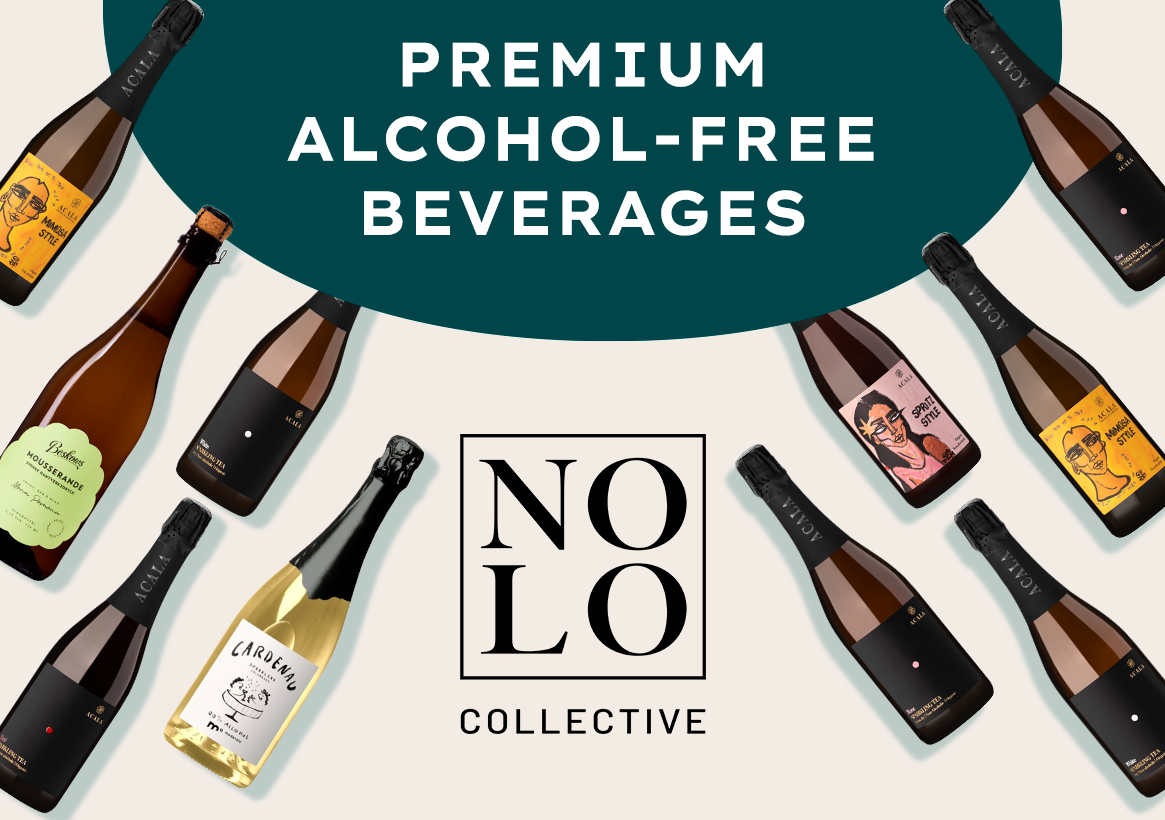
Sponsored banner from NOLO Collective
Another important element is minerality. Žemavičius speaks with particular enthusiasm about Champagne and Burgundy.
“I love the minerality and salinity you get in Champagne. At ACALA we use high minerality natural spring water. Fresh spring water is brought every week.” Finally there is complexity. “In wine you have the complexity of aromas and flavours. When we create ACALA we work with the same five principles. Minerality, acidity, sugar level, tannins and structure, and complexity.”
When those elements align, the drink feels familiar even if it is not wine.
“When people taste ACALA they often say this is actually nice. But they do not always know why. It is because those five elements are there.”
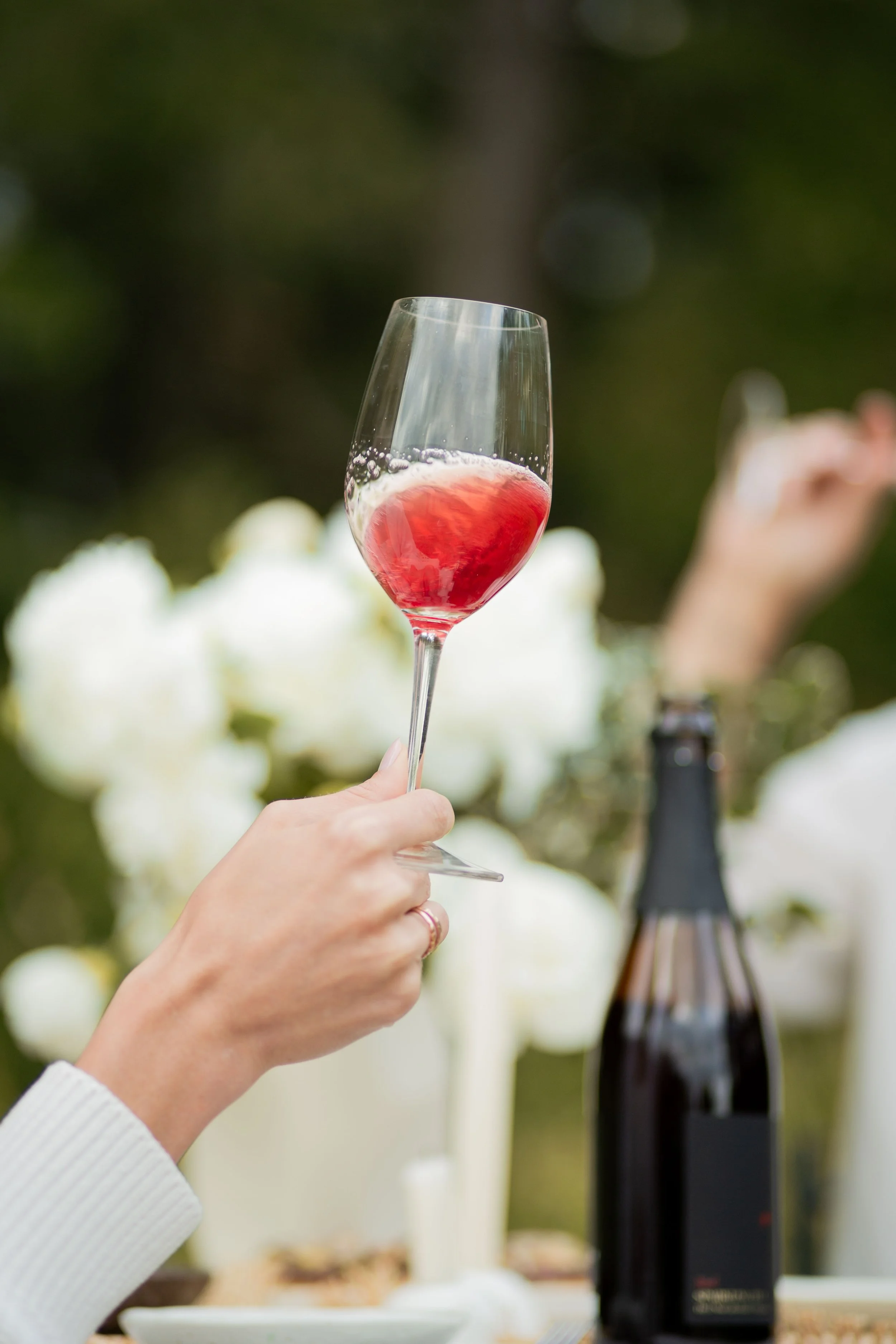
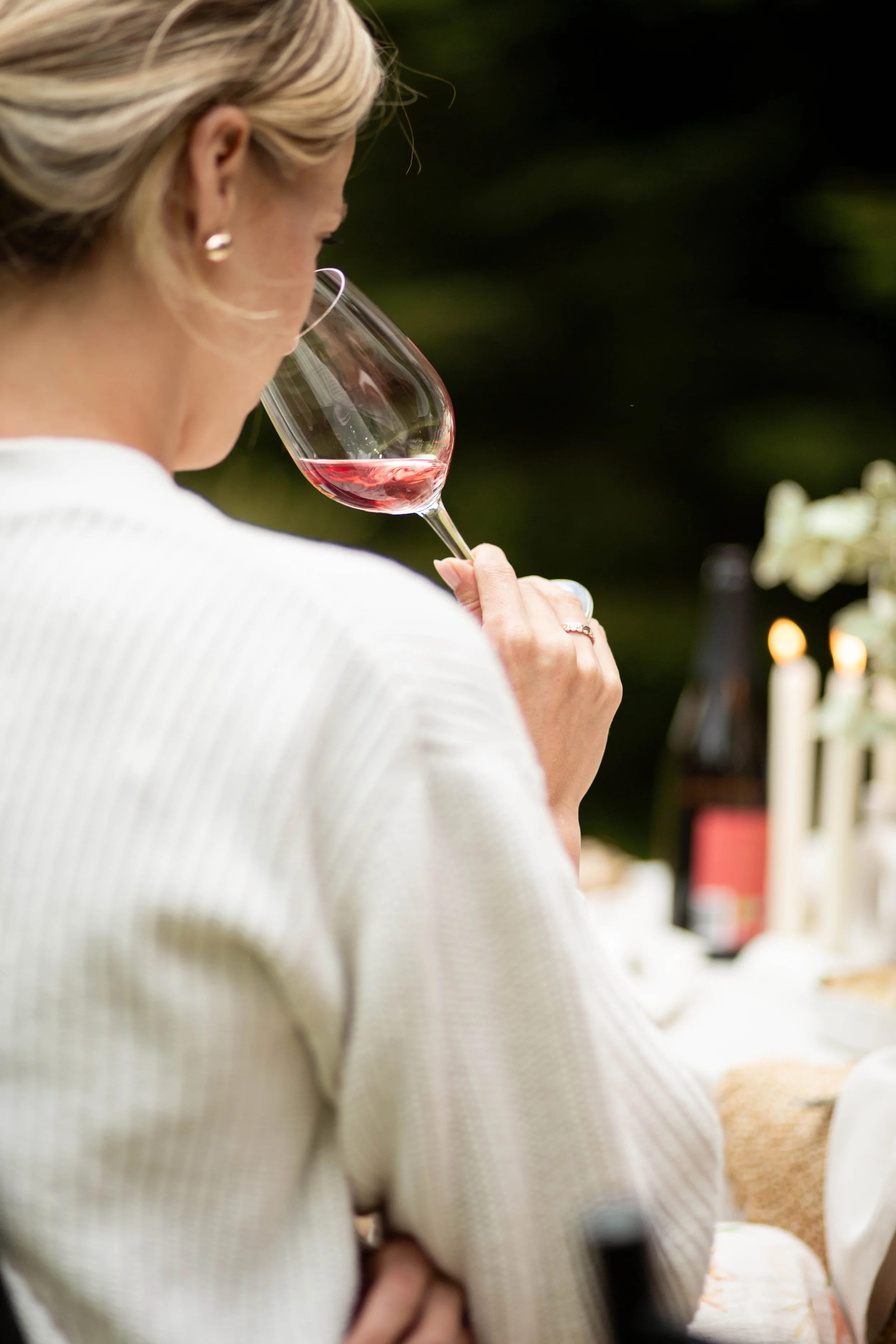
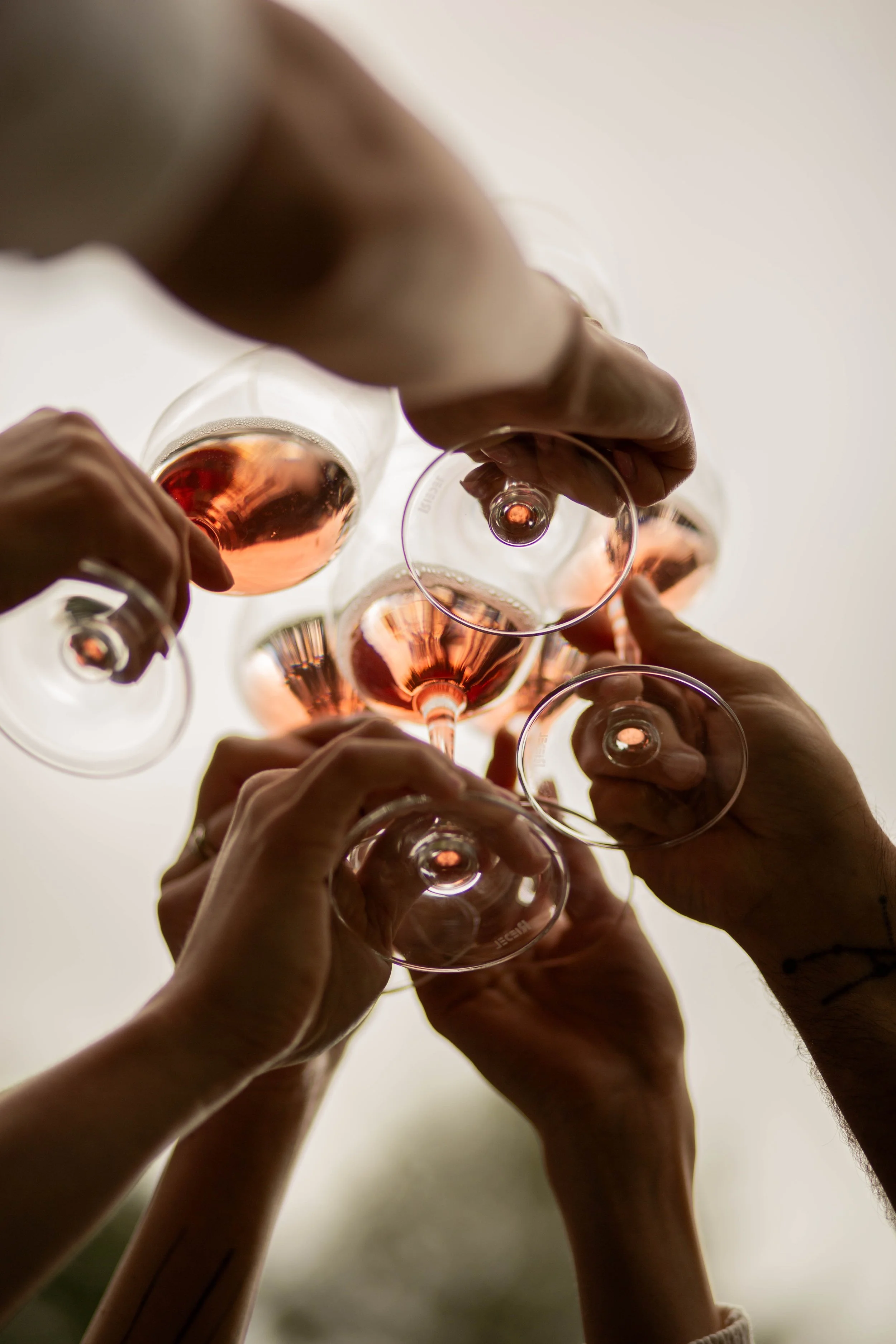
A terminology problem
The growth of alcohol free drinks has created a new challenge. The industry still struggles to describe what these beverages actually are. During the conversation I raised a question that has been coming up more often among sommeliers.
The terminology is still unclear.
The phrase alcohol free starts with a negative. It defines a product by what it is not. Meanwhile some producers and sommeliers use the word proxy to describe drinks designed to function like wine without being wine. The problem is that the term is not widely understood. I recently mentioned proxies to a fellow sommelier and she had never heard the word before.
Žemavičius agrees that the language around the category is still evolving.
“Non alcoholic already starts with a negative word. And many people have had bad experiences with dealcoholised wine. They put that experience on the whole category.”
The term proxy is also problematic. “It is very niche. Even professionals often do not know what it means.” For ACALA the solution has been to work within the category of sparkling tea.
Here Žemavičius is quick to credit Copenhagen Sparkling Tea, whose founders Bo Sten Hansen and Jacob Kocemba helped establish the concept internationally. “They created the category and worked very hard to build that foundation. Because of them people already recognise the name sparkling tea.” Even if someone has never tasted the drink before, the term provides a basic expectation. “When people hear sparkling tea they understand two things. It will have bubbles and it will contain tea or botanicals.”
A sommelier’s approach to pairing
One of the central questions for sommeliers is how to approach pairing when alcohol is removed. For Žemavičius the answer is surprisingly straightforward. “In a way we are not reinventing the wheel,” he says. If the structural balance that works in wine has been proven for centuries, it makes sense to use similar principles. “If acidity at that level worked for hundreds of years, if sugar around certain levels worked, if tannins worked, then why change it. Just try to be as close as possible to what people love and what works with food.” In many cases that means ACALA can be approached in a similar way to wine. “I think the best is just to treat it as a wine.”
"Our red or rosé are very subtle and elegant. They are low in sugar and have gentle structure. For that reason many fine dining restaurants like pairing them with umami dishes."
When alcohol free drinks work better
There are also situations where alcohol free beverages can outperform wine. This is particularly true when working with very delicate dishes. “For example raw fish,” he says. “Very high quality sashimi.” In Japan such dishes are often paired with sake. “Sake can be sixteen percent alcohol. For me the alcohol can overpower that delicate umami flavour.” In those cases a drink like ACALA can be more supportive. “Our red or rosé are very subtle and elegant. They are low in sugar and have gentle structure. For that reason many fine dining restaurants like pairing them with umami dishes.”
Mistakes restaurants still make
As alcohol free pairings become more common, restaurants are still learning how to present them. Glassware is one frequent mistake. “If you treat it like wine then use the correct glassware.” Temperature is another. “Sometimes ACALA red is served very cold. But you would not chill Bordeaux to seven degrees?” Restaurants sometimes hesitate to present alcohol free options with the same seriousness as wine. “Give it the chance to prove it can pair really well with food.”
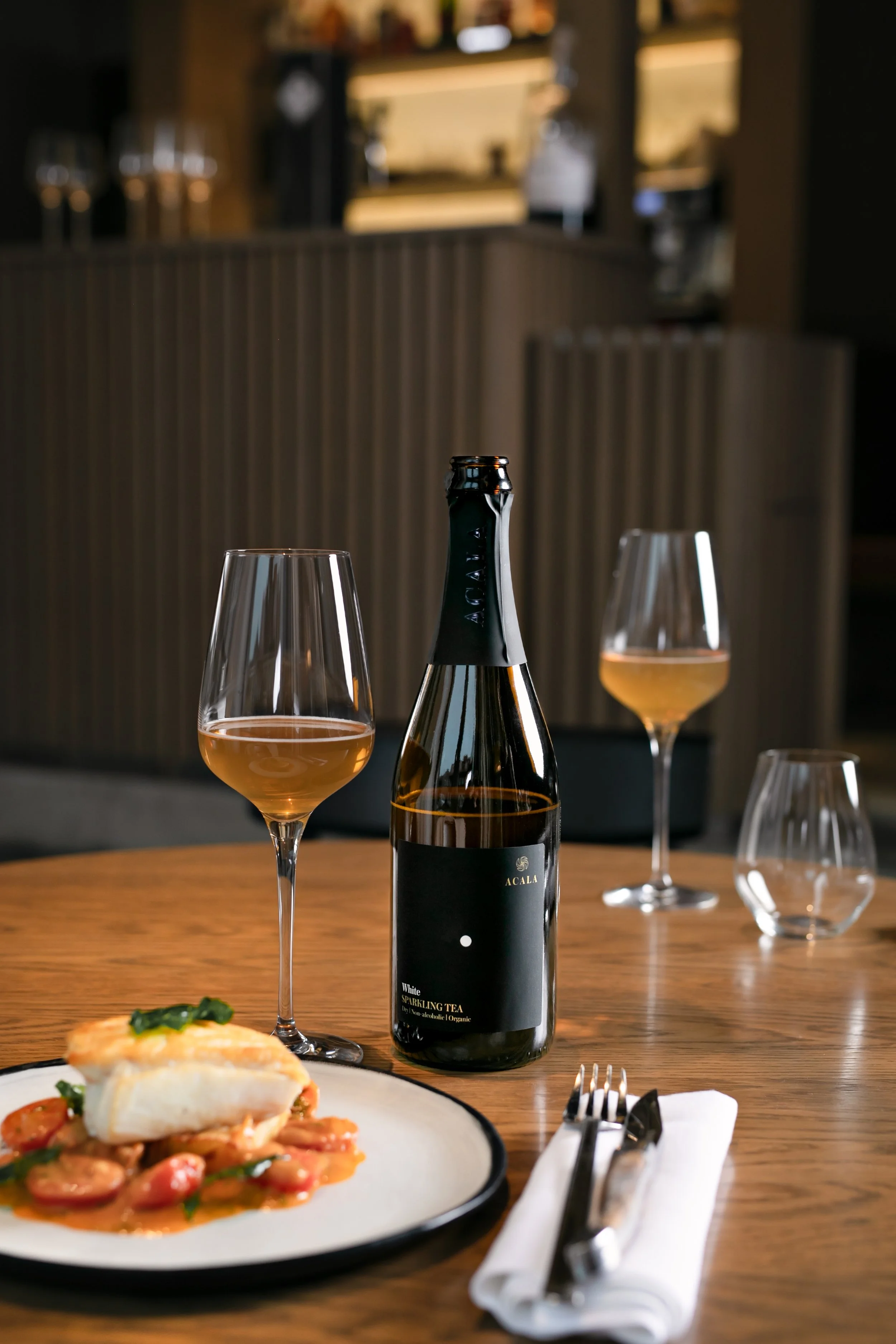
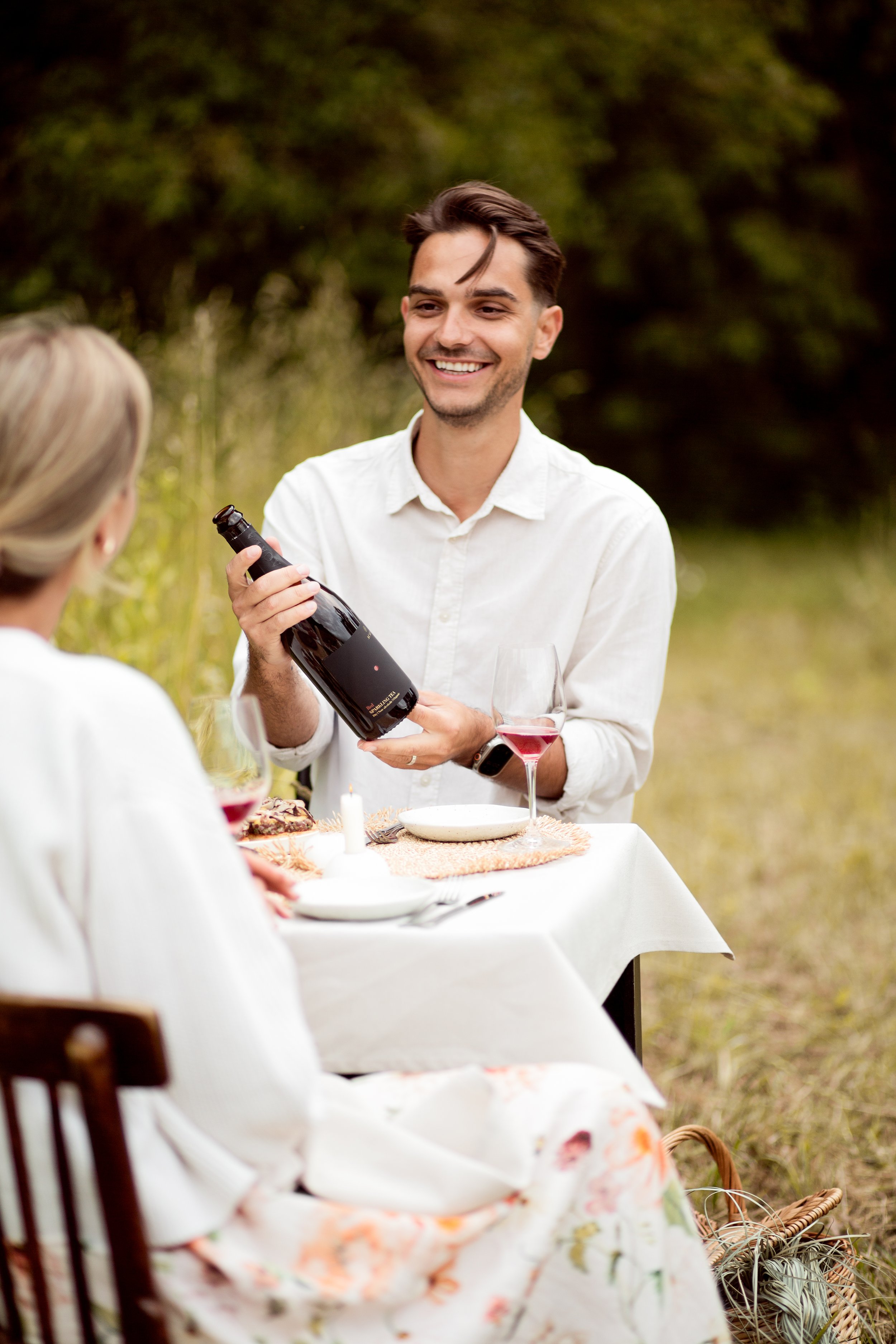
Acala Sparkling Tea. Image: Acala
The Nordic advantage
When asked about markets where ACALA has been particularly successful, the Nordic countries quickly come up.
“Yes,” Žemavičius says. “It has been easier here.”
Part of the reason is the work already done by Copenhagen Sparkling Tea in building awareness for the category. But cuisine also plays a role.
Nordic gastronomy often focuses on seafood, herbs, acidity and light textures. “That fits very well with our style. Low sugar, fresh acidity and complexity.”
Denmark in particular has responded strongly.
“Copenhagen is seen as a gastronomic capital. People understand these flavours. For them it is easy to accept a product like this.”
Who actually drinks ACALA
There is a common assumption that alcohol free drinks are mainly for people who never drink alcohol.
Studies by Nielsen and other analysts show that the vast majority of consumers buying alcohol free beverages also drink wine or cocktails.
“About ninety four percent,” Žemavičius says.
These are people who enjoy wine but do not want alcohol all the time.
“They might be driving. It might be a Tuesday. It might be Dry January. But they still want an adult drink.”
The rise of zebra drinking
Another emerging trend is what some now call zebra drinking. Instead of choosing between alcohol or no alcohol, guests alternate between the two. “A glass of Champagne, then an alcohol free drink, then wine again.” This approach allows diners to enjoy long tasting menus without becoming intoxicated. For high end restaurants this can make a real difference to the experience. “When you go to places like Noma or Alchemist you want to experience every texture and flavour. If you drink too much alcohol you lose that sensitivity.”
I have experienced the same myself. During long tasting menus the amount of wine can sometimes become overwhelming. When my husband and I visit restaurants like Søllerød Kro or Alchemist, we often order one wine pairing and one alcohol free pairing and then share. That way we can taste both, and we feel we keep the ability to really enjoy the food throughout the meal. Alternating between wine and alcohol free options is a way to keep the palate sharp during the entire experience.
"If it is next to Coca Cola or juice, people will not look there when they want a gastronomic pairing."
Drinking ACALA at home
My own interest in the category started from a health perspective. During Christmas I decided to go entirely alcohol free and used the opportunity to try a wide range of products on the market. ACALA quickly became one of the bottles I returned to most often. The red in particular stood out as something that could actually sit comfortably on the dinner table. It had enough structure and depth to match winter food and still felt like an adult drink rather than a soft drink.
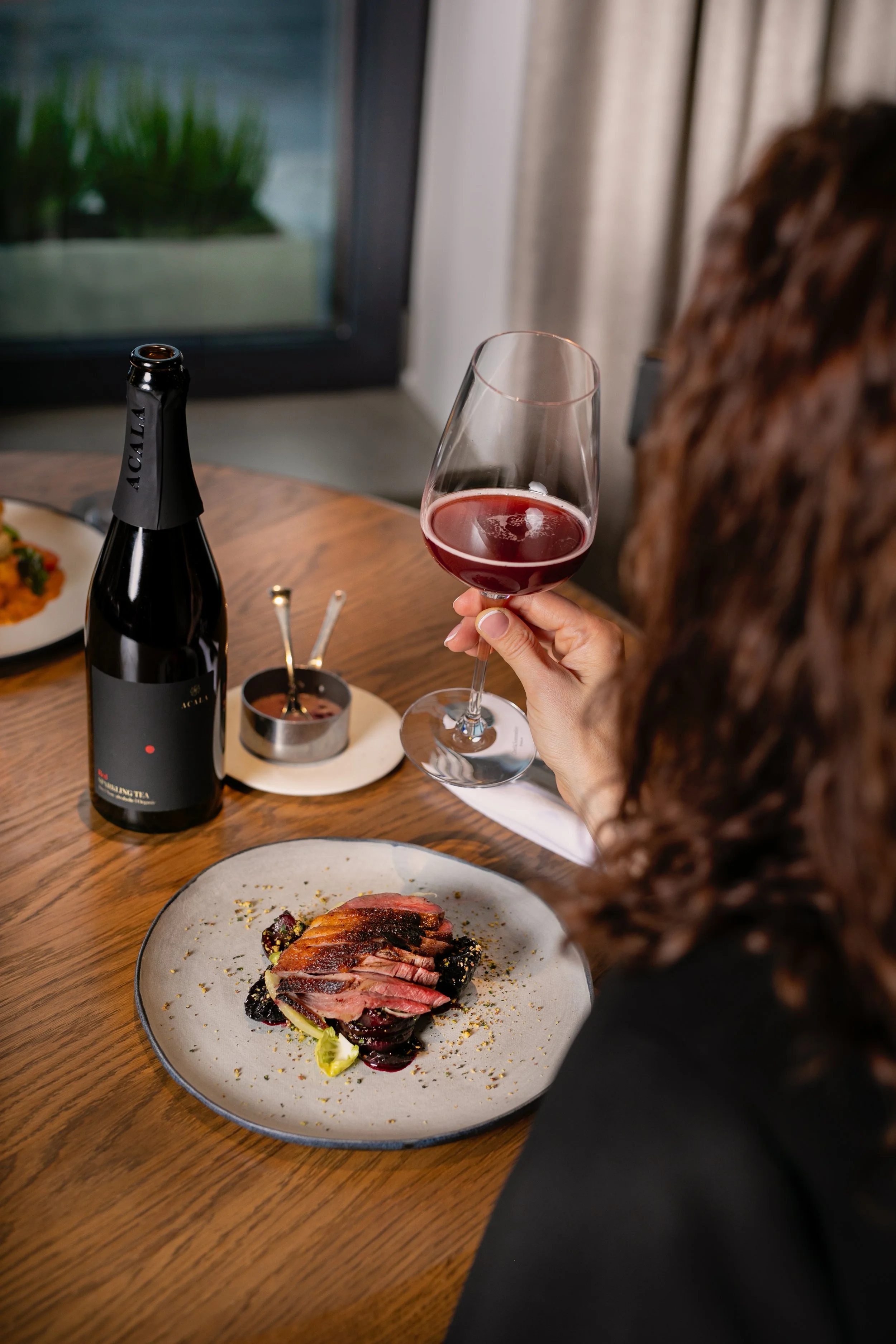
Acala Sparkling Tea. Image: Acala
Where should sparkling tea appear on a wine list
One final topic Žemavičius raises is where sparkling tea should appear on restaurant wine lists. Too often it ends up listed next to soft drinks.
“If it is next to Coca Cola or juice, people will not look there when they want a gastronomic pairing.”
His suggestion is simple. Place alcohol free sparkling options near the beginning of the wine list, alongside Champagne and other sparkling wines.
That positioning signals that the drink belongs within the gastronomic experience rather than outside it. As alcohol free beverages continue to evolve, the terminology around them will likely evolve as well. Categories may shift and new styles will emerge as producers keep experimenting with fermentation, tea and botanicals.
What will ultimately matter, however, is not the label attached to the category but how the drink performs where it counts. For beverages like ACALA, success will depend on their ability to hold their place within the meal itself, working alongside food in the same thoughtful way wine has done for centuries.